We Are in an Educational Crisis!

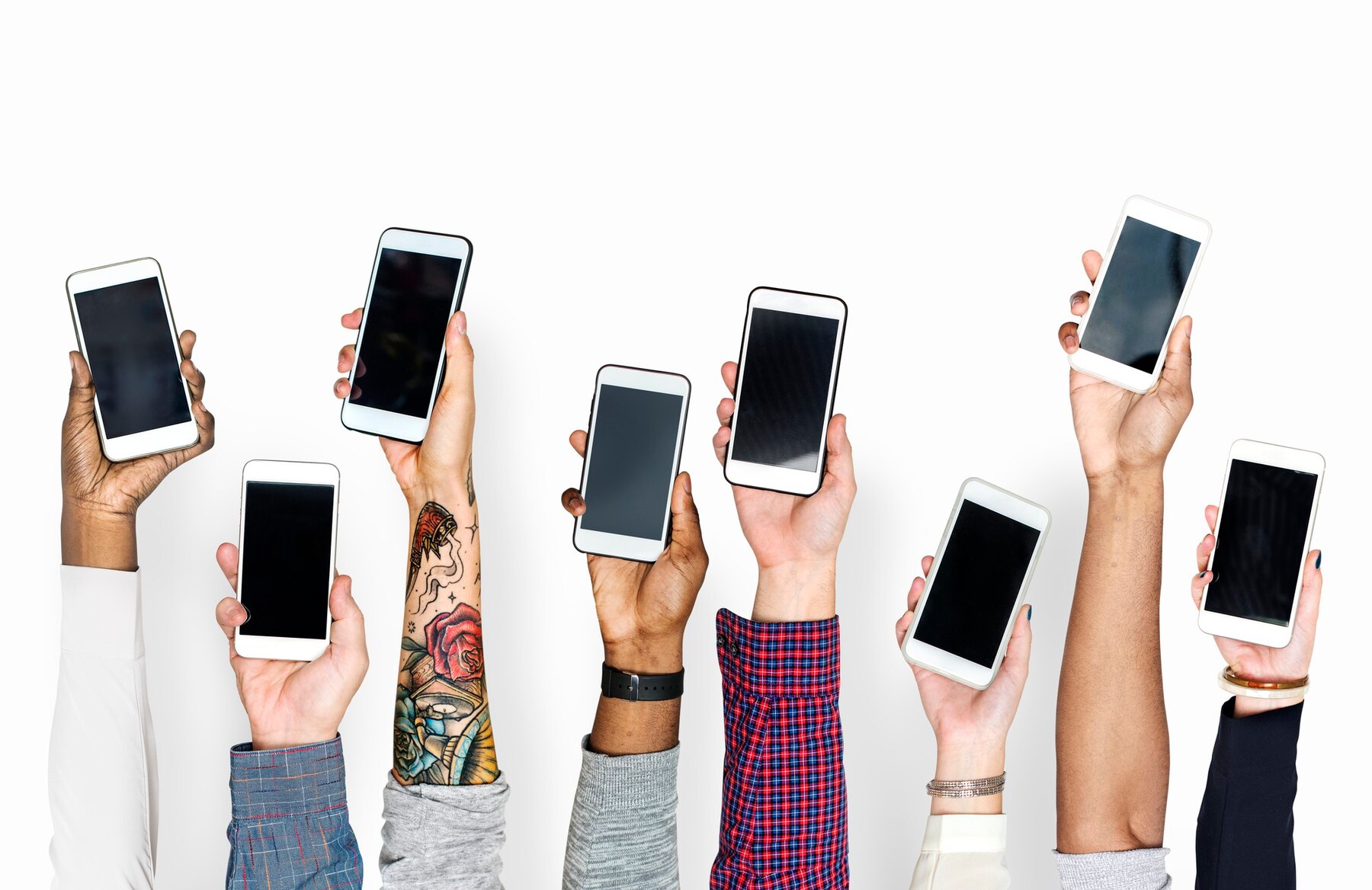
Have you wondered if your children or grandchildren are getting the education they need? Do you wonder if they are really learning what they need to learn and whether it will prepare them for college…or for life? Do you ever wish that schools would ban phones from classrooms or that the United States would ban social media for kids under 16 so that your children could pay better attention to learning, sports, hobbies or even their friends?

I have worried about all of these things. And I have also wondered whether the recent popularity of theories backed not by science but by TikTok proclamations may be a result of the failure of our educational system to teach people how to evaluate ideas and to think for themselves.

We are in an era where opinion trumps science, where scrolling social media is preferred to reading books, where facts are no longer respected, and where screens win out over socializing in person. Whatever your politics, these trends do not bode well for our children learning how to relate to other people, to separate truth from opinion, to evaluate ideas for themselves, and to make cogent, fact-based arguments.

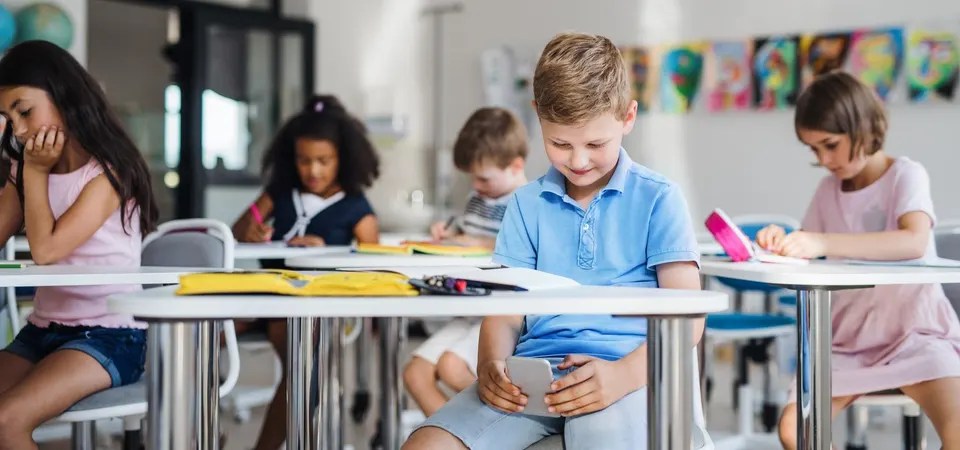
And because of our kids’ habitual use of phones and screens, attention to classroom teaching and homework is suffering.

David Bailey reported on just this in a recent article in Math Scholar. He said that we are experiencing a crisis in education—and he cited plenty of evidence:

  1. U.S. educational test scores are in a generation-long decline: From 2015 to 2025, 83 percent of school districts lost ground in reading, and 70 percent of districts lost ground in mathematics (Bailey, 2026).
  2. Twelfth-grade U.S. reading scores have dropped to the lowest level since 2005. Sadly, the declines have been greatest for those students from lower socioeconomic environments (Bailey, 2026).
  3. A working group at the University of California, San Diego, found that 900 of the latest incoming freshman class had mathematics skills below high-school level, and most of those did not even fully meet middle-school standards. Nationwide, college professors teaching mathematics and computer science courses report growing numbers of incoming students unable to do basic algebra or solve simple word problems (Bailey, 2026).
  4. Even at elite U.S. universities, professors report difficulties getting students to engage with full-length literature texts; in many cases, students have never read such “lengthy” works (Bailey 2026).
  5. Grade inflation is rampant at all levels. At Harvard University, the percentage of A grades soared from 24 percent of all grades in 2005 to 60 percent in 2025 (Bailey, 2026).

In this article, Bailey said that these changes in student performance are concurrent with the rise of smartphones, increased use of social media, and rising student absenteeism.

So it seems my concerns—and possibly your own—are justified.

While many people believe that this trend started during the COVID-19 pandemic—and while it is true that this period severely worsened the downward trajectory of student test scores—recent data from the Stanford Educational Opportunity Project shows that a “learning recession” actually began around 2013 (Miller et al., 2026). This report says that almost everywhere in America, students are performing worse than their peers did a decade ago. The term, “learning recession” was coined by the Education Scorecard, a joint project of Sean Reardon at the Stanford group, Thomas Kane at the Center for Education Policy Research at Harvard, and Douglas Staiger at Dartmouth (Miller et al., 2026).

In a recent New York Times article, Nat Malkus, a senior fellow studying educational policy at the American Enterprise Institute, said, “I cannot be more emphatic: This is an enormous problem that’s not getting enough attention” (Miller et al., 2026).

Students’ ever-present screens are potent sources of distraction. According to The Pew Research Center, nearly half of American teens say that they are online “almost constantly” compared with under a quarter who said the same thing a decade ago (Miller et al., 2026).

Moreover, schools are expecting less and less of kids. Students are required to read entire books far less often than in previous years. And their attentional abilities have also declined, resulting in less attention paid in the classroom and to longer homework assignments.

So parents, I hate to say it, but it is time to worry. And it is also time to do something.

Here are my suggestions:

  1. Make sure your child goes to school every day. This may seem obvious, but regular school attendance and a commitment to school are important for kids.
  2. Start going to the public library on a weekly basis when your children are around age 2. Take out the books they want and read them to them at home. When they are older, let them take out the books they want to read themselves.
  3. Model reading print books and magazines at home. Make sure your children see you reading books or magazines and enjoying it.
  4. Encourage your school-aged child to read for at least 10 minutes before going to sleep. This is a good, relaxing habit. And make sure their cell phone is not in the bedroom.
  5. During homework time, insist on cell phones being put in another room.
  6. Have your kids do their homework in a community space in the house where you can monitor what they are doing on their computers, making sure it is homework and not YouTube.
  7. Monitor your children’s curriculum. If you have concerns about it, or if you think it is not rigorous enough, speak up. Schedule a face-to-face meeting. Talk to the school principal. Demand more challenging work for your child.
  8. Monitor your children’s learning. If you do not think they are keeping up in reading or math or any of the other subjects, talk to the teacher. If the problem persists, ask for a formal assessment of your child’s learning and learning ability. Once a parent requests this, all public schools are required to set up an evaluation by the school psychologist.
  9. If you would prefer that phones—or even screens—not be used in the classroom, again, speak up. Talk to the teacher and the principal. Don’t be afraid to attend school board and PTA meetings and be vocal.

Parents, it is up to you to monitor your children’s education and to advocate for better services and policies if you do not think your children are getting the education they need. It is also up to you to instill good study habits—starting early—to help your children build their attentional capacities and to prepare them for the later school years and college.

References

Bailey, David (2026). The Great Dumbing Down of America, Math Scholar. https://mathscholar.org/2026/07/the-great-dumbing-down-of-society/

Miller, C., Paris, F., and Dervosh, S. Why U.S. Test Scores are in a ‘Generation-Long Decline.’ The New York Times, May 13, 2026. https://www.nytimes.com/2026/05/13/upshot/test-scores-school-districts-…

Is It Time to End Phone Use During School?

The New York Times is reporting that various social media companies have actually made it a policy to try to engage school-aged users during the school day. “Snapchat sent phone alerts to adolescents during school hours, urging them to share what was going on in their classrooms. Meta paid “teen ambassadors” to promote Instagram and hand out swag to their friends at school. TikTok gave the National PTA millions of dollars, in part to throw school events about online safety and provide favorable comments to journalists.”

Ok, as if social media’s threat to kids’ focus, attention, and capacity for socialization wasn’t enough, now we find out that our children’s educations are being purposefully undermined.

While I am not, in general, a person who uses the concepts of good and evil in my life, I can say without hesitation that THIS is evil.

To intentionally grab children and teenagers’ attention away from their teachers and their work at school? For the purpose of larger usership and thus larger profits? 

Evil.

“TikTok’s leaders decided not to disable notifications during school hours, rejecting a change that its safety teams had pushed for years. A Snapchat strategy document referred to classroom phone use as “under the desk” time. Google managers knew YouTube was recommending videos to students during the school day that had nothing to do with their lessons.”

Evil.

No matter how good a teacher is, they cannot compete with YouTube. And no matter how interesting the conversation might be in the cafeteria, evidently, it also cannot compete with social media. During class, kids are indeed looking at their phones under their desks, and during free time, according to the reports of some teens I know, many are sitting in silence, looking at their own phones.

Evan Spiegel, who co-founded Snapchat, is quoted in the New York Times article as having said of the early users of his app: “We were thrilled to hear that most of them were high school students who were using Snapchat as a new way to pass notes in class.”

Ok, maybe evil is not the best word to describe the motivation behind the creation of this and other social media platforms. Perhaps it takes more words: for example, the relentless pursuit of users at any cost. Or amoral business practices that treat human users as mere avenues for growth rather than as sentient creatures whose well-being matters.

According to one article in The Journal of the American Medical Association, phone use during school hours is associated with negative academic outcomes. The study states the obvious, that phones create distraction from learning. This study found that even kids with restrictions placed on their phone use through an app that limits the amount of time a child can spend on their phone averaged 1.5 hours on smartphones during the school day. And a quarter spent two hours or more per day with social apps being the most frequently accessed. Subtract this from the estimated 8.5 hours that kids ages 13 – 18 generally spend on their phones per day (Jackson, 2026), and you have 6.5 hours of phone use at home, when many kids might be doing homework.

Yet another study (Tezler et al, 2026) found that kids use their phones during every hour of the school day, spending a third of their day on their phones. This resulted in what they called “reduced cognitive control”, that is, poorer self-regulation and challenges to cognitive development.

This is an enormous problem.

And not just for school kids. College students and even medical and law students, I’ve seen in my practice have complained to me about how hard it is to study. They feel compelled to check their phones quite literally every other minute. Some have resorted to deleting all their apps, some have had to put parental restrictions on their own phones and some just put their phones in another room when they study. But inevitably, many tell me they give in and add back the apps or bring their phones back into the room with them. Their self-control is insufficient in the face of the demand and the allure of the smartphone.

The word addiction has been used.

So – the evidence, both research-based and anecdotal, is clear. As Tezler et al said,  ” These findings highlight the need for school-level policies and digital literacy programs that address not only overall screen time but also habitual smartphone-checking behaviors that fragment attention.”

Amen.

It is time to take phones away from kids during school hours. It is time to educate kids as well as adults as to the effect of frequent social app use and app checking. And it is time to bring the companies that purposefully manipulate all of us to justice.

References

Kaitlyn Burnell, et al (2025). Smartphone engagement during school hours among US youths. JAMA Network Open.Vol. 8, No. 8

Jackson, J. (2026) Smartphone use cuts into school hours with social media leading the way. https://phys.org/news/2026-01-smartphone-school-hours-social-media.html

Tezler, E. et al (2026. Smartphone use duing school hours and association with cognitive control in youths aged 11 to 18 years. JAMA Netw OpenPublished Online: March 9, 2026

Mentalization: What is it, anyway and what does it have to do with parenting?

In the last few years, everyone has been talking about mentalization. But what is it, really?

Two British psychologists, Peter Fonagy and Anthony Bateman, began writing about mentalization in the late 1980’s. They introduced the term to describe the process of understanding our own behavior and that of others in terms of underlying feelings, desires, and intentions. 

Often described as “holding in mind” or “thinking about thinking”, (and also called Theory of Mind) this skill is crucial for understanding other people as well as being helpful in understanding and regulating our own emotions. Mentalization allows us to reflect on our own behavior and that of those around us and to interpret its meaning.

This sort of reflection is an important skill for use in parenting. Fonagy states that for the optimal development of children, it is important for parents to imagine what their children are thinking and feeling and to keep these feelings in mind in their everyday interactions with their children. This is different from what is called “gentle parenting,” where parents meet their child’s every behavior with an explanation to the child of their feelings. In fact, you could say that gentle parenting takes mentalization to an illogical and unnecessary extreme. 

Sometimes described as “having the mind in mind” or “seeing ourselves from the outside and others from the inside,” the capacity for mentalization is important for building an internal picture of how other people’s minds work. 

Fonagy says that some parents have more trouble understanding what their child is thinking and feeling than others. In such cases, the parents’ own feelings can get in the way of understanding what might be in their child’s mind. They may misattribute the motivations that often drive themselves to their child, or they may attribute the motivations that were attributed to them as children to their own child. This can interfere in really understanding their own child. It can also result in their child not feeling understood or truly seen.

Once, when my son was about a year and a half old, we were at the Bat Mitzvah of my niece. When the photos of the Bat Mitzvah girl’s late grandparents (my parents) were projected, I began to cry. My son looked at me with concern….and then offered me his bottle.

I wonder now, was this metalization on his part? At one and a half? My eighteen-month-old could relate to my feelings and he wanted to comfort me. Was this more an example of empathy – which is an identification with another’s feelings – or was it mentalization? Was my son able to understand and relate to my feeling sad or was he able to understand more fully why I was feeling this way? The former would seem like a primitive form of mentalization while the latter would be a more fully developed theory of mind.

I suspect that at that age, my son was not able to imagine what I was thinking and what it was that made me cry – – but he was able to see my sadness.

Endearing – but not mentalization.

When children can more fully mentalize, starting at around age 4, this is very helpful to them. Understanding the motivations of others aids in building their own emotional regulation. If a four-year-old child can begin to understand that his friend took his toy because he had waited a long time and just could not wait any longer, he learns several things – first, that his friend was in a different position than he was. Often called alternate perspective taking, the child can realize that he had the toy and he was enjoying playing with it but his friend did not have the toy and was having a hard time waiting to play with it. This is helpful because it is much more tempting to hit someone when they take your toy if you have no understanding of why they did it.

And for parents, mentalization is important for several reasons. First, using mentalization, that is, keeping your child’s mind in mind while being his parent, helps with differentiating your feelings from your child’s and being able to understand your child’s feelings, thoughts and motivations separate from your own. This is useful when trying to maintain your own emotional regulation while dealing with your child. Second, modeling mentalization is helpful for your child’s development of this skill. We want our children to achieve theory of mind because children who are able to reflect on their own feelings and to predict the feelings of others are better able to develop good relationships, strong self-confidence and a healthy sense of self.

So what does mentalization look like in parenting? An example of a lack of mentalization would be a parent who hurries their reluctant child into the car for a pediatrician appointment saying only, “Hurry up, we’re going to be late!” The same parent, using their mentalizing function, would realize that their child might be slow in leaving because they are frightened to go to the doctor’s. The parent might remember that the last time they went, their child received a vaccination, and they would be able to keep in mind that their child might be feeling anxious about the visit. They might imagine their child thinking, “I don’t want to go!” or “I won’t go!”. The parent can choose whether or not to reflect back to their child what they realize, but their awareness of the child’s mental state can guide their actions with their child in a very helpful way. 

Does Your Kid Need a Luxurious Dorm Room?

Photo by Alethea Jay

Evidently there is a TikToc trend where people post photos of luxe dorm rooms. 

And evidently kids heading off to college soon see these and want them.

Or, some kids do.

According to The Washington Post, some almost college-students are having their dorm rooms wallpapered, they are getting luxury linens, bed skirts, curtains and framed wall art. And, once they arrive at college, their parents are spending hours putting these rooms together.

Some families are even creating registries so that friends and relatives can give luxury items for the dorm room in advance.

What happened to posters put up with tape and sheets and a comforter you didn’t have to worry about?

Or, for my generation, an old camp blanket, the worst sheets in the house and a trunk for the rest of your stuff?

Not anymore.

Some parents are spending $5 -10,000.

So, I wonder…what does this trend mean?

What is it kids are looking for when they insist on outfitting their rooms this way?

And how do the kids who can’t afford these luxuries feel when they see these rooms? 

This leads to a related question:

What are kids and parents trying to accomplish with these rooms?

One designer suggested that custom outfitted rooms would be cozier and prevent homesickness. 

Let’s reflect. The idea that the nicer the dorm room is, the less a teen will miss home is interesting. Is what kids miss when they go to college the comfort of home, or even the luxury of home (when they come from luxurious homes)? Well, perhaps this is some of what they miss. 

But also, homesickness is part of the college experience. It is part of the point of college. At 17 or 18, at least in our culture, many kids leave home in order to go to college to continue their education – but also to continue the separation-individuation process. They go to college to learn more about how to be independent, to broaden their persepectives, to figure out what they think and what they want for their own lives. 

Being homesick is part of leaving. It is part of separating. Missing what was is a necessary part of creating a self that is different from the former self. Missing parents and comforts and familiar friends is a part of mourning the life of childhood.

So, parents, when you send your child off to college, or when you take them to college, think about what message you are sending: if you move everything in for them, if you supply them with lots of new stuff for their dorm room, even lots of luxurious stuff – what are you communicating? Might you be telling them you don’t think they came make the move on their own? Might you be telling them they don’t REALLY have to leave home? Might you be communicating that they can just take home with them? Might you be telling them that they still need you and what you can provide?

Of course, in some ways, your kids DO still need you when they go to college. But you want to encourage them to not need you in all the ways they used to when they were younger. You want to communicate that you have faith in their abilities – even if they don’t have that faith yet.

And remember to check your own feelings as you make those pre-college purchases. Are you giving in to too many requests out of your own feeling of sadness at their going? Or your own anxiety about their going? Or your own fear regarding their ability to separate successfully? Or might you be feeling guilty because you are looking forward to a little more peace and quiet?

Think about it.

For more:

The Over-the-top World of Dorm Decorating, Jenny Singer, The Washington Post, Aug. 19, 2025.

https://www.washingtonpost.com/home/2025/08/19/luxury-dorm-decorating/?utm_campaign=wp_post_most&utm_medium=email&utm_source=newsletter&carta-url=https%3A%2F%2Fs2.washingtonpost.com%2Fcar-ln-tr%2F443dc6d%2F68a4a32985d30e1ccc076beb%2F63caa51aa2ddf36a686dd4c3%2F14%2F66%2F68a4a32985d30e1ccc076beb

How Much Time Do Teenagers Actually Spend on Their Phones at School?

Screen use amongst children and teens in the US and elsewhere is an enormous concern – with adolescents aged 13 – 18 spending an average of 8.5 hours daily on screen-based media. This is at least one-half of all their waking hours – and it is time that could be spent in so many other ways.

And some of these 8.5 hours of phone use take place in school.

Yes, kids are on their phones at school.

The issue of whether kids should even have their smartphones with them during the school day is one that comes up again and again – including in this blog. Some parents feel it is a safety precaution in case their children need to get in touch with them. Others feel that phones are a distraction from learning and are better left in lockers or in a central location at school.

But there has been very little good data concerning how much time kids actually spend on their phones at school to date.

Finally, however, there is a study which looks at this. Just published in the Journal of The American Medical Association Pediatrics, this study begins to help us understand kids’ phone use at school.

The researchers not only answered the question of how much time kids spend on their phones but they also looked at what kids are doing on their phones during school hours.

As it turns out, kids spend an average of an hour and a half on their smart phones over the course of a six-and-a-half-hour school day. But a quarter of kids spend more than two hours on their phones while at school. And the most looked at apps or categories of phone use are messages, Instagram, video streaming, audio and email.

These are very revealing findings. They are not surprising….but they are shocking. The researchers who performed this study said, “Parents and adolescents may derive benefit from access to phones for communication and learning purposes during school. However, application usage data from this study suggest that most school-day smartphone use appears incongruous with that purpose. The analyses show high levels of social media use during school.”1

In other words, kids are not just using their phones to communicate with their parents during the school day. They are using their phones for the same purposes they use them out of school: scrolling social media, watching YouTube, etc.

It is time for us as a society, and for parents as individuals to think about whether this is the best use of kids’ time – both in school and out.

This is the third in a series on phone use in school.

Footnotes/References

1 Christakis DA, Mathew GM, Reichenberger DA, Rodriguez IR, Ren B, Hale L. Adolescent Smartphone Use During School Hours. JAMA Pediatr. Published online February 03, 2025. doi:10.1001/jamapediatrics.2024.66

How To Help Children Feel Competent

Today I am reviving and adding to an old post:

There seems to be a problem going on amongst middle and upper-middle-class parents which involves not just hovering and helicoptering but also downright coddling and intruding.

Children from 2 to 32 are being treated as incompetent people who can never do the simplest things — tasks their own parents — and certainly their grandparents did starting very early in life.

The thing is — children are more competent than we give them credit for — and they always have been.

By hovering and helicoptering we get in the way of their developing their own skills, and worse, we interfere with their ability to have experiences that teach them how to do what they need to do in life. As a result, we limit the development of their feelings of competence, confidence, and mastery.

In our parenting groups, I have observed that parents are feeling exhausted. And part of this is because they feel they have to help with everything. If a child doesn’t like what is for dinner, the parent feels like they have to provide something else. If a child wants the parent to help them with their homework each day, the parent feels they have to do this. If the child wants to look at a device during dinner, the parent feels they have to say yes to avoid a meltdown. And in the bathroom? Don’t get me started…


When a five or six or seven year old asks for help with wiping, the parent feels they have to go right in.

But the question parents must ask themselves from the time their children are two years old through adulthood is this: Am I actually helping my child become more competent and confident? Or am I expecting too little from them? Am I stepping in and doing too much for them? And if I am stepping in too often, why am I doing this?

Is it just easier to do things for our children rather than insisting they do them for themselves? Or is it too painful to watch children struggle — to watch children make mistakes and suffer the consequences — to watch children feel frustrated? Bored? Angry?

Or do we have expectations of ourselves as parents that are too high? If so, why? When did we cease to believe that experience was the best teacher? And when did we decide that we, as parents, are really the best teachers and that it is our job to help our children avoid difficult feelings such as frustration, failure, boredom, and anger?

Let’s look to the scientific literature for help.

In studies of what promotes feelings of competence amongst students, structure and support for their autonomy have been shown to be important. Students feel more competent when their teachers give them the opportunity to do work on their own, and when there are clear instructions as to what they should be doing.1

Students also feel more competent when they have the opportunity to help others, and to get support for themselves from peers.1

The attitude of the adults who are around kids is also pertinent as to what makes them feel competent. In a survey, students described teacher kindness, support for autonomy, relatedness, and non-controlling orientation as factors that contributed to their competence satisfaction. For instance, the students felt competent because their teachers had an approachable, helpful, and interactive teaching style and provided them with opportunities to interact with each other.1

Additionally, students mentioned that participation opportunities, respectful teacher-student interactions, and teachers who were responsive to their views, needs, and interests facilitated their competence satisfaction in class. This means that opportunities to give their opinions, to do hands-on work and to be met with a respectful attitude was helpful.

What’s more, students indicated that they feel more competent when teachers make expectations clear, and provide appropriate help when necessary.

Other research has looked at social and emotional competence and has found over and over again that children with better social skills and those who are able to manage their own feelings feel more competent — in addition to being more trusting, empathic and intellectually inquisitive.

So there is quite a bit of research, but often these studies are not translated into actual methods by which parents can learn how to promote competence in their children.3

So, how can parents apply the research findings to their own approach to parenting?

Well, first, we know that being attuned to our babies and children’s feelings and needs is crucial. From birth, we need to observe how they are feeling, and when they are upset, we need to be able to tell the difference between times when they need help calming down and when they are able to soothe themselves.

We must try to stay attuned to their feelings as they engage in difficult tasks (starting with tummy time and going all the way through writing high school papers) and only intervene when it is clear that they have become so frustrated that they cannot continue. We can be there and be available in case help is needed – but we should not jump in at the first sign of frustration.

Second, we must make our expectations of our children clear, but not try to control what and how they do things.

Third, being kind and respectful toward our children and their efforts to accomplish things helps them to internalize a kind and respectful attitude toward themselves.

Fourth, helping children to manage, recognize and understand their own feelings and talking with them about the feelings of others supports social and emotional competence.

Fifth, it is important to encourage independence and autonomy in our children while providing as much structure and support as we think they need.

So, for example, we can help a toddler learn how to pour her own orange juice — but we can suggest starting out doing this activity while standing on a stool and doing it in the sink. As she becomes more capable of pouring without spilling we can ask her if she has noticed how much better she’s gotten and invite her to pour her juice at the table.

Or, when a high schooler is having difficulty with writing a paper, rather than jumping in to read it over or to aid with the writing, we can start by helping them calm down and talk about what is making it so hard for them – before we take ANY action whatsoever.

In summary, helping a child or teen with a task by telling them how to do it or doing it for them is not actually the most effective way to help a child feel competent.

These days, we often feel we have to help our children before they may actually need it. And we may praise our children rather than pointing out the improvement the child has made and asking the child if they notice their improvement or whether they feel proud — of themselves.

In the end, we all want our children to feel competent and good about themselves. And we want them to feel this from the inside rather than waiting for praise from the adults around them or for A’s from their teachers. We want them not only to be competent, but we want them to feel competent.

References

1 Reymond, N. C., et al. (2022) Why students feel competent in the classroom: a qualitative analysis of students’ views. Frontiers in Psychology, Oct 13. https://pmc.ncbi.nlm.nih.gov/articles/PMC9612881/

2Housman, D.K. (2017) The importance of emotional competence and self-regulation from birth: a case for the evidence-based emotional cognitive social early learning approach. ICEP 11, 13. https://doi.org/10.1186/s40723-017-0038-6

https://ijccep.springeropen.com/articles/10.1186/s40723-017-0038-6

3 Miller, J. S., et al. (2018) Parenting for Competence and Parenting With Competence: Essential Connections Between Parenting and Social and Emotional Learning. School Community Journal, V. 28 (2) p. 28. https://files.eric.ed.gov/fulltext/EJ1201828.pdfMorereferences

Are Kids Safer at School With or Without Their Phones?

This is Part 2 of a series on phones at school.

In my previous post on the topic of phones in schools, I wondered why we haven’t already helped kids avoid distraction by putting smartphone bans in place at all schools. UNESCO has recommended that this be done worldwide 1and there are a large number of studies demonstrating why this is important.2,3

In researching the answer to this question, I found out that while some states have put legislation in place allowing school districts to enact smartphone bans at school, other states hesitate to do so because there are parents who are against this—and some have even sued school districts.4

Coincidentally, I recently received a notification from Delaney Ruston, M.D., who writes the blog Screenagers on just this topic.5

She wrote that one reason some parents object to kids not having their phones with them during the school day is that the parents think it is safer for them to have their phones in case of a school emergency. They want their children to be able to contact them.

Ruston has called for a national survey on the opinions of Americans as to whether children are safer with or without phones at school, but in the meantime, before such a study can be carried out, she did a little survey of her own—not scientific—but meaningful nonetheless.

She asked numerous people what they thought and these are some of the responses she received:

Superintendent

“We had a real-time emergency…We went into lockdown, and moments after that, students started communicating with their parents, texting, and calling from their cell phones. As a result, our first responders were arriving at the school, and we had parents lined up in our driveway, and the first responders literally couldn’t get their vehicles to our school. The driveway was backed up all the way to the street.

Police Officer

“I do not like children having access to their phones directly in school because of the safety aspect of it. You can’t get away from … the misinformation that gets presented. The slightest little rumor of a threat or the slightest statement that gets made, which isn’t investigated, gets circulated quicker than the police even get notification or before staff gets notified.”

Elementary School Principal

“When I was a principal at a high school, we had a lockdown occur one time, and because all of the students got on their phones immediately, the network of the school crashed, and then none of our phones worked.”

“I am not a proponent of cell phones, especially during an emergency situation.”

School safety expert who consults with schools across the country

One of the biggest arguments parents have is that kids should have access to phones, especially high school, during the day in the event of an emergency and a security breach. And, we tell them, no, the first thing we want to have is first responders in the building as soon as possible. We have to speed up our responses to emergencies, not slow them down.”

“I would like to see a policy where there’s no phones allowed, bell to bell. Period. Put in the lockers or some other kind of system where there’s accountability that those kids can’t access them.”

So, here are some experts, people on the ground taking care of kids and in charge of public safety, who say that phones do not make kids safer at school.

It is also important to consider that the use of cell phones during unfolding school emergencies can distract students from what they are being told to do by school staff to preserve their safety.

And beyond the potentially negative effects of cell phones used during emergencies, students have used cell phones to make bomb threats, plan school shootings, and make individual threats to other students. And phones have also been used for cyberbullying and for instigating and organizing fights and other safety disruptions at school.5

So, now that you have heard some of the reasons why smartphones may not actually make children safer at school, what do you think? Are children safer and better off at school with or without their phones?

References

1. https://devbusiness.un.org/news/unesco-calls-global-ban-smartphones-sch…

2. https://www.jeremyajorgensen.com/the-impact-of-cellphone-use-on-student….

3. https://pmc.ncbi.nlm.nih.gov/articles/PMC9676861/

4. https://files.eric.ed.gov/fulltext/EJ1287931.pdf

5. https://www.screenagersmovie.com/blog/how-phone-bans-improve-school-saf…

6. https://schoolsecurity.org/trends/cell-phones-and-text-messaging-in-sch…

Should Schools Ban Cell Phone Use During Class?

In September 23, 2024, Governor Gavin Newsom signed the Phone-Free Schools Act into law. This legislation requires all public schools in California to develop and implement policies restricting student cell phone use during school hours – unless needed for individualized instruction, medical necessity or an emergency situation. 1

Meanwhile Florida banned phones altogether as of July 1 of this year. 1

In Connecticut the State Board of ED introduced voluntary guidelines this past summer allowing individual school districts to design their own policies. Guidelines suggest that elementary and middle schools remove all cell phones and similar devices – but they do not mandate it. 1

Indiana is a little stricter, having passed a law which went into effect July 1 of this year requiring all educational institutions to establish guidelines for prohibiting phone use in classrooms. 1

In Delaware, money has been set aside for a cell phone pilot program which will require students to put their phones in pouches during the school day. 1

And the variations continue, state by state.

But why?

There is a large body of literature that looks at smartphone use and academic performance.

And, as might be expected, smartphone use is associated with poorer course comprehension, lower GPA’s, poor sleep quantity, decreased life satisfaction, and higher rates of anxietyloneliness, and depression. 3

It has been well documented that cell phone use in class is also a common source of distraction and leads to decreased focus. 2

In a study of college students, one group whose cell phones were removed were compared to another group of students who were allowed to keep their cell phones. Results indicated that students whose smartphones were physically removed during class had higher levels of course comprehension, lower levels of anxiety, and higher levels of mindfulness than the control group. 3

We know that cell phone use at school also facilitates cheating on tests, as well as allowing sexting and cyberbullying during class time.

And if all that were not enough, UNESCO has called for a WORLDWIDE ban on cell phone use in schools. 5

So why have we not done more to help our kids stay away from their cell phones during the school day?

Well, as it turns out, parents don’t always like cell phone bans. When The Department of Education in New York City implemented a district-wide cell phone ban in 2005, parents sued. They weren’t successful in overturning the ban, but they did spend a considerable amount of resources to challenge the ban. Lawyers for the parents argued that the board overreached its authority by denying parents their constitutional right to stay in contact with their children in school. The challenger also alleged that the cell phone ban violated the U.S. Constitution because it “infringed on parents’ fundamental right to provide for the care, custody, and control of their children” (Price et al. v. New York City Board of Education, 2007, p. 7) 4

It turns out that banning or restricting cell phone use in schools is extremely controversial. In an article summarizing the lawsuits which have been brought against schools which implemented policies restricting cell phone use, the authors concluded that to prevent further law suits, educational leaders need to develop cell phone use policies and apply them carefully when disciplining students who violate their provisions. The authors of the review found that the courts are generally willing to defer to the authority of educators to enact reasonable cell phone policies in order to preserve school safety and security.

Where do YOU stand on your kids using their phones in school?

Is your desire to communicate with your child during the school day more powerful than your wish to protect your child from distraction during class?

Think about it.

https://www.newsweek.com/map-shows-states-school-cellphone-bans-1958547….

https://www.jeremyajorgensen.com/the-impact-of-cellphone-use-on-student….


https://pmc.ncbi.nlm.nih.gov/articles/PMC9676861/


https://files.eric.ed.gov/fulltext/EJ1287931.pdf

5 https://devbusiness.un.org/news/unesco-calls-global-ban-smartphones-schools

What Now?

As of Weds morning, there are many jubilant Americans and many devastated Americans. 

What can I say that will add anything at this point?

I myself am in a news blackout. That is what I need to do to continue to keep an even keel.

And, at this point everyone needs to find a way to keep themselves stable.

Whether you immerse yourself in the victory or you seek refuge in nature or poetry or music or Netflix or sleep. 

And we need to do this so that we can be available to those who need us – most  especially our children.

Whichever category you fit into, try to remember how you behave and how you speak about the election results in front of your children will influence and affect them.

This will be a confusing time for them.

They are hearing all sorts of things at school, from their friends, on social media and elsewhere. There is a great deal of emotion – elation, anger, sadness, dire predictions, threats, and promises – any of which may or may not be welcome.

So, if, as parents you are overjoyed at the win, if you are celebrating, remember, your kids are watching and you are sending a message about how to handle victory.

Or, if you as parents are upset, frightened, furious or disheartened, also, remember what message you are sending. 

Are your children thinking they can lord the win over their friends who wanted a different result? Are your children upset and afraid about what’s to come?

Children need to be reassured: this is what democracy looks like. There was an election, there was a winner and we must live with the results. 

Children also need to know that the adults in their lives will work to make sure there are other elections in 2 and in 4 years and we will have a choice again then.

They need to know that if we don’t like what happened this time, we can work to tip the scales back in a direction we like better in two years – and we can start to work on that as soon as we feel up to it.

AND parents need to try – no matter what – to reassure their children that they will keep them safe even if there are those who may talk about making changes to our system that we don’t agree with. 

Children need to know that in their house, values of kindness and fairness still apply. 

And if children are getting messages from other kids or teachers at school about who should have won or who did win, they need to know that you want to hear about it and talk about it with them.

However, if children observe parents doom scrolling, or panicking or feeling helpless or hopeless, they may feel that there is no one to help THEM with with their own anxieties.

So, here are some options:

– Whether you feel jubilant or hopeless, try to manage your own feelings in a way that will be tolerable to your children and teens.

– If your kids are anxious, if they are asking lots of questions or finding it hard to go to sleep at night, try to reassure them – especially your children twelve and under. Remind them that you are there for them and will work to keep them safe. Sit with them a little longer before it’s time to go to sleep. Read an extra book with them.

– Remind them that over the arc of history, there have been many heated political campaigns, many changes in government, and many scary and difficult events in this country – but that we are still here.

– Remind them that in this country there are still checks and balances and that the President does not have absolute power. Whether you want him to institute certain changes or you are afraid he will institute certain changes – it is not entirely within his power to do so. 

– Keep the news and political commentary off the screen until your younger kids go to bed

– And with your teenagers, keep the conversation open. Talk to them about how they feel, don’t hide what you feel, but also try not to  denigrate those on the other side of the political spectrum as you talk with them.

***Please comment on this post and tell us how you are feeling and WHAT you are doing – for yourself – and for your children***

How to Talk With Your Children About the Upcoming Election

This is an updated version of a post written for the election two cycles ago.

As we approach the presidential election, it’s a good time to talk to your kids about winning and losing.

The subjects of sportsmanship, humility and grace come to mind – as well as braggadocio, sore losing and bitterness.

Whatever side of the electoral battle you are on, you and your children will be having strong feelings.

So what do we say to our children? And at what age are they ready to have this conversation?

Well, really children of any age, starting around 3 know about winning and losing – and they can talk about the feelings that come when they experience each. Of course, depending on your child’s age, you will speak about this differently.

But the place to start is to remind your child – whatever age they are – that how your family feels at this moment about who you want for President is not the way that everyone feels. Some people are for one candidate and some people are for the other. This is a time to talk about values and WHY you prefer the candidate you prefer, what values and policies they represent, and why you are in favor of these.

This is the time to talk about the history of our country and what democracy is all about – and this includes the fact that in our country we allow the people (represented by the electoral college) to choose the president and that we are honor bound to stick with this decision.

HOWEVER – and this is where the more nuanced part of the discussion comes in – it is important, whatever you or your child feel, to help your child to be aware that when other people feel differently than we do, that it is important to treat them and their feelings with respect.

Good sportsmanship is something that kids who play on teams should be learning. You can provide this as an example: after a game, your team shakes hands with the other team to indicate that you both played a good game and that there are no hard feelings left over from the competition.

The losers can feel upset but still lose graciously. This is a concept that can be introduced to a 3 year old and also to a 16 year old.

And the winners can feel happy and joyous – but they can also behave graciously by telling their competitors that they played well. Children can be reminded that bragging about winning is not the way to go, even though inside it feels so good to win.

You can tell your children the story of “burying the hatchet”: when Native American tribes had disputes or wars with each other, when they were over, the two formerly opposing sides literally buried a hatchet in the ground to symbolize the end of the disagreement.

This is a way to handle winning and losing an election too. After someone has won or lost, it is time to bury the hatchet, to accept the defeat or the victory and to move back to getting along.

It is also time to continue to cling to the values you hold dear and to not give up on them.

I fervently hope that both we and our children can do this both before and after the upcoming election.

***************