
The Most Amazing Thing She Had Ever Seen

By Tejal Toprani

Tejal is a social worker, therapist and mom living in Arizona.

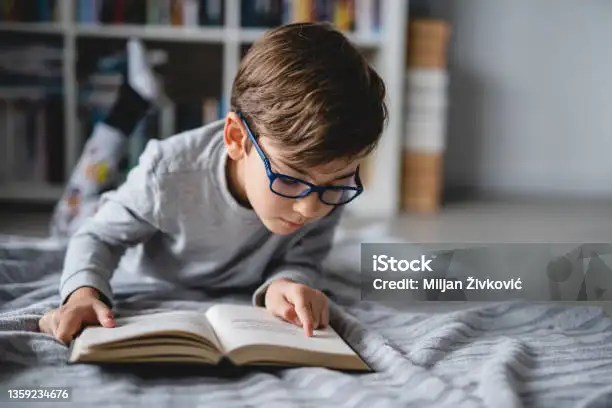
I recently recommended the book The Amazing Generation to my ten-year-old son, Avyaan. Surprisingly, he took it to school. And finished it in one day. This does make sense, however as his school limits “technology” to a basic computer skills class three times a week, and he has plenty of time to read there. And he actually forgets to charge or even wear the communication watch we got him for drop-offs and events.

Which honestly says two things:

  1. The book is incredibly readable.
  2. My child is not yet screen addicted
  3. And my child may already be concerned about the collapse of civilization.

And so am I: A few months ago, I went to a supper club where guests played one of those “get to know you” icebreaker games. You walk around with a sheet of questions, trying to make meaningful human connection while balancing a cocktail and pretending this doesn’t feel like corporate team-building with better lighting.

One of the questions was:
“What is the most amazing thing you’ve ever seen?”

I asked this of a woman in her seventies. Now, from what I later learned about her, she had lived:

She had traveled extensively.
Raised a family.
Spent time with adult children and grandchildren.
Ran a thriving family-owned restaurant.
Built a career outside the home.
Experienced actual life in all its messy, textured, analog glory.

But do you know what she told me the most amazing thing she had ever seen was?  “A Facebook video.” The most amazing thing she had ever seen was a Facebook video –

Not childbirth.
Not Paris.
Not falling in love.
Not watching her children grow up.

A Facebook video. The video involved a woman getting pulled over by the police for holding her phone while driving. The twist — and apparently the hook — was that the woman did not actually have a right hand. The woman at my table leaned in while telling me this story. There was going to be a “trial,” apparently, because both sides insisted their version of events was true. 

She was riveted. I smiled politely and said, “Wow, that’s crazy.” But internally? I was haunted.

Because this woman had lived a full human life, and somehow the most amazing thing she could think of was content specifically engineered to keep her watching. Not living. Watching other people live. And I say this without judgment because honestly? We are all vulnerable to it.

I fall into that strange microgeneration sometimes called Xennials — old enough to remember life before smartphones, but young enough to have fully merged with technology like reluctant cyborgs.

We remember:

  • house phones
  • getting lost without GPS
  • boredom
  • waiting
  • silence
  • not being reachable every second of the day

Our children do not. For them, technology is not an invention. It’s oxygen.

And that’s why I gave my son the book. And it’s also what makes The Amazing Generation feel less like a parenting book and more like a cultural intervention. The author, Jonathan Haidt, argues that we accidentally traded a “play-based childhood” for a “phone-based childhood.” And once you see this, you cannot unsee it. 

Kids are safer physically than ever before. But emotionally? Many are struggling more than ever. Anxious. Lonely. Disconnected. Chronically stimulated but somehow undernourished. As a therapist and a parent, I see this constantly.

Children are losing opportunities to:

  • tolerate discomfort
  • navigate conflict independently
  • develop confidence through real-world experiences
  • experience boredom without immediately anesthetizing it

And adults are not immune either. We are all being trained, little by little, to confuse stimulation with meaning. To confuse consuming with connecting. To confuse watching life with living it. The thing is, if you ask people about their favorite memories, almost nobody says:

“Honestly? Probably that seven-hour scroll session I had in 2023.”

They talk about:

  • road trips
  • summers
  • inside jokes
  • heartbreak
  • friendships
  • sports teams
  • campfires
  • college roommates
  • babies
  • terrible apartments
  • laughter so hard you couldn’t breathe

Real life.

The uncurated kind. And this is where I think parenting gets complicated. Because we are raising children inside an environment that even we do not fully understand yet. We hand kids devices because everyone else has them. Because we’re tired. Because we need to make dinner. Because modern parenting is exhausting and relentless and occasionally you just need someone to watch YouTube so you can send one coherent email.

I get it. But I also think many of us feel a quiet unease. Like maybe something sacred is being slowly traded away. Not dramatically. Not all at once. Just one scroll at a time. One less conversation. One less bike ride. One less moment of boredom that could have turned into imagination. One less fully lived day.

I’m not anti-technology. I use it constantly. I am literally writing this on a computer while probably ignoring three texts and an unread email from Costco. But I do think we need to ask ourselves harder questions about what kind of childhood we are protecting. And what kind of adulthood are we drifting toward? Because I don’t want the most amazing thing my children ever see to be content optimized for engagement.

I want it to be their actual lives.

The Amazing Generation makes a compelling case that our society has shifted from a “play-based childhood” to a “phone-based childhood” and as a result, has directly contributed to the rising rates of anxiety and loneliness in children. As both a therapist and a parent, I felt it was vital for my ten-year-old son, Avyaan, to read this book; I wanted him to understand that good memories are made through living in the present, off-screen, and true resilience and emotional strength aren’t found in a digital interface, but are built through the messy, unpredictable experiences of the real world.

The most powerful outcome of his reading the book, however, wasn’t just his understanding of the theory, but his immediate application of it: he asked to play a board game together as a family when he came home from school the day I gave him the book. This was a small, uncurated moment—a simple step back into the “oxygen” of real life that the book advocates for, one that gave him deep, quiet contentment and a sense of happiness with himself, who he is, and who we are as a family – even while surrounded by peers with greater tech access.
What Happens When AI Does the Writing?

Recently, The Journal of the American Medical Association, one of the most prestigious journals in medicine, published an opinion piece on the use of AI in scientific writing. The author, John Steiner, discussed the perils involved. 

He talks about how tempting it is for scientists to use AI when they write, given that many of them do not enjoy or feel competent at writing. He mentions that they have been trained in science, not in the humanities, and many have received no formal training in writing….since high school.

The problem is that scientists become successful partially by virtue of the number of papers they get published. Overwhelmed as they are by their other responsibilities – teaching, research, grant writing, etc. – AI becomes particularly attractive as a way to shortcut the writing process. 

But, Steiner says, it is amid these pressures that an important matter is forgotten: scientific writing is a creative act.

And here is where we get to my point in writing this post: this is not the case only with scientific writing. Just about any kind of writing is a creative act – and this is as true in fifth grade or seventh grade as it is at the postgraduate level. If children and teens farm out their writing to AI, they too miss out on the creative act of writing. They miss the opportunity to choose words and, indeed, ideas, carefully and consciously. They miss out on the chance to figure out how to best express their own thoughts.

Steiner quotes the writer, Ted Chang, who pithily said,  “The task that generative AI has been most successful at is lowering our expectations, both of the things we read and
of ourselves when we write anything for others to read. It is a fundamentally dehumanizing technology because it treats us as less than what we are: creators and apprehenders of meaning.”

The creative act of writing involves struggle. It isn’t easy to express ones ideas clearly, to choose the words that convey our ideas best and that sound the most pleasing. But the question is, what happens to people – scientists, or kids – if they do not engage in this sort of mental exercise? What happens to their creativity? And what happens to their feeings about themselves when they submit an article or hand in homework on which they didn’t really work very hard because they used AI to do their writing? What happens to the development of their ability to withstand the frustration inherent in doing intellectual work?

In the end, Steiner comes to this conclusion: “We should not protect young researchers from that struggle, and they should not protect themselves by relying too heavily on AI tools.” And I would say the same of kids. Let’s do all we can to discourage AI use in writing – at home and at school. Yes, AI is good for correcting grammar and spelling mistakes, for finding citations, and even for summarizing the content of articles. But beyond that? Let’s try to help kids (and scientists) to do the writing on their own.

References

Steiner, John F., JAMA. Scientific Writing in the Age of Artificial Intelligence, November 17, 2025.
doi:10.1001/jamainternmed.2025.6078

Chiang T. Why AI isn’t going to make art. New
Yorker. Published on August 31, 2024. Accessed
May 19, 2025. https://www.newyorker.com/culture/
the-weekend-essay/why-ai-isnt-going-to-make-art

Do Your Kids Know How to Learn?

And what cognitive science has to offer

Daniel Willingham is a cognitive scientist, by which I mean, he is an academic researcher who extracts information from psychology, neuroscience, linguistics, philosophy, computer science, and anthropology in an effort to understand the mind and apply the findings to education.1

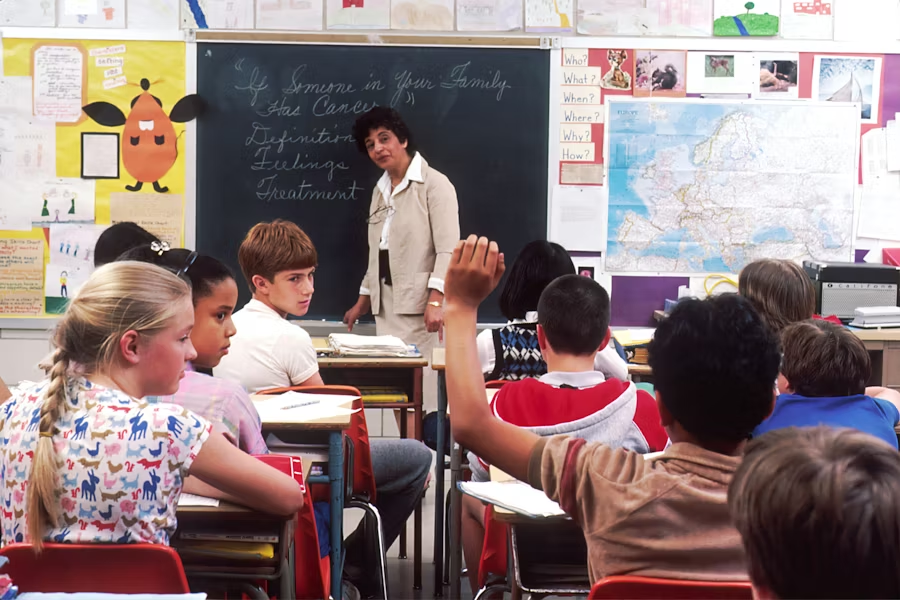
In his book, Outsmart Your Brain, Willingham says something revolutionary: he says that most children are asked to learn without ever being taught study skills, without ever being taught how to organize themselves for studying, without ever having been taught to prioritize what to study, and without ever having been taught what to do when they procrastinate about studying.

And we all know this is true because we were once those children.

Unless your kids go to a very unusual school, this will be true for them as well.

When I went to school, I remember being told that I just wasn’t “trying hard enough”. But Willingham says that wanting to learn has no direct impact on learning.

He says that we often remember things we didn’t intend to learn and we often do not remember things we did want to learn.

He also says that repetition doesn’t guarantee learning.

From junior high onward, Willingham says that school is made up mostly of three basic tasks: listening, reading and taking tests — and these are the three areas of learning he covers in his book.

He talks about so many important things. For example, he describes how to extract the important information from a lecture, a lab or a demonstration. And he goes into detail about how to take notes, and how to organize materials.

Interestingly, he also talks about the dangers of having a computer open in the classroom — even if the student is taking notes on it — and I think we all know what he means: it is tempting to look at other things and do other things while the laptop is open. Willingham suggests that students who are allowed to have laptops open in class put the laptop on airplane mode so they do not do other activities during class

Willingham even gives advice for instructors about how to present material so that it will be clearer and more easily learned. And he gives more such advice in another of his books, Why Students Don’t Like School.

Whether all of his ideas are backed up by research on the particular methods he is recommending is unclear to me. But his books are heavily referenced, he has clearly studied the existing literature on learning, and his own background in cognitive science is extensive.

You may want to read these books. You may even want to donate a couple of Willingham’s books to the principal of your child’s school and ask if they can incorporate some of what he has to say into in-service training for teachers. Furthermore, you may want to ask the principal of your child’s school to institute some new curriculum for the students on how to study and learn effectively, or even suggest that a course be offered in this subject – especially in seventh or ninth grades when learning becomes more complex. I say this because teaching kids how to learn is not a job parents should feel they have to take on entirely by themselves.

In fact, I think it would be hard to impart Willingham’s ideas to your own children. Kids often resist parents’ efforts to help them learn. But if done at school, as part of the curriculum, it seems to me that teaching strategies for studying and learning – including many of Willingham’s ideas – could be extremely helpful.

Teachers receive a lot of information about pedagogy. They go to college to learn how to teach, they go to conferences to learn more and they are often provided with materials during seminars at the schools where they work. But kids, as Willingham says, are rarely taught how to learn.

It is about time that we helped kids learn how to learn, that we helped teachers teach kids how to learn, and that we helped teachers teach in a way that makes it easier for kids to learn.

PS

This book isn’t just for parents and teachers – it can be helpful to anyone still engaged in the learning process – including at work. Check out, especially, the chapter on procrastination!

References

https://joe-kirby.com/2013/03/23/science-learning/

Willingham, Daniel T. Outsmart Your Brain

Willingham, Daniel T. Why Students Don’t Like School

Best Parenting Books 2022

Here’s a round up of the top five best parenting books that were released in 2022. Happy reading!

Best New Books:

1) Brain-Body Parenting: How to Stop Managing Behavior and Start Raising Joyful, Resilient Kids by Mona Delahooke

“Based on years of clinical experience, this book offers a new approach to parenting that considers and centers the essential role of the entire nervous system, which controls children’s feelings and behaviors, in how to raise children.”

2) Peaceful Discipline: Story Teaching, Brain Science & Better Behavior by Sarah R. Moore

“A reflection on the body-brain connection in behavior and why our concept of “consequences don’t work for children, and what to do, within a positive framework, instead.”

3) Raising Antiracist Children: A Practical Parenting Guide by Britt Hawthorne

“An essential guide to raising inclusive, antiracist children from educator and advocate, Britt Hawthorne.”

4) LGBTQ Family Building: A Guide for Prospective Parents by Abbie E. Goldberg

“This easy to read guide offers a comprehensive overview of parenting with regard to the specific complexities, joys, and nuances of being an LGBTQ+ person and parent.”

5) Good Inside: A Guide to Becoming the Parent You Want to Be by Dr. Becky Kennedy 

“A comprehensive resource offering new techniques for modern parenting and how to raise kids to feel confident and resilient.”

And a few oldies but goodies:

(These are a few recommendations but this series continues all the way up to adolescence!)

An Alternative Ending to “The Giving Tree”

Dr. Corinne Masur

The Giving Tree, by Shel Silverstein is a beloved favorite in some families and a book to be avoided in others. The tree gives its apples, its branches and eventually its trunk to the boy who has grown up “loving” the tree. For some people the tree provides an example of selfless love.  For others, the tree models love which knows no boundaries and ends up destroying itself in an effort to give the boy all he wants.


If you or anyone you know fall into the second category, a playwright has written an alternative ending to The Giving Tree just for you!  While possibly not as poetic as the original and perhaps needing some rewording for young children, it does provide a model of what it means to love while also setting self preserving boundaries:
https://www.topherpayne.com/giving-tree