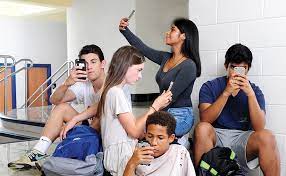
What is TikTok Doing to Us?

The Washington Post conducted a poll of TikTok users and found that over a period of several months, their use, on average, doubled or tripled. For some, it even quadrupled (1).

How does TikTok (and other social media) do this?

According to The Post, a 51-year-old user said, “There are times when I know I should stop scrolling and get work done or go to sleep, but it’s so hard to stop, knowing the next swipe might bring me to a truly interesting video.”

He said that although he had never been addicted to drugs, alcohol, or nicotine, his TikTok use felt like an addiction to him.

We can all relate to this.

And if it is true of us as adults, how much harder must it be for kids and teens to pull themselves away from TikTok – and other social media?

The deck is stacked against us, regardless of our age.

TikTok uses a personalized algorithm to appeal to each person’s tastes, but according to The Post, we know very little about these algorithms and how they do what they do.

So the Post collected data from 1100 TikTok users in order to look at how much time people spend on the app, how many times a day they look at the app and how much time each person waits before moving on to the next video.

They found some amazing things:

First, it takes only watching 260 videos (which can be done in as little as 35 minutes) to form a habit of watching the app. 

Second, after just one week of app use, daily watch time grew an average of 40%.

And third, the more people used the app, the faster their swipe time became.

What are the implications here?

Well for adults as well as for kids, according to The Post, time spent on TikTok replaces time spent doing more productive activities.

This is pretty obvious.

But what is not as obvious are some of the other things that happen when TikTok users spend more and more time on the app.

According to some experts, with increased TikTok and similar app use, self-control decreases, compulsive behaviors increase, losing track of time increases, and using the app while with others also increases.

What conclusions are we to draw from this?

Well, people think that they control TikTok. They think that by swiping past videos they aren’t interested in, they can train the app to give them videos that they like better and they can curate what they watch.


And while this may be correct, the greater truth seems to be that TikTok is controlling us – to watch more, to watch longer, and to watch compulsively, even when we know we have better things to do.


The videos are fun to watch. And the more they become tailored to the watcher’s interests, the more the watcher enjoys themselves, and the more time they are inclined to watch.


And this is true for kids and teens, too.

But the costs are high.

Researchers have found that immersion in a world created by TikTok and Instagram is associated with higher levels of depression and anxiety. And while people may think they are using the apps as a beneficial escape from everyday worries, going on them is absolutely not the best coping strategy. In fact, it has been found that people not only feel more depressed and anxious (2) with app use but they also often feel more bored after using the apps as well as feeling ashamed for having wasted their time.

So – what can you do for yourselves and your kids?


1. Set a daily time limit for how much time you want to devote to TikTok and other social media.


2. Help your kids to do the same. Don’t lecture them about it. Don’t tell them to do it. Just ask them how much time they would like to spend on the apps each day. Ask them if they think going on the apps gets in the way of doing other things. Then ask them if they would like to set a time limit for their use. And if you are setting a limit for yourself, tell them. And if you struggle to stick to it, tell them this too.


3. Look into third-party apps to block or restrict your ability to open the app – and let your kids know you are researching this.


4. Ask your kids if they would like to use one of these apps to help them stay off TikTok and other social media while doing homework and other activities.


5. Promote family time where phones are put away, put in the middle of the table or left at home. This means you, too! And while you are doing these activities, ask your kids their opinions about things. Have discussions. Lots of swiping can inhibit independent thought – and you definitely want to promote critical thinking and the development of personal opinions – about politics, about social issues, about relationships….and about app use.

Good luck.

Cutting down on TikTok use and the use of other social media is extremely difficult, not unlike fighting other kinds of habits and dependencies. It takes time and effort…and repeated backsliding to accomplish.


References

1. https://www.washingtonpost.com/wellness/interactive/2025/tiktok-addiction-algorithm-scrolling-mental-health/?utm_campaign=wp_post_most&utm_medium=email&utm_source=newsletter&carta-url=https%3A%2F%2Fs2.washingtonpost.com%2Fcar-ln-tr%2F453509f%2F68e53a68fe87267da2488670%2F63caa51aa2ddf36a686dd4c3%2F14%2F67%2F68e53a68fe87267da2488670

2. Roberts JA, David ME. Instagram and TikTok Flow States and Their Association with Psychological Well-Being. Cyberpsychol Behav Soc Netw. 2023 Feb;26(2):80-89. doi: 10.1089/cyber.2022.0117. Epub 2023 Jan 30. PMID: 36716180.

https://pubmed.ncbi.nlm.nih.gov/36716180/

What Kids Say Would Get Them Off Their Phones

Recently, The Atlantic published a fantastic article about kids and phones in which the authors uncovered what kids in our country really want to be doing with their time.

To look at this question, Lenore Skenazy, author of Free-Range Kids, Zach Rausch, senior research scientist at NYU, and Jonathan Haidt, renowned social psychologist, helped to conduct a Harris Poll in which kids themselves were asked what would get them off their phones and what kinds of activities they prefer.

The results?

Kids want unstructured time to play with their friends.

And their parents aren’t allowing this.

We blame phones, we blame social media, we blame gaming for kids not playing outside and with friends more, but it seems to be time to look at ourselves.

In the poll, 500 kids between 8 and 12 were asked for their opinions. A majority reported having smartphones, and about half of the 12-year-olds said their friends are on social media.

Kids spend more time than we would like on these devices. But what light did the poll shed on this?

Most of the kids polled said they aren’t allowed out in public without an adult. Over half of the 8- and 9-year-olds said they aren’t allowed to go down a grocery aisle alone, and over a quarter are not allowed to play unsupervised with friends.

So what has childhood become, if not a time to play? Well, it seems it has become a series of curated classes and activities aimed at structured learning and eventual success. But what about what we know about experiential learning? The kind of learning that takes place when kids are hands-on, when they make judgments for themselves, when they have to solve problems on their own?

We know that experiential learning is an effective form of learning—and a necessary part of a child’s education. We know, as David Kolb, psychologist and learning theory specialist, said, that the acquisition of knowledge can best be done through direct experience, reflection, and application. Listening to someone tell you how to do something is not as good a way to learn how to do it as trying to do it for yourself. And we know that making mistakes is a better teacher than being warned not to make mistakes. Trying to jump from one rock to the next and falling teaches caution. Being told not to make that jump teaches a child not to try risky things.

Parents have always wanted their children to be careful and avoid harm. But for some reason, parenting has recently become a never-ending surveillance activity. Parents feel they have to be on hand at all times to teach, to warn, and to protect, or they need to put their children in activities where other adults serve the surveillance function.

And why are parents doing this?

Well, it is clearly because of their love for their children—and their anxiety. Parents are so anxious that their children are going to get hurt or kidnapped that they are preventing their children from having unsupervised time. And they feel this way despite the facts. Crime is down in many places, and kidnappings are extremely rare. Of course, each parent needs to assess his or her own neighborhood, but in many areas, more free outside play just cannot be considered dangerous.

And the thing is, kids who are kept inside at home are going to go onto their phones if they have them.

So what is a parent to do?

Well, first, I think parents need to look at their own anxieties to see where they come from and whether they are fact-based.

Second, parents need to think about how they were raised and what kind of play activities they liked and learned from.

Third, parents need to try to allow more unstructured time for their children to play with other kids. Parents will need to make efforts at first to quell their own anxiety about doing this, and then they will need to find opportunities for free play that they feel are reasonable for their own situations.

Fourth, parents need to look for opportunities in their own communities for children to get together and play without too much imposed structure. Is there a park or a program nearby? A community pool or a rec center? Is there a playground where kids can be left for an hour or two?

In Piedmont, California, a network of parents started dropping their kids off at the park every Friday to play unsupervised. Elsewhere, churches, libraries, and schools are creating screen-free “play clubs.” To ease the transition away from screens and supervision, the Outside Play Lab at the University of British Columbia developed a free online tool that helps parents figure out how to give their kids more outdoor time, and why they should.

As Skenazy, Haidt, and Rausch say, “Granting (kids) more freedom may feel uncomfortable at first. But if parents want their kids to put down their phones, they need to open the front door.”

Kids want to be with their friends—and if they can’t do it in person, they’re going to do it online.

References

www.theatlantic.com/ideas/archive/2025/08/kids-smartphones-play-freedom/683742/

Helping Teens With Phone Use

Recently, I read an article in The New York Times about some teens on Long Island who started a newspaper. And what was interesting to me about this was why they did it. Several of them were quoted as saying they were bored with scrolling on their phones.

They wanted something else to do – something to get them out of their bedrooms, interacting with each other and using their minds.

Even teens are getting bored with scrolling.

We all assume that teens love both their phones and the social media they can access on them. But, as it turns out, there are other feelings involved.

Delany Ruston, MD, founder of Screenagers, says she sees a lot of teens in her medical practice who wish they didn’t spend so much time on social media but who find cutting back really hard.

And, in fact, she has put together a program, Boostingbravery.com, to help teenagers support each other in making healthier screen choices.

In her recent post, Dr. Ruston talks about an interesting phenomenon amongst screen users, including teens: people who scroll out of boredom often feel even more bored after scrolling.

But, she says, it’s not just how much teens and others use screens, it’s also how they use their screens.  She quotes Katie Davis of University of Washington’s Digital Youth Lab, who has done research in this area. Davis has found that while scrolling can lead to boredom, active use of screens to create something, message someone, post something meaningful or search for specific content can lead to more positive feelings. 

Evidently, using a screen actively promotes very different feelings than being the passive recipient of news, videos and everyone else’s posts.

How about helping your teen (and possibly yourself…) to learn more about the feelings evoked by these various types of screen use – and to exercise some new choices?

Try some of these suggestions:

1. Take a hint from the Long Island teens who started a newspaper and support your teen if they want to start a project with friends, go somewhere (safe) outside of the house or engage in projects at home. Do all you can to keep these activities going.

2. Tell them about what you’ve learned here. Make sure they know that active use of their screens to create something new can lead to more positive feelings than just passive scrolling.

3. Plan activities outside of the house at least once a day on weekend and vacation days. Make sure you get buy-in from your teen. And try to make at least some of these activities ones that require your teen’s full attention so that you don’t have to forbid phones – but the phones have to be put down as part of the activity. It’s almost summer: try canoeing, kayaking, learning to row, hiking, a picnic, swimming, snorkeling, visiting a local garden, museum or art gallery, planting and taking care of some herbs and vegetables, going to minor or major league games, walking around a nearby city, taking a train somewhere new.

You get the idea.

4. Start the conversation. Talk about scrolling and boredom. Tell your teen if you have felt bored while scrolling or after doing so – and ask them if they have.

5. Ask your teen what new things or new projects they would like to start. If they have no idea, don’t start making a million suggestions – just tell them to think about it and get back to you.

All of these ideas are good – but don’t get discouraged if your teen stares you down and goes back to their phone when you suggest them. Just bring up the issues I’ve mentioned here now and then, and hope for some discussion.

References

Have You Watched “Adolescence”?

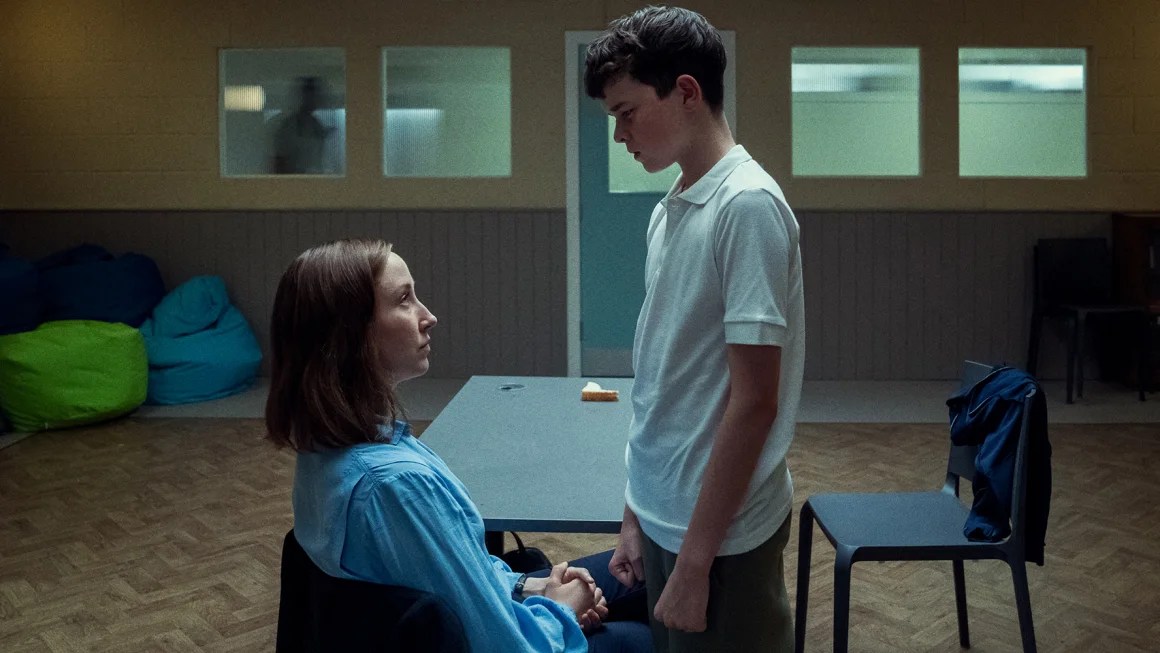
It takes a certain amount of bravery to get through the Netflix mini-series Adolescence. It is compelling but also harrowing, showing a family’s intense pain when their thirteen-year-old is accused of committing a terrible crime.

This show is being thought about, discussed, and written about all over the media. 

But what is the show about? Is it about what the internet has done to childhood? Or is it about mental illness? Or perhaps the intersection of the two?

Spoiler alert: if you haven’t seen the show and you don’t want to know what happens, stop reading here.

In Adolescence, a thirteen-year-old is accused of killing a classmate. And for the first two episodes, it is just impossible to believe that he has actually done this. Sweet-faced and smart, this boy looks to have barely reached puberty and his obvious love and respect for his father make you want to believe that he is a good kid who has been falsely accused.

But as the show moves on, as inconceivable as it seems, the viewer is led to believe that he is, indeed, the murderer.

But, as the viewer you want to know: why did he do it? And how could he have? 

And this is where the impact of social media and the boy’s difficulties with his mental health intersect.

It becomes clear that the victim made fun of the boy. And she did it, as is so often the case now, on social media. And how she did it was subtle, speaking in the secret and nuanced language of adolescence: emojis. Tiny, seemingly harmless symbols – which turn out to convey enormous, humiliating insults. Through these emogis the girl lets it be known that the boy she is targeting is unwanted, unappealing, ugly…  and perhaps even an incel, one of those angry men who can’t get a woman to go out with them and who are resultingly furious with all women as a result. Or, as one boy in the show puts it, a virgin for life.

This is a deeply cutting insult for a boy, of course, but is it enough to lead him to murder? 

After all, teasing between adolescent boys and girls has gone on since time immemorial.

Certainly we can look to the internet for introducing kids to the overstimulation of porn and to concepts such as the incel. We can blame social media for widening the scope of teasing to include everyone in a given school, and beyond, in the larger internet community. And this obviously amplifies the impact of teasing to ever more humiliating heights – but again, is this enough to drive a thirteen-year-old to murder?

We know that this sort of teasing has driven some kids to suicidal actions – and to completed suicides.

But again, in these cases, too, is it just the teasing? And the social media advertisement of the teasing?

I think not.

In the final episodes of Adolescence, we find out some interesting things. We find that the boy in question has a problem with his anger. He can escalate to violence and when he does he can be cruel, impulsive, destructive. We find out that despite his sweet face and his obviously good intellect, once angry, he cannot calm himself down without firm limits from outside of himself. And we find out that his parents did nothing about this.

This was a boy who was allowed to sit alone in his room with the door shut to look at whatever he wanted on his computer, including, evidently, humiliating posts and reactions to his posts by the kids in his class. And this was also a boy whose obvious anger was not seen as anything more than an echo of his father’s anger, who was not helped to understand this anger and who was never provided with any help to learn how to bring himself back from it.

This was a boy like so many children, who was left largely on his own not only to deal with social media but to deal with the darkness contained in social media and with his own darkness, his own rage and his own difficulty containing it. Yes, he was egged on by social media. He was insulted by his peers publicly and he was rejected by a girl he wanted – but he was also neglected by an educational system that was obviously immune to the real needs of children and by a loving set of parents who just did not seem to know whether or how to help him.

The portrayal of this boy, as I imagine the creators of the show intended, is similar to the description of so many of our school shooters. It is the profile of so many adolescents, often boys, who go unnoticed and unhelped by ever more overburdened, underfunded and undercaring educational and mental health systems.

This is the boy who needs us. This is the boy who needs to be seen, and heard, and supported at school and through early intervention. His are the parents who also need support and guidance. And he is the boy and they are the parents we are failing.

What’s Up With Hook-ups?

Hook-up culture has been around for a while. Often fueled by alcohol, these encounters avoid all the the preliminaries – the flirting, the talking, the “dates”.

Kids in their teens as well as young adults are getting drunk and having sex of one sort or another… and then ghosting each other.

But why?

And what can they possibly be getting out of this?

Delaney Ruston of “Screenagers” recently released a podcast and a blog post on this subject and she interviewed Dr. Lisa Wade, author of American Hook-up: The New Culture of Sex on Campus.

According to Wade, kids in high school and college often feel that “everyone is doing it”, referring to hooking up.

So perhaps one motivation for hook-ups is to be doing what “everybody” else is doing.

But there must be more.

Having an intimate encounter with someone can involve allowing oneself to be vulnerable. And allowing vulnerability, often leads to feelings of closeness and connection – which is something most teens want.

But teens who opt for hook-ups are getting the vulnerability and the physical closeness with none of the emotional connection.

Why opt for this?

I wonder if some teens – whether in high school or college – are avoiding something by engaging in hook-ups. I wonder if they are avoiding the anxiety of acknowledging that they like someone, taking the risk of contacting that person and actually talking with them face to face. I wonder if the anxiety and the potential for an awkward encounter – or even worse, for disappointment – is keeping some kids from trying.

But why is this more true now than ever before? Why is there even a hook-up “culture” at this point in history?

Could the isolation of COVID, combined with the usual awkwardness of adolescence and the prevalence of social media have made it harder for many adolescents to socialize face to face?

Of course, it is true that casual dating decreased during COVID. It was harder to meet people and it was harder to get together without the risk of exposure to illness. (2)

But the desire for a relationship did not decrease. This put teens in a difficult position. The longer kids were in isolation, the more many kids looked forward to the rewards of getting back to socializing and potentially finding a romantic relationship. (1)

However, hook-up culture existed pre-COVID and still exists post-COVID. So the appeal of the hook-up must transcend the loss of opportunities and the lack of social skills kids experienced as a result of COVID.

So this leaves me to speculate: I think there was always a certain amount of hooking-up. I think that kids have been having substance-fueled sex for a long, long time. But perhaps the prevalence of hook-ups now points to something more malignant.

At this point, many teens and young adults seem ill at ease with one-on-one interactions. And this is true even when it comes to the phone. Recently I read that one teen likened hearing his phone ring to being stabbed in the chest. People in this age group do not like to talk on the phone. They seem to lack confidence in their ability to hold down a one-on-one conversation. Even worse, for some, is getting together. Many kids prefer to stay on their beds. Many don’t have “friends” anymore – if they have anything, they have remote friends they talk to on social media or with whom they play video games. At best, they have “friend groups”. While sometimes they may get together one-on-one, more often the group does things together.

Something has happened to teens and young adults in regard to their ability to tolerate contact and intimacy.

And it is not just a few teens and young adults, it is many.

I suspect the advent of contact through screens has something to do with this – but perhaps not all of it. With the use of video gaming and social media, kids no longer have to leave the house to get stimulation. Now it can be had from the comfort of bed or basement. Social skills are no longer needed. And there are not nearly as many opportunities to practice what social skills a teen may have, or to make mistakes and recover, or to experiment.

I also think that one one-on-one conversations and interpersonal interactions are not demanded of teens and young adults often enough. Parents AND children spend hours each day on their phones. Even when they are together, parents are not talking to kids as much and kids are not talking to their parents as much as in previous generations.

And at school, as I wrote about in my last post, kids are on their phones at least some of the day, rather than interacting with each other. And at some schools and in some classrooms, kids use their computers rather than engaging in classroom discussion and debate.

The malignant thing I referred to earlier is not just the proliferation of screens, it is not just the aftermath of the isolation of COVID, it is our teenagers’ loss of faith in themselves as social beings.

And it is contributed to by our allowing teens to hide behind screens, stay on their beds, and avoid interpersonal interaction.

I think hook-ups, in many cases, are the workarounds that many kids have found to get to have sex and contact without having to utilize much in the way of social skills.

But hook-ups are a desperate workaround, a decidedly second-rate, often risky, and more often hurtful and disappointing way to try to get something rather than to risk what kids fear: getting nothing in the way of romance or sex.

One male student said:

“Most of the time, it’s not a fun experience. Sometimes it’s great, but more often than not, people are kind of left feeling maybe a little bit regretful, kind of embarrassed, awkward. There’s pressure to hook up, but if you don’t, you feel like you’re missing out.” He added, “If you hook up with someone and they don’t text you after, that can be pretty hurtful.” 1

This is only one student, but I suspect he speaks for many others. Hook-ups meet a basic desire for sex, but they don’t meet any of the other needs that teens have for interpersonal relatedness and connection, for affection, support, and validation.

References

1 Ruston, Delany. 2025. Is Hookup Culture Really the Norm? Feb. 18.


 Kuperberg, Arielle (2022). Dating during COVID-19: A sociologist’s perspective.


2 Breaux R, Cash AR, Lewis J, Garcia KM, Dvorsky MR, Becker SP. Impacts of COVID-19 quarantine and isolation on adolescent social functioning. Curr Opin Psychol. 2023 Aug;52:101613. Epub 2023 Jun 1. PMID: 37364468; PMCID: PMC10232930.Ki

How Much Time Do Teenagers Actually Spend on Their Phones at School?

Screen use amongst children and teens in the US and elsewhere is an enormous concern – with adolescents aged 13 – 18 spending an average of 8.5 hours daily on screen-based media. This is at least one-half of all their waking hours – and it is time that could be spent in so many other ways.

And some of these 8.5 hours of phone use take place in school.

Yes, kids are on their phones at school.

The issue of whether kids should even have their smartphones with them during the school day is one that comes up again and again – including in this blog. Some parents feel it is a safety precaution in case their children need to get in touch with them. Others feel that phones are a distraction from learning and are better left in lockers or in a central location at school.

But there has been very little good data concerning how much time kids actually spend on their phones at school to date.

Finally, however, there is a study which looks at this. Just published in the Journal of The American Medical Association Pediatrics, this study begins to help us understand kids’ phone use at school.

The researchers not only answered the question of how much time kids spend on their phones but they also looked at what kids are doing on their phones during school hours.

As it turns out, kids spend an average of an hour and a half on their smart phones over the course of a six-and-a-half-hour school day. But a quarter of kids spend more than two hours on their phones while at school. And the most looked at apps or categories of phone use are messages, Instagram, video streaming, audio and email.

These are very revealing findings. They are not surprising….but they are shocking. The researchers who performed this study said, “Parents and adolescents may derive benefit from access to phones for communication and learning purposes during school. However, application usage data from this study suggest that most school-day smartphone use appears incongruous with that purpose. The analyses show high levels of social media use during school.”1

In other words, kids are not just using their phones to communicate with their parents during the school day. They are using their phones for the same purposes they use them out of school: scrolling social media, watching YouTube, etc.

It is time for us as a society, and for parents as individuals to think about whether this is the best use of kids’ time – both in school and out.

This is the third in a series on phone use in school.

Footnotes/References

1 Christakis DA, Mathew GM, Reichenberger DA, Rodriguez IR, Ren B, Hale L. Adolescent Smartphone Use During School Hours. JAMA Pediatr. Published online February 03, 2025. doi:10.1001/jamapediatrics.2024.66

Does Your Teen Hate Social Media?

I know, I know. Most teens love it and are on their phones 24/7. But do you have one of those rare teens who is just … over it? Who sees through all the curated images of life? Who is actually tired of sitting on their bed all day and watching life go by through a screen?

Because, if you do, they are not alone.

A New York Times reporter, Alex Vadukul, has written two stories on a group of teens in Brooklyn who started something they call “The Luddite Club”.

Biruk Watling, was one of the founders. Now a student at Temple University in Philadelphia, she says that she and some friends from high school started the club in 2022. They gathered in Prospect Park on the weekends sketching, painting, reading … and most radical of all, talking together. 

They named their club after the bands of English workers who destroyed new machinery in cotton and woolen mills from 1811 to 1816, because they believed the machinery was threatening their jobs. These days, we use the name Luddite to describe people who oppose new technology.

Logan Lane, one of the members of the club in Brooklyn,  said, “Like other iPad kids, I found myself from the age of 10 longing to be famous on apps like Instagram, Snapchat and Tiktok. My phone kept the curated lives of my friends with me wherever I went, following me to the dinner table, to the bus stop, and finally to my bed where I fell asleep groggy and irritable, often at late hours in the night, clutching my device.” Then at 14, she had a revelation while sitting by the Gowanus Canal. She said, “I felt the sudden urge to throw my iPhone in the water. I saw no difference between the garbage on my phone and the garbage surfacing on the polluted canal”. A few months later she signed off on social media and put her smartphone in a drawer. 

The Luddite Club members all got flip phones so they could call people and used their computers for homework – but otherwise, they tried to stay away from electronic media.

Now Biruk is recruiting members for a new Luddite Club at college. But just because she and her friends have tried to embrace this lifestyle does not mean they find it easy.

 Sometimes they feel left out. Odile Dexter, another founding member of the club says that she has resisted using technology since high school but she is sad that everyone at college uses dating apps and she cannot. Another member said she tried to adhere to the lifestyle but ended up getting a smartphone because she needed to order an Uber now and then. Many of the club members agreed that it is harder to live without using a smartphone these days.

It’s just not easy giving up technology. It’s omnipresent – but that hasn’t stopped more clubs from forming. There is one at Brooklyn Tech, one at Telluride High School in Colorado, one at Oberlin College and one each at high schools and colleges in Seattle, West Palm Beach, Florida, Richmond, Va., South Bend, Indiana, and Washington, DC.

If you have a teen who’s had it with social media, tell them about these clubs and maybe your teen will want to start one, too.

And if your kids are still loving their phones, try these ideas, as suggested by Andrew McPeak, who wrote an article on the subject:

1. Expose your kids to shows and articles about children and teens who are making different choices about their use of social media.

2. Bring up the question of how your kids’ media choices are affecting them and encourage your school to do the same.

3. Plan device-free activities, times, days and vacations for your family – and this means you too!!!

For more info on Luddite Clubs:

https://www.theludditeclub.org

References

Vaduku, Alex. Still averting social media’s grip. The New York Times, February 2, 2025.

McPeak, Andrew. A new wave of teens are pulling away from social media. Growing Leaders. https://growingleaders.com/a-new-wave-of-teens-are-breaking-away-from-social-media/

Teens and Social Media – AGAIN!

This post is by Ana Hagstrand

Ana is a psychologist in private practice in Philadelphia. She is the mother of three children and she enjoys outdoor adventures.

At what age should we let kids use social media?

As a clinical psychologist and mother of three, I’ve been grappling with this question. My oldest child is 13 and he claims that everyone has Snapchat except him. 

Looking at the scientific research, the wider mental health trends, and what I know about adolescent development, I’ve decided he will have to wait until he’s at least 15.

Here’s why: 

First, there are concerning trends in adolescent mental health. The rates of teen anxiety, depression, and suicide have risen significantly over the last decade. Numerous studies show that teens report persistent feelings of sadness and hopelessness at significantly higher rates and that mental health professionals are diagnosing higher rates of depression. Most alarming is that the suicide rate for 10-14 year olds increased 139% for girls and 70% for boys over the last decade. And what does this have to do with social media?

Adolescent mental health started to decline sharply in 2012, which is the year that we started using the word “selfie” and the year that Facebook acquired Instagram. 

Is there evidence that social media has played a role in these worrisome mental health trends?

Yes. 

You may recall that Facebook was initially only for college students and was rolled out at different colleges at different times over the course of two years before opening up to the general public. One study found that the rates of anxiety increased by 20% and the rates of depression increased by 7% at each college in the year following the introduction of FB. 

Several recent studies actually demonstrate causation, not just correlation between social media use and decreased mental health, and the apparent pathway is social comparison. In other words, use of social media causes people to engage in more social comparisons and fear of missing out (FOMO) and this in turn increases depressive symptoms and decreases self-esteem, body image, and self-perceived social acceptance. 

And it has been found that the harmful effects of social media are stronger (worse) for girls.

Some of the studies I just referenced were done on young adults, and it’s important to consider that there are several reasons why social media may affect adolescents even more than it affects adults. During adolescence, the brain regions associated with attention, feedback, and reinforcement from peers become more sensitive as teens navigate identity formation, acceptance, and social status. This is a normal part of adolescent development, but with so many peer interactions occurring online for all to see and possibly even enshrined forever on people’s social media feeds, the stakes seem higher than they were pre-social media. If adults feel pressure to curate a certain image on social media, of course it’s even more fraught for teens.

Teens have always had a tendency to think they have an audience that notices their every blemish, and we used to try to quell their anxieties by telling them that no one is paying nearly as much attention to them as they think. Now that argument doesn’t work. 

Social media, which started out as a vehicle for social connection seems to have turned into a way of quantifying social status.

So why do I recommend waiting until age 15? 

One large study in the U.K. found developmental windows of increased sensitivity to the harmful impact of social media. Apparently, the onset of puberty and the onset of adulthood are especially vulnerable times: age 11-13 for girls, age 14-15 for boys, and age 19 for all genders.

I’m under no illusion that we can control our children’s online activity at age 19, but let’s try and hold out until at least age 15. When many teens in a community are on social media, it impacts everyone negatively, even those who don’t use it, so I think it’s worth thinking through this together as a community of parents. Most of us have felt the dopamine-fueled pull of social media on our adult brains, and I doubt we will regret holding out a little longer before unleashing it onto our kids. 

Adolescence, with all its developmental tasks and hormones is certainly hard enough.

References:

https://www.nature.com/articles/s41467-022-29296-3(Developmental windows)

https://pubmed.ncbi.nlm.nih.gov/27940701

(national trends depression)

https://www.cdc.gov/childrensmentalhealth/data.html

(national trends anxiety)

https://stacks.cdc.gov/view/cdc/101761

(national trends suicide)

Makarin, Alexey. American Economic Review, Volume 112, No. 11, 2022

(Facebook rollout study)

Kleemans, Daalmans, Carbaat, & Anschütz (2018). Picture Perfect: The Direct Effect of Manipulated Instagram Photos on Body Image in Adolescent Girls. Media Psychology. 

(manipulated photos on IG lead to worse body image in girls)

González-Nuevo, C., Cuesta, M., Postigo, Á., Menéndez-Aller, Á., & Muñiz, J. (2021). Problematic Social Network Use: Structure and Assessment. International journal of mental health and addiction.

(social comparisons on SM and depression)

Samra, A., Warburton, W. A., & Collins, A. M. (2022). Social comparisons: A potential mechanism linking problematic social media use with depression. Journal of Behavioral Addictions.

(social comparisons on SM and self-esteem)

Lee (2022). The effects of social comparison orientation on psychological well-being in social networking sites: Serial mediation of perceived social support and self-esteem. Current Psychology. 

(social comparisons on SM and mental health)

Burnell, George, Vollet, Ehrenreich, & Underwood (2019). Passive social networking site use and well-being: The mediating roles of social comparison and the fear of missing out. Cyberpsychology: Journal of Psychosocial Research on Cyberspace.

(causal pathway: passively using SM🡪social comparisons and FOMO🡺worse mental health)

https://www.nature.com/articles/d41586-020-00296-x

(social media in a community hurts everyone)

https://docs.google.com/document/d/1w-HOfseF2wF9YIpXwUUtP65-olnkPyWcgF5BiAtBEy0/edit

(causation, girls)

More Social Media Advice From A Teen


So, remember that 19 year old I wrote about a few weeks ago? The one who gets her friends to pile their phones on the table when they eat together so that no one looks at their phone during the meal?  Well, she has more ideas.

This week she told me that she had an exam that she was worried about.  So what did she do?  She decided to analyze her own social media use.

She looked at her phone to see what apps she spends the most time on – and found out that by far, she looks at TikTok the most.  Very scientific approach, right?

So she deleted TikTok for two days prior to the exam so that she would get those hours back – and use them for studying.  

Self control being what it is, she knew she could not stop herself from looking at Tiiktok if it was still on her phone.  

Teens of all ages as well as young adults have told me that they simply cannot stop themselves from checking social media – sometimes as much as every 2 or 3 minutes. 

Young teens have complained to me that they just don’t know what to do.  They know they shouldn’t do this – but they find themselves doing it anyway.  And for some highly motivated kids, this is distressing – they want to do well at school and they know their use of their phones is getting in the way.  One young teen boy cried in my office as he told me how guilty he felt – he knew he should be studying more, reading more and doing other things that were better uses of his time but Youtube was sucking him in every day after school and he just couldn’t stop.

People have compared social media use—as well as computer gaming, Youtube and other computer activities— to an addiction.  And I tend to agree.  The in-the-moment pleasure derived from doing these things, the immediate surge of gratification gained from looking at these sites is so powerful.  Reading and studying?  They don’t stand a chance. 

So, parents, you are in a difficult spot.  Recommending that kids delete their apps, even temporarily, will be met with protest and push back.  What are you to do?

Maybe just leave your computer open to this post for a while and let you kids walk by and see it for themselves…..

Or talk with your kids about the ideas here, just to see what they think.