Bumbum Cream for YOUR Kids???

Recently I became aware that children, tweens and teens are buying beauty products….like firming creams for their skin.

Teens?

Doesn’t surprise me.

But children and tweens?

Mystifying!

Are your kids asking for $48 a tub face or body cream?

And if so, what do you do?

In a New York Times article published recently, a 15 year old was quoted as saying, “All of my friends have it”.

Do they really think their bums need firming?

Why do they think they need something which advertises itself as “visibly smoothing and tightening the appearance of your skin”?

These kids have the tightest, most beautiful skin of anyone on the planet!

This is concerning to me.

I really do think that if your child is asking for this, you might want to open a discussion of why they want it. And if the answer is, “because all my friends have it”, you might want to ask why they think their friends all want it.

This brings up the topic of body image and the importance of external appearances. It can open the question of why our children think these things are important (if they do) and how they feel about their own bodies and appearances. Do they have worries about how their skin looks? Or do they have worries about other parts of their bodies?

It can also bring up the topic of aging. Are kids, even young kids, worried about getting older and what they will look like as they do?

These things are not easy to talk about. Your children may resist. They may say, “just forget it” and then save up their own money to buy the cream.

But these topics are important, as we all know.

And what’s more, this may be an opportunity to talk about money and what is worth spending money on and what is not.

We can also talk about advertising and how companies take advantage of people’s worries to get them to buy more products.

And THIS may lead to a discussion of values – what you value, what you want your child to value and what your child thinks about values.

On the other hand, you may just feel like one of the parents quoted in the New York Times article who said, “It’s not that serious, they’re just trying to have fun.”

For more see: https://www.nytimes.com/2024/06/16/style/sol-de-janeiro-brazilian-bum-bum.html

Trickle Down Anxiety

By Dr. Corinne Masur

There is a theory in economics which says that benefits for the wealthy trickle down to everyone else. Whether you agree with this or not, don’t worry, because I am not going to be talking about economics here.

What I am going to talk about is the idea that one mother brought up in our parents’ group today. 

She said that she thought her daughter was affected by a term she invented: “trickle down anxiety”. 

And what she meant is that she thinks her own anxiety and that of her husband are affecting their daughter – and possibly even their infant son.

Just an hour earlier she had been talking about how unsafe the world feels right now with the wars and with the divisiveness in this country, including – especially – on several of our nearby campuses here in Philadelphia where there have been demonstrations and evidence of hate speech over the last several days. 

Another mother brought up how all of us lost our sense of safety during Covid and how now that we might just be getting back on our feet, we are facing new sources of anxiety – and even danger.

What are parents to do?

These ARE anxious times.

Well, there is no perfect answer to this question. 

But there ARE some things that could be helpful:

– First, just check in with yourself: Are you feeling anxious? Are you worried about the war in Israel and Gaza? Or the one in the Ukraine? Are you worried about the political situation in this country? Or the safety of your neighborhood? Are you worried about your child’s safety and well-being? Does this hit you in ways that overwhelm you? And is this beyond how you imagined you would feel as a parent? 

– Second, if you find that you ARE feeling anxious, take note of how this affects you: Does it make you more irritable? Does it make it hard for you to get to sleep or stay asleep at night? Are you interacting with your children or partner in a way that demonstrates your anxiety and/or irritability and/or tiredness? Are you getting in more arguments? Are you finding yourself disagreeing over small things? Or are you showing that you are anxious in other ways – do you look worried? Are you eating less? Or more? Are you checking your newsfeed more frequently than you used to? 

For most of us, the answers to some or even all of these questions is probably yes.

And if this is the case, acknowledge it: acknowledge it with yourself and then acknowledge this with you partner and children.

Even young children, three or over, can understand it if you say, “Mommy/Daddy has been more worried (or more tired) today, I’m sorry I was cranky with you”.

– Third, ask yourself whether your children are more anxious these days. Do you think they could be experiencing your anxiety and then feeling anxious themselves? Are they having trouble getting to sleep or staying asleep? Are they more irritable than usual? Are they asking you any questions about whether you’re OK?

And finally, is there anything to do about all this?

Let’s me ask just a few more questions:

What do you need for YOUR anxiety? 

Because if you can get what you need, there might be less trickle down from you to your children.

Do you need more support from your partner or friends? Do you need a place to talk about your anxiety? Would talking for a bit after the children go to sleep (whether with your partner or with someone on the phone) help? Or might you consider cutting back on the amount of news you consume? Do you need to protect yourself from the media onslaught more than you are currently doing? Or does all of this sound insufficient and might you need to consult with a professional about your anxiety?

Think about it.

Our anxiety DOES affect our children. They feel it. It DOES trickle down And when the trickle reaches them they feel more anxious without even knowing why.

Once you have gotten some of your anxiety taken care of, talk to your children about how you’ve been feeling. See if they volunteer anything about how they’ve been feeling. Reassure them that even when you have worries, they are safe. 

Repeat this as often as necessary. 

The world is scary right now. But we can do some things to help ourselves and to reassure our children.

Talking To Your Children About the War in Israel and Gaza – Part I

By Dr. Corinne Masur

Mohammed Abed/AFP via Getty Images

Our world feels particularly frightening right now – two major wars, several smaller armed conflicts (Sudan, Ethiopia, The Sahel, the Mexican and Central American drug and gang wars) and so many natural disasters.

Do we talk with our children about these things?

And if so, how?

And more specifically, for those of us personally affected by the latest war in Israel and Gaza, how do we handle our own feelings and those of our children simultaneously?

I cannot pretend to have definitive answers. 

The attack on Israel came as a shock to all of us. 

The war there is just days old. And we are all trying to absorb and process the magnitude of the horror.

We may be filled with anxiety – or sadness – or anger. We may be feeling all of these emotions in succession and combination. 

When we hear what’s happening and see the images of beautiful young people who have been kidnapped or killed or the videos of devastation, we may feel physically ill. 

So how do we deal with our own emotions? And then how do we address the situation with our children?

I have some suggestions.

For those of us who are directly affected because we have family and friends in Israel or Gaza, the situation is the hardest. We have the competing interests of trying to track our loved ones while also wanting to protect our children from being overwhelmed by the events in Israel and by our own fear and horror.

We need to be free to experience our own feelings – while also needing to be in control for our children. Because we know that in order for our children to feel cared for and safe, they need to know that we are still able to be in control and in charge.

This is an extremely difficult dillemma.

And for others of us, not so directly affected, we are still full of emotion – outrage, fear, terrible sadness.

It is tempting for many of us to keep the news on all day, to check our newsfeeds on our phones and computers constantly, to read the newspaper and to talk about the war at home, on the phone and together with friends and family.

But is this the best thing to be doing – for ourselves? Or for our children?

Let me share my thoughts on this.

If you have children under the age of eight, for their sake, and for your own, try the following:

– Turn off the TV news and keep it off. Repeated exposure to violence, even on the television or phone, can be traumatizing – for adults as well as children.

– Even when the terrible events we see are not happening directly to us, we can be traumatized just by the act of seeing them or hearlng about them. This is called vicarious traumatization. 

– If you must check the news on your phone, do so in private – if you have to take a bathroom break to do so, then do that – and do so only a few times per day, if possible.

– Talk to friends and relatives about the war out of earshot of your children.

– Don’t think you can be in the same room with your children and talk in a low voice about the war – when you do this children often understand that there is something being said that they aren’t supposed to hear – and they will try very hard indeed to hear what it is.

– If you go to a restaurant with your children and they have the news on the TV over the bar, either go to a different restaurant or ask the waiter privately (ie, not in front of your children) if they would be willing to change the channel.

– Over the next few weeks, if your child is going on a play date at a friend’s house, ask the parents of the child your child is going to play with what they do in their home about having the TV on or talking about the war – before you child goes over.

– But also, be proactive. Talk to your children (starting with those around age 3 and up) directly about what is happening. 

– Tell them the facts in simplified form.  For example, “A group called Hamas started a fight with Israel on Saturday. Now Hamas and Israel are fighting and it is very hard for the people there.” You can add a few specific details about your friends and relatives – but not too many, and none that are graphic. And you can say, “Daddy and I are very worried about this”.

– Answer your children’s questions – and they will have many. 

– But keep it simple – and leave out the disturbing details.

-Use very simple language. Children this age do not know where the Middle East is or what a terrorist is. Leave out the facts about children and families being killed or taken hostage. These details are too frightening for young children.

– When they ask if your friends or relatives will be safe, again, answer honestly. 

You can say, “They are doing everything they can to stay safe” or “They are trying hard to stay safe, but right now we don’t know what will happen. War is scary for everybody”.

– If they ask, reassure your children that the war is far away and that they are safe in your home.

And if you have children over the age of eight, you can try these:

– Turn the TV news off and keep it off – again, for your own sake and for theirs.

– Keep adult conversations about the war either out of earshot of your children or limited to what you feel they can hear without becoming overwhelmed with fear.

– Address the situation directly with your children.

– Ask your children what they know about the war.

– Ask them what they think about the war.

– Ask them what their friends are saying about the war.

– Ask them what their friends have seen on social media about the war (sometimes it’s better to ask what friends are doing rather than asking your shile what he/she/they are doing).

– And If they ask, tell them what you think about the war. But try to stay as steady as you can during these conversations. This may be very hard. But, again, the most frightening thing for children of all ages is seeing their parents feeling overwhelmed or out of control.

– This can lead to a wider discussion about war in general. Or about the history of the relationship between Israel and the Palestinians. Or about the development of Hamas. These discussions can add much needed context for what is happening right now.

– If you are sad about the war, do not be afraid to share this. Even crying in front of your children is fine. It shows them one way to express the scared and upset feelings both you and they may have.

-If your children have their own cell phones, suggest that they check the news infrequently, if at all. 

– If they are teenagers and/or if they are particularly interested in what is going on in Israel and Gaza, encourage them to look at the reliable news sites and to stay away from the sensationalized news – including stories and images on social media – and tell them why you don’t think it will be helpful for them to look at these sites. You can tell them openly that you feel these images are just too horrific and too upsetting for anyone of any age to look at. You can also say, that looking at the images plays into the terrorist’s desire to terrorize people. However, be prepared for the possibility that you will have limited influence with your teenagers’ viewing decisions.

– Check for signs of your older children overwhelming themselves with painful media. Try to be aware of whether they seem particularly anxious or overwhelmed. And if they do, sit down and talk about what they – and you – are feeling. Try not to argue over social media use and this sort of thing at this time. 

– And try to take care of yourself. Try not to overwhelm yourself with information or with constant vigilance and discussion – if this is at all possible for you.

Sending fervent wishes for peace to all –

Corinne Masur

For more on this topic:

https://www.npr.org/2023/10/11/1205017249/how-to-talk-to-children-violence-israeli-palestinian-gaza-hamas

Further Resources:

How to Talk to Kids About What’s Happening in Israel Right Now:
(An overview of how to address age groups developmentally)
 
Helping Children Cope After a Traumatic Event: A recovery guide for parents, teachers, and community leaders

(From the Child Mind Institute)
 
Israel at War- Guidelines for Families and Individuals

(A guide from Ohel, a social service agency serving children and families in Brooklyn. )
 
Helping Children with Tragic Events in the News

(From PBS Kids)

Talking to Your Kids About Sex

By Dr. Corinne Masur

Today in our parenting group one Mom brought up the fact that her son had asked if all girls have to have babies.

And another Mother told the story of her daughter asking how gay men have sex – while sitting at a holiday dinner with all the relatives.

So…we talked about when and how to talk to kids about sex.  

As it turned out, the girl who asked about how gay men have sex was sitting across the table from her uncle and his male partner.

This could have been awkward…

But, interestingly, it wasn’t. 

The Mom in question answered her daughter’s question and the uncles confirmed the answer.

This kind of openness is not possible in all families – but it was in this one because both the Mom and the uncles consider themselves sex positive and are fine talking about sex.

In some families, maybe even most families, there CAN be awkwardness. Some parents avoid the discussion. Some let school provide the forum for discussion. Some get books and use them to lead the discussion. 

Like the other Mother, the one whose son asked if girls have to have babies did not have a problem answering. Or perhaps this was an easier question.

But in our group this Mom did tell us the story of her own parents’ struggle with talking to her about sex. Her parents were immigrants and let’s just say the talk was extremely short and a pamphlet was involved.

There really is no one right way to talk with your children about sex. But it is important to do it.

Let’s break this down to make it easier:

If one of your goals is to help your children to not feel embarrassed or awkward about the subject, then you might want to try thinking about how you are going to approach the questions before they come up.

You may want to look at some books aimed at children your childrens’ ages – before your children (or you) need them.

You may want to talk with your partner about what you want to say when the questions come up.

And you may want to reflect on your own feelings about talking about sex, sexuality and bodies before you talk with your children. 

If you feel embarrassed or awkward, maybe you can try to reflect on why this might be. And perhaps you can think about what might make you feel less embarrassed or awkward.

But remember – the first time your child asks about their own anatomy or yours, about sex or about having babies, you do not have to make it into a big deal – you do not have to have what used to be called, “the talk”. 

Just answer the question at hand.

There can be many discussions about bodies and sex and sexuality over the course of your children’s childhoods. 

And if using a book is helpful to you in talking to your children, if this will make you feel more confident about the discussion, I have some suggestions (below).

 But also remember:

– Your child will ask about their body, other people’s bodies and sex when they are ready to know. You do not have to initiate the discussion.

– But the first questions usually come early. Two and three year olds want to know about bodies. Children are observant and curious at this age. And at this point, they are not usually asking about sex.  They just want to know why you look one way and they look another. They may want to know why you have breasts and they do not. Or why Daddy’s penis is bigger than theirs. Reassuring answers such as “we all have something – boys (or people assigned as male at birth if you prefer) have a penis and girls (or people assigned as female at birth) have a vulva and a vagina” or “you will have a big penis like daddy’s when you grow up” (for people assigned male at birth) are best. 

– As the questions pop up, just answer the specific questions your child is asking. Don’t feel pressure to say more until they ask further questions.

– Make your answers appropriate to your child’s age and in accordance with the culture of your family. For little kids, a simple, factual answer is best. For older kids you can add more detail.

– Use the correct names for the various body parts.

– As children get older, don’t be afraid to talk to them about the feelings around liking another person. Help them to distinguish between liking someone as a friend, liking someone for romantic reasons and liking someone because you are attracted to them. And when doing this, mostly just listen. 

– If your child “likes” someone for the first time, just ask them to tell you more about it. Ask them what it feels like to like someone.

– Once your child gets to be ten or eleven, you will probably have had numerous conversations about bodies and sex and sexuality. But if they haven’t asked, or if, for one reason or another, you have not explained very much to them, make sure your child, no matter their gender, knows about what happens with bodies as they mature. In this case, you can bring up the subject if they have not. Make sure they know about how breasts and penises grow and about when menstruation and ejaculation start to happen and why they happen.  And after you talk about these things, feel free to leave a couple of books in obvious places around the house so that they can find out more if they don’t want to ask again.  But hopefully, they WILL ask – again, and again, and again.

– By twelve, or thirteen (and you are the best judge of when to do this) if you have not already talked about how sex works, it’s time to do so. Or, if you have only explained it in the simplest of terms, it is time to go into more detail. Again, you can bring this up. At the same time, you can start to introduce the idea of consent into the conversation. The book by Al Vernaccio, listed below, will help you with how to present some of the ideas you may want to convey about various sexual possibilities and about consent. 

– And most importantly, make sure you tell your children that you are glad they asked the questions they asked and you are glad they were willing to listen to what you had to say – so that they will feel welcome to ask again in the future when they want to know more.

Helpful Books:

The Care and Keeping of You: The Body Book for Younger Girls

The Girl’s Body Book: Everything Girls Need to Know for Growing Up, Kelli Dunham

The Body Book for Older Girls, Cara Natterson

The Boy’s Body Book, Kelli Dunham

The Boy’s Body Book: Everything You Need To Know for Growing Up

For Goodness Sex: A sex positive book about raising healthy, empowered teens, Al Vernaccio

Best Parenting Books 2022

Here’s a round up of the top five best parenting books that were released in 2022. Happy reading!

Best New Books:

1) Brain-Body Parenting: How to Stop Managing Behavior and Start Raising Joyful, Resilient Kids by Mona Delahooke

“Based on years of clinical experience, this book offers a new approach to parenting that considers and centers the essential role of the entire nervous system, which controls children’s feelings and behaviors, in how to raise children.”

2) Peaceful Discipline: Story Teaching, Brain Science & Better Behavior by Sarah R. Moore

“A reflection on the body-brain connection in behavior and why our concept of “consequences don’t work for children, and what to do, within a positive framework, instead.”

3) Raising Antiracist Children: A Practical Parenting Guide by Britt Hawthorne

“An essential guide to raising inclusive, antiracist children from educator and advocate, Britt Hawthorne.”

4) LGBTQ Family Building: A Guide for Prospective Parents by Abbie E. Goldberg

“This easy to read guide offers a comprehensive overview of parenting with regard to the specific complexities, joys, and nuances of being an LGBTQ+ person and parent.”

5) Good Inside: A Guide to Becoming the Parent You Want to Be by Dr. Becky Kennedy 

“A comprehensive resource offering new techniques for modern parenting and how to raise kids to feel confident and resilient.”

And a few oldies but goodies:

(These are a few recommendations but this series continues all the way up to adolescence!)

Coming Home to New Traditions

By Victoria Cano

I was never a cooking kid. Despite the many invitations into their separate kitchens I always refused my parents offers to help cook. I never made paprikash csirke with my mom or baked ziti with my dad. The kitchen and all its mysteries was the domain of parents. Except on Christmas. Because on Christmas we didn’t cook. We baked. 

Cooking, to me, was the Wild West. Full of strange ingredients, relying on instinct and secret troves of knowledge. Baking was different. There were a key set of players that could be rearranged into a thousand different delicious things. There were steps, there was order, there was control. And as a kid, in that, I found magic. 

For the past seven years I have missed those baking Christmases. I wasn’t with EITHER parent – both because I lived abroad and because of the pandemic. 

For many people, like me, this will literally be the first holiday season they have together with family in years.

And while that is so so wonderful. It presents a challenge many of us weren’t expecting. In the absence of our routines, in a world turned topsy turvey, traditions were rearranged. Adapted. Transformed. As were relationships and rituals. 

Right before the pandemic my mother had gone on a few dates with a guy, I barely remembered his name. Now I know him as Peter, my stepfather, and the man who made her feel loved enough she decided to move in with him after twenty years living on her own. The era of going to my grandmother’s house for the holiday too has ended (she’s moving in with my mom.) And my father, who, over the 25 years of their divorce only ever lived down the road, is moving the day after Christmas to Albany, 3.5 hours away.

There is a part of me that just wants to yell ‘Stop! Hang on a second! Let me catch up.”

At first, I felt like that little kid being invited back into my parents kitchen to cook.I don’t understand. Where is everything as I left it? Where is it all going? 

I’m a thirty year old kid and having these questions, these before bedtime fears. So too may many of your little ones. Routine and ritual can be so beneficial and comforting to a child. 

Kids love baking. 

So how do we talk to our children, both little and big, about life, the holidays as they now are, about a world where traditions sometimes have to change and rearrange?

Every year as I was growing up, my mother and I celebrated advent (the entire December month long lead up to Christmas.) Since I was 18 and moved away, we haven’t had much of a chance to spend that time together. I haven’t gotten to read to her her favorite Christmas Story (A Child’s Christmas in Wales by Dylan Thomas.) 

This year I have. And when I sit on the couch to do so, my grandmother is there too. And before we begin, Peter lights the Chanukah candles and sings Maoz Tzur. Later tonight I’ll help my father finish packing, moving for the first time to a place that is his and no one else’s. As I sit and read, I can see the advent candles flickering side by side with our menorah. 

It is indeed a strange new world. And that can scare kids and their grownups (and grownup kids) alike. But in the strangeness, new beauty and new wonders can be found. And as I sit and read, looking at the glowing world around me, I am reassured that everything is going to be fine, that the kids are going to be alright. Because they’ll learn that old traditions mesh with new ones, and you can make something together, in which everyone is involved. And, from where I’m sitting, that’s a wonderful thing. 

After I finish reading, I’ll watch the candles go out, wrap my dad his presents to open in his new house, and later I’ll help with the cooking (and the baking!)

Translating Psychoanalytic Terms into Everyday Life:

Aggression in Our Children — It’s Not What You Think!

Most people think of aggression as a bad thing.

Especially when it comes to our children.

“He’s too aggressive” is something you do NOT want to hear from your child’s teacher!

However, it is important to consider other meanings of this word.

Sigmund Freud, the father of psychoanalysis, talked about people having two drives: the aggressive and the libidinal — or loving. He believed that these two drives motivated all human behavior.

Modern day psychoanalysts do not necessarily think this way anymore — but we do still think about aggression — and not necessarily in the way that you think.

Henri Parens, a wonderful child psychoanalyst, moved the field forward by MILES by talking about the aggressive drive as having more than one component.

He talked about the HOSTILE aggressive drive which is the one we normally think about.

And then he talked about the NON-HOSTILE, NON-DESTRUCTIVE aggressive drive. This is the one that provides motivation in life. It is the “oomph” that moves kids forward to learn, to be creative, to get up and DO! It is the thing that drives curiosity and exploration.

All kids need SOME aggression –

They need the first kind in order to be able to protect themselves and to stand up for themselves.

This is the kind of aggression that is built into our DNA in order to ensure that we survive as a species — as well as in our individual lives. Being able to fight back is not a bad thing! It is only when this form of aggression is expressed in excess or in situations that do not warrant it, that it becomes problematic.

And children need the second kind of aggression — the non-hostile, non-destructive type, to learn new things, to move forward in life, to achieve, to do MORE.

The non-hostile, non-destructive type of aggression is so important to kids to provide the motivation to do what they need and want to do. And some children have more of this than others. These are the children that are more active, more curious, more energetic and seem to want to just do MORE.

It sometimes feels like a burden to a parent to have a child like this —

BUT if you can help your child to channel this energy, to use it for productive purposes, if you can support their energy level by engaging in productive activities with them and encouraging them to engage in some on their own, if you can provide them with the materials and activities they need — whether legos or art supplies or science kits or music lessons or teams to play on or model airplanes to build, if you can set sufficient limits to help them to contain their energy and to channel it, you may find that you have a future CEO or artist on your hands!

For more on this subject, see Henri Parens’ book,

Aggression in Our Children

3 Principles Which Will Help You To Nudge Your Children into Doing What you Want –

Or — the gentle art of Choice Architecture

Every day we make thousands of decisions, most of them unconsciously. What we decide often depends on the way in which the choice is framed and the context in which a choice is made. Economists have been concerned with how people make decisions and behavioral economists specifically, among them Nobel Laureate Richard Thaler, were the first to incorporate insights from psychology into their work.

Thaler has developed a whole science revolving around how people make choices.

In its highest application, this science is used to help people to make the choices that are best for them. This is called “Choice Architecture” and Thaler writes about this in his books “Nudge” and “Nudge, the Final Edition”.

Here we are going to apply these ideas to parenting — and for transparency’s sake, I will say that all the ideas in this post are stolen from this brilliant man!!!!

Principle #1

Think about what words you choose when you speak with your child. This can drastically alter what choice your child makes!

For example, when you want your child to go to bed, you say, “Are you ready for bed?”

And your child says……….”No”.

Of course. What do you expect them to say?

Thaler would say that you have constructed the question in the wrong way.

If you want your child to go to bed, you need to say, “OK, time for bed! Do you want to jump into your bed like a frog or slither into bed like a snake?”

Or something like that.

You can give your child a choice. You can give him or her SOME power and agency. But you DO NOT give them a choice about WHETHER or not they go to bed.

Principle #2

To get your child to do what you want them to do, make the choice simple for them.

For example, let’s say your child is five and you want them to get dressed in the morning on their own. And let’s say your child has put up some resistance to doing this.

Ask yourself why.

Investigate.

Figure out what’s making it hard for them to get dressed on their own.

Let’s say you go into their room and realize that their drawers are a mess, full of clothes that are too small or for the wrong season.

Or let’s say you think about it and realize you gave your child six choices about what they COULD wear. You know the old, “do you want to wear a dress or leggings or maybe tights and a skirt or here’s a nice pair of jeans you liked last month.”

No.

In the first case, your child might be unable to get dressed because he or she finds it so frustrating to look through the drawers and find something.

If you need to, help clean and organize the drawers. Put things that are appropriate for the season in the drawer, get rid of all the old stuff and put pants and shirts and socks and underwear in different places so they are easy to find.

And, if you have to go a step further, lay out two outfits — but no more.

Make it easy for your child to do what you WANT them to do.

Look for whatever obstacles are getting in the way of their doing what you want and REMOVE THE OBSTACLES!

Principle #3

If you want to reduce certain aspects of your child’s behaviors, make those behaviors you don’t like harder for them to do.

Let’s say your child likes to run around at night after bath and before bed. He gets himself all excited and then it’s hard to get to bed and the whole process takes too long. You’re exhausted by then anyway and this makes it worse.

Try something new. Pick your child up in his towel (let’s say he’s five or younger) and say something loving and distracting (“oh, you’re so snuggly after a bath”) as you walk to his room. Once there, shut the door(s) without saying anything and then help him get the pajamas on. If you need to, make up a story — this is our bear den — let’s be cozy here. Do you want two books or three? Let’s make this room our princess castle, here’s your princess nightie. ETC.

In other words, get your child to their room without making a big deal of it, shut the doors and don’t let them out.

But do it quietly. And subtly.

This way you reduce your child’s ability to run around wildly. The trip between the bathroom and the bed is obviously a hard one for your child and one that invites running! Removing the obstacles to their doing what you don’t like, in this case, means removing the temptation — and the ability — to run around

Or let’s say you don’t want your child to eat so much junk food.

Sorry — but you’re going to have to either hide the junk food you like or stop buying it all together. And don’t go to fast food places together either. If you want your child to stop eating so much junk, make it hard for them to find any!

These three principles WILL help — if you think about how to use them. They are not magic. They won’t make parenting a snap in five minutes as so many blogs promise you their advice will do — but they WILL help.

Thank you, Richard Thaler! The next book you write should be for parents!

Baby Gorilla Born for the First Time in the Cleveland Zoo’s History – what happened next and what we as human parents can learn from this!

Cleveland Metroparks Zoo announced that for the first time in its 139 year history, a baby gorilla has been born there.

The baby was born to Nneka, a 23 year old female, and Mokolo, a 34 year old male.  

This was Nneka’s first baby and either she did not know how to care for her baby or she was not interested.  

However, Fredrika, or Freddy, the troop’s oldest female, who had raised four infants herself, WAS interested, and she took over.

The team at the zoo had been preparing for this possibility for months.  They had brought in a stuffed gorilla baby and had bottle fed the “baby” in front of the female gorillas.  They also rewarded the female gorillas if they brought the “baby” to a team member for feeding.

After the actual gorilla baby’s birth, Freddy held the baby almost constantly and brought him to team members for feeding when he seemed hungry, just as she had been taught to do with the stuffed “baby”.

Weighing around three pounds at birth, newborn gorillas are in almost constant bodily contact with their mothers for the first six months of life and they nurse for about three years.

SO much like humans, right?

But one problem – humans, at least in Western societies, usually do not have an older female readily available if they do not know how to care for their first babies – or if they are ill or suffering from postpartum depression. AND parents usually don’t have a team available to help if there is a problem during the early weeks and months of a baby’s life.

What can we learn from this?

Well, it’s been said many times, but it DOES take a village. Or a team. Or a grandmother, aunt, uncle or a few friends.

Before YOUR baby is born, think of who you want on your team.

And if you already have children and don’t feel like you have enough help, try to bring some relatives or friends closer.  And if this isn’t possible, look for a parents group in your community where you can meet other parents and possibly make new parent friends with whom you can trade some babysitting, advice or support.

After all, we are ALL primates – and we can learn more about parenting even from our cousins, the gorillas!

HALLOWEEN READING WITH KIDS

From Lisa Walton Medium Daily Digest:

16 Spine-Tingling Halloween Books Kids Will Love

Spooky stories are a great way to draw in reluctant readers

Photo by Ehud Neuhaus on Unsplash

It’s the season of witches and warlocks, goblins, and ghosts. And one of the best times of year to hook your kids with a good book. Even reluctant readers are often sucked in by the thrill of a good mystery or ghost story. Here are 16 spine-tingling Halloween books that kids will love.

Take advantage of the eerie allure of Halloween to pick a book that will delight your readers. From mildly-spooky to spine-tingling to sweet, there is a book just right for every reading appetite.

This spoiler-free list includes Halloween choices for readers of all ages.

Picture Books (Grade K-2)

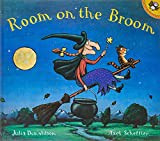
Room on the Broom

by Julia Donaldson

This classic Halloween read about problem-solving, friendship and making room for everyone is sure to bring a smile to young readers.

How to Catch a Monster

by Adam Wallace

This sweet bed-time story is just spooky enough to qualify for Halloween. It reminds kids that things aren’t always as scary as they seem.

Bonaparte Falls Apart

by Margery Cuyler & Will Terry

This Halloween story is chock full of monsters. With encouragement and support, they help Bonaparte keep himself together during a stressful transition.

Frankie Stein

by Lola M. Schaefer

One of my favorite Halloween stories of all time. Frankie Stein is not the child that his parents expected. This story about love and family teaches children and parents alike that it’s okay to be different.

Young Readers (Grades 2–4)

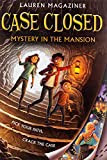
Case Closed #1: Mystery in the Mansion

by Lauren Magaziner

This choose-your-own-adventure story is packed with puzzles and clues. The readers join the story to help Carlos and friends solve the mystery and save his Mom’s detective agency. This book is the first in a series so it’s a great way to get kids excited about reading.

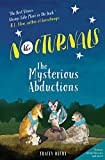
The Nocturnals

by Tracy Hecht

Three unlikely friends learn about friendship, teamwork, and laughter as the Nocturnal Brigade solves unexpected mysteries of the night. This series is perfect for virtual learning. Visit the website for printable online activities and educator guides.

It’s Halloween, I’m Turning Green, My Weird School Special Series

by Dan Gutman

Another kid favorite! I couldn’t included a list of Halloween books without a selection from My Weird School. Join A.J. and the gang from the laugh out loud funny My Weird School series in a holiday-themed chapter caper about candy, costumes, and more.

Middle Grade (Grade 4–7)

Ghosts

by Raina Telgemeier

After Maya and Cat learn their new town is haunted, Maya becomes determined to meet a ghost. But Cat is not interested. Can Cat put aside her fears and make the spirits appear?

The Haunted Lighthouse

by Zander Bingham

A classic mystery that kids will love. After Jack’s aunt buys an old lighthouse, odd things begin to happen. Mysterious figures in the windows, strange noises, flickering lights. Could it be haunted?

Ghost Squad

by Claribel Ortega

This action-packed debut novel weaves a thrillingly spooky tale about family and phantoms.

Premeditated Myrtle

by Elizabeth C. Bunce

This smart new series combines unexpected plot twists with a strong female lead trying to earn the distinction of most daring and acclaimed amateur detective ever. You can’t help rooting for Myrtle.

Spirit Hunters

by Ellen Oh

We Need Diverse Books founder Ellen Oh bring us this captivating ghost story about a seventh-grader who must face down the dangerous ghosts haunting her younger brother. Its twists and turn will have you guessing with every page.

Young Adult (Grade 8–12)

One of Us Is Lying

by Karen McManus

This New York Time Bestseller is one of my favorite reads. The twisty plot keeps you guessing until the end. Five strangers walk into detention and only four walk out? Who did it? Can you guess? You can’t go wrong with any of McManus’ books.

Cemetery Boys

by Aiedn Thomas

This modern ghost story is perfect for Día De Muertos. A transgender Latinx boy summons a ghost to prove to his family that he is a real brujo. Only now he can’t get rid of the spirit? A wonderful book for Halloween and beyond.

Rafa and the Real Boy

by Emily Juniper

This exciting new release blends family drama, romance, friendship and suspense. Readers will find themselves engrossed in Rafa’s complex, emotional journey and guessing at what is real and what’s not.