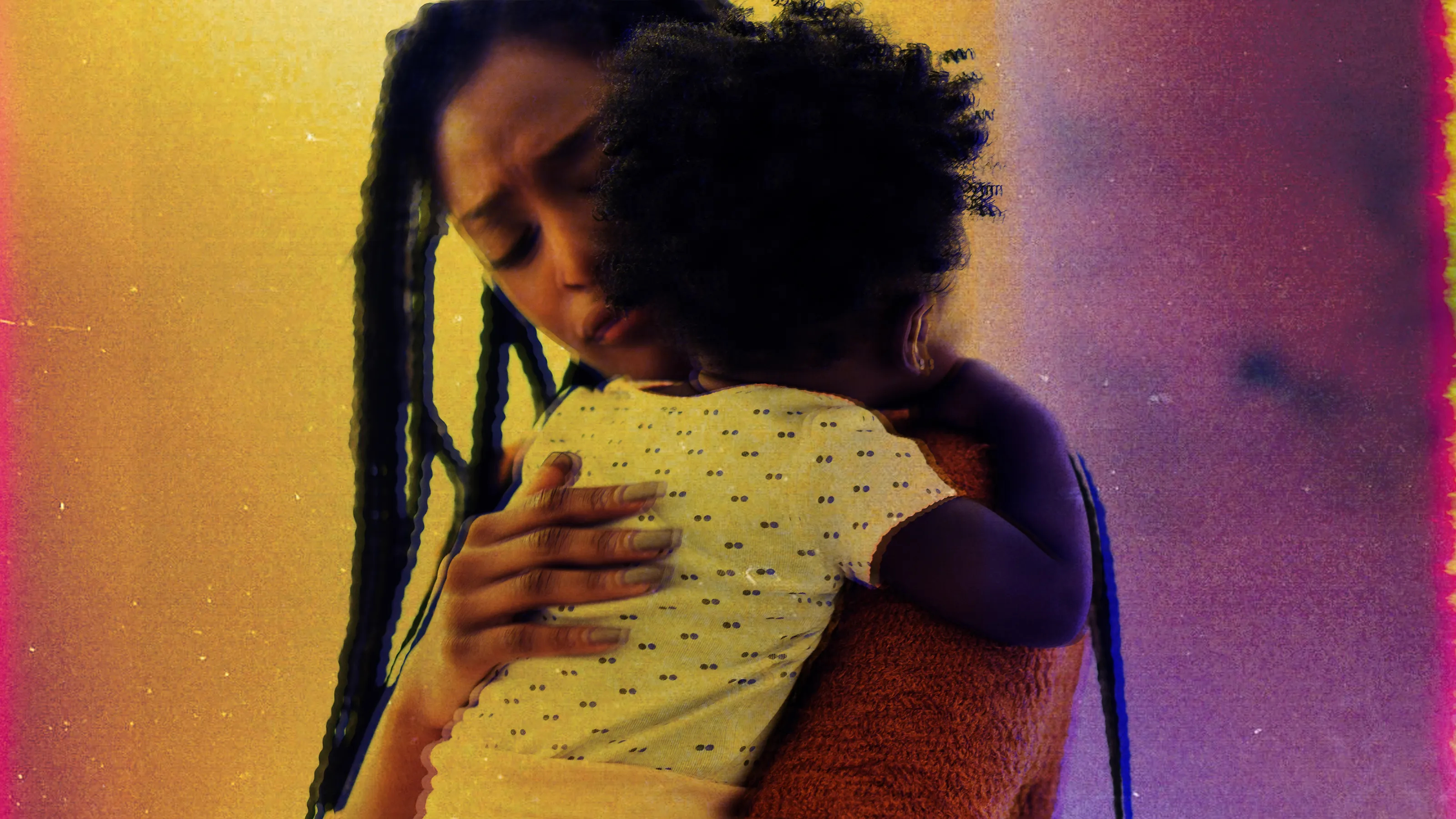
Matresence: The Transition to Motherhood – Isolation and Identity Shift

A while back I wrote a post on matrescense, or the transition to motherhood, which seems to have struck a chord. This post is the second in a series on this subject.

To give some background, matrescence is a terms that was coined in the 1970’s by medical anthropologist, Dana Rafael, in her book, Being Female: Reproduction, Power and Change. More recently, the term was brought back to our attnetion by Aurelie Athan, a reproductive psychologist at Columbia University.

Athan notes that Rafael “pointed out that in many cultures, the birth of a new baby is announced by saying, “a woman has given birth.” Athan’s point is that the focus is on the mother and what she has done. And that emphasis is important. The mother is given credit for what she has accomplished. This is symbolic of the meaning the culture gives to the event and how it is handled. In cultures other than our own, mothers are often more supported after the birth of a baby, and more taken care of.

For example, in South Korea, it is common for mothers to go to a retreat for the first 21 days after they give birth. There, fresh meals are delivered three times a day, they can receive massages and facials and attend childcare classes, and there are nurses available to watch over the baby if the mother needs a rest.

There is a special soup to drink, traditional in South Korea during the postpartum period, lactation consultants and exercise routines to help with recovery, and body realignment to help new mothers get back in touch with their bodies.

In South Korea, eight out of ten mothers go to such a spa after giving birth.

This is the kind of thing that mothers in the United States can only dream about.

Here, mothers are often isolated in their own apartments or homes after their babies are born. During their leave from work, they often struggle with feelings of loneliness and anxiety. And this is especially true for first time moms who are not entirely sure what they are doing.

For example, a New York Times article profiled Alicia Robbins. When she had her first two children, she, like almost every woman who has birthed a child before her in this country, felt overwhelmed upon leaving the hospital. Never mind that she herself is an obstetrician and gynecologist. She said, having a child “was way harder than I expected. I kept wondering if it was OK that breastfeeding was so difficult or that I felt anxious. I kept asking myself, ‘Is this really my new normal?’”

Her mother came to help her, “but she kind of froze,” Dr. Robbins said. “I love her, God bless her, but we had fights over things like whether you need to sterilize the breast pump for three hours.”

In this country, as Aurelie Athan says, we talk about the baby, not the mother. We pay attention to the infant, give gifts to the infant, visit the infant….and we don’t talk so much about what the mother has accomplished and what we can do for her.

But the process of becoming a mother is something that we, in our culture, need to pay more attention to. As Daniel Stern said in his two books, The Motherhood Constellation and Becoming a Mother, giving birth to a new identity may be as hard, or even harder than the act of giving birth to the actual baby.

Becoming a mother changes who a woman feels herself to be. It expands her identity — but, as with many changes, this expansion can be fraught with uncertainty and anxiety. Who am I now? Do I know how to be a mother? Am I doing the right thing? What kind of mother do I want to be? Can I ever get back to doing the things I used to like to do? And if I do, will I be neglecting my baby? Can I still work? How much should I work? Can I still be good at my job?

The questions are endless.

Additionally, becoming a mother changes a woman’s identity as a partner. And this is not always easy. Sometimes a woman wonders if she still has room in her emotional repertoire for her partner. Sometimes the partner is jealous of the time a woman spends with her baby. Sometimes a woman feels she can only share her body with one person at a time and she feels resentful of other demands being made on her or torn about who that person should be — the baby or the partner? Often, a mother and her partner differ on how they each feel caring for the child should be handled. Conflicts come up over sleep training or how much of a schedule the baby really needs. And the energy for talking through these conflicts can be in short supply. Women often feel they carry more of the mental load for making doctor’s appointments, reading up on child development, and thinking about what the baby needs.

This identity shift is especially difficult, as a new mother needs her partner for support, and any resentment, difference of opinion, or outright conflict can get in the way of feeling supported.

The identity shift a woman faces after giving birth is hard. Like shedding a skin that no longer fits, the woman must say goodbye to aspects of herself and ways of being and doing that were part of her previous self, and she must grow into her new role as she works out what that will be.

Just knowing that all women experience this, that having a hard time with this shift is normal, and that it can be named and learned about — and even, in some cases, talked about with other mothers — can be helpful to new mothers.

I recommend that anyone suffering from this transition reach out — whether to friends, other new mothers, more experienced mothers, or even to a therapist who can discuss these issues openly.

After my last post, one such mother reached out to me and said that she felt less alone just knowing that what she was feeling was not unique to her.

****************************

For more good discussion of this subject, see the references section below and watch this blog for part 3 of this series.

To find a therapist, visit the Psychology Today Therapy Directory.

References

Jones, Lucy. Matresence

Rafael, Dana. Being Female: Reproduction, Power and Change

Stern, Daniel. Becoming a Mother

Stern, Daniel, The Motherhood Constellation

Teens and Social Media – AGAIN!

This post is by Ana Hagstrand

Ana is a psychologist in private practice in Philadelphia. She is the mother of three children and she enjoys outdoor adventures.

At what age should we let kids use social media?

As a clinical psychologist and mother of three, I’ve been grappling with this question. My oldest child is 13 and he claims that everyone has Snapchat except him. 

Looking at the scientific research, the wider mental health trends, and what I know about adolescent development, I’ve decided he will have to wait until he’s at least 15.

Here’s why: 

First, there are concerning trends in adolescent mental health. The rates of teen anxiety, depression, and suicide have risen significantly over the last decade. Numerous studies show that teens report persistent feelings of sadness and hopelessness at significantly higher rates and that mental health professionals are diagnosing higher rates of depression. Most alarming is that the suicide rate for 10-14 year olds increased 139% for girls and 70% for boys over the last decade. And what does this have to do with social media?

Adolescent mental health started to decline sharply in 2012, which is the year that we started using the word “selfie” and the year that Facebook acquired Instagram. 

Is there evidence that social media has played a role in these worrisome mental health trends?

Yes. 

You may recall that Facebook was initially only for college students and was rolled out at different colleges at different times over the course of two years before opening up to the general public. One study found that the rates of anxiety increased by 20% and the rates of depression increased by 7% at each college in the year following the introduction of FB. 

Several recent studies actually demonstrate causation, not just correlation between social media use and decreased mental health, and the apparent pathway is social comparison. In other words, use of social media causes people to engage in more social comparisons and fear of missing out (FOMO) and this in turn increases depressive symptoms and decreases self-esteem, body image, and self-perceived social acceptance. 

And it has been found that the harmful effects of social media are stronger (worse) for girls.

Some of the studies I just referenced were done on young adults, and it’s important to consider that there are several reasons why social media may affect adolescents even more than it affects adults. During adolescence, the brain regions associated with attention, feedback, and reinforcement from peers become more sensitive as teens navigate identity formation, acceptance, and social status. This is a normal part of adolescent development, but with so many peer interactions occurring online for all to see and possibly even enshrined forever on people’s social media feeds, the stakes seem higher than they were pre-social media. If adults feel pressure to curate a certain image on social media, of course it’s even more fraught for teens.

Teens have always had a tendency to think they have an audience that notices their every blemish, and we used to try to quell their anxieties by telling them that no one is paying nearly as much attention to them as they think. Now that argument doesn’t work. 

Social media, which started out as a vehicle for social connection seems to have turned into a way of quantifying social status.

So why do I recommend waiting until age 15? 

One large study in the U.K. found developmental windows of increased sensitivity to the harmful impact of social media. Apparently, the onset of puberty and the onset of adulthood are especially vulnerable times: age 11-13 for girls, age 14-15 for boys, and age 19 for all genders.

I’m under no illusion that we can control our children’s online activity at age 19, but let’s try and hold out until at least age 15. When many teens in a community are on social media, it impacts everyone negatively, even those who don’t use it, so I think it’s worth thinking through this together as a community of parents. Most of us have felt the dopamine-fueled pull of social media on our adult brains, and I doubt we will regret holding out a little longer before unleashing it onto our kids. 

Adolescence, with all its developmental tasks and hormones is certainly hard enough.

References:

https://www.nature.com/articles/s41467-022-29296-3(Developmental windows)

https://pubmed.ncbi.nlm.nih.gov/27940701

(national trends depression)

https://www.cdc.gov/childrensmentalhealth/data.html

(national trends anxiety)

https://stacks.cdc.gov/view/cdc/101761

(national trends suicide)

Makarin, Alexey. American Economic Review, Volume 112, No. 11, 2022

(Facebook rollout study)

Kleemans, Daalmans, Carbaat, & Anschütz (2018). Picture Perfect: The Direct Effect of Manipulated Instagram Photos on Body Image in Adolescent Girls. Media Psychology. 

(manipulated photos on IG lead to worse body image in girls)

González-Nuevo, C., Cuesta, M., Postigo, Á., Menéndez-Aller, Á., & Muñiz, J. (2021). Problematic Social Network Use: Structure and Assessment. International journal of mental health and addiction.

(social comparisons on SM and depression)

Samra, A., Warburton, W. A., & Collins, A. M. (2022). Social comparisons: A potential mechanism linking problematic social media use with depression. Journal of Behavioral Addictions.

(social comparisons on SM and self-esteem)

Lee (2022). The effects of social comparison orientation on psychological well-being in social networking sites: Serial mediation of perceived social support and self-esteem. Current Psychology. 

(social comparisons on SM and mental health)

Burnell, George, Vollet, Ehrenreich, & Underwood (2019). Passive social networking site use and well-being: The mediating roles of social comparison and the fear of missing out. Cyberpsychology: Journal of Psychosocial Research on Cyberspace.

(causal pathway: passively using SM🡪social comparisons and FOMO🡺worse mental health)

https://www.nature.com/articles/d41586-020-00296-x

(social media in a community hurts everyone)

https://docs.google.com/document/d/1w-HOfseF2wF9YIpXwUUtP65-olnkPyWcgF5BiAtBEy0/edit

(causation, girls)

Reflections On A Hard Year, Part 5: A Mother Reflects On Her Own Sorrow

The hardest part of the pandemic for me has been tolerating the deep sorrow that accompanies illness and mortality while simultaneously protecting my children from this very feeling within myself. 

Although I am one of the lucky parents – I did not contract COVID and was vaccinated in early 2020 – there was illness and death all around me.  The first months of the pandemic were hard — my uncle, who I grew up adoring (and feeling adored by) died suddenly from COVID. I remember one day in early April 2020 my mother called to tell me that he was feeling ill.  Three days later he died in a nearby hospital.  Luckily, his doctor was a family friend and allowed my aunt (his wife of fifty-five years) to be by his side as he took his last labored breath. 

My heart felt broken.  

Days later my family gathered on Zoom for his funeral and shiva.  I sat in my own home, on our family couch. I was surrounded by my husband and my two boys, my youngest, sitting on my lap, wrapping his little fingers inside my palm.  And, even though there were familiar faces and voices on my screen – my cousins, aunts, parents, and sibling – I felt very alone in my grief. So many parts of these rituals were missing – hugs with my family, communal vibrations of song that soothe when many voices join together in a single space, and of course, the presence of my family elders ushering us (the younger generation) through loss.  

All of a sudden everything and everyone around me felt fragile and I could no longer take anything for granted.  I stayed awake at night wondering how I would raise our two young boys if my husband (a physician who treated COVID patients) became ill and died? And what would happen to my dear boys if I died?

Without a government that took the pandemic seriously, how would I keep my boys safe even if I did manage to survive? And, in my most terrifying moments, the only thing I could think about was how George Floyd’s last words spoke every boy’s deepest source of security – “mama.”  

It is misleading to say that the pandemic is solely responsible for the slow tear that pervaded my veil of security. In the months prior to the emergence of COVID in the US, my life had already been uprooted by illness. In fact, I spent most of the fall of 2019 caring for important people in my life who were ill.  In October of 2019, I stayed with a close friend and helped with her two daughters as she endured treatment for stage IV lung cancer.  And then, in the final days of 2019, my father was diagnosed with Leukemia and I underwent surgery, donating my bone marrow to him to increase his chances of survival.  

By the time the pandemic hit, I was exhausted and needed time for reflection.  In a normal year I would have used the spring to sort out the feelings that came with the previous fall.  On my hours off from work and while my kids were at school, I would have enjoyed visits with my dad and taken long runs by the river. I would have met friends for tea and shared my experience, emerging from the interaction feeling grounded and full. Now, my whole world shrunk down to the few rooms of my home – with my kids at home for school and my husband working at the hospital I could no longer leave the house to hold my dad’s hand nor to go running by myself.  Suddenly, it was no longer safe to meet friends in person and as a therapist I often did not want to set up one more Zoom session even if it was for the purpose of talking to friends. I found myself crying in the shower so that no one would hear me, especially my children.   

As a daughter of a severely depressed mother, I have worked hard to hide my sorrow from my children.  I don’t mean I never let them see me sad or upset.  Rather, I’ve tried hard to protect them from the deep sorrow many daughters of depressed mothers inherit – the feeling that we are undeserving of goodness and are responsible to make our mothers better so that we may have the goodness we see others enjoy.  Over the years, I’ve buoyed myself with my professional work and beautiful experiences that remind me I am worthy of joy (such as fun family vacations).  And, I’ve healed the broken part of me through many deep relationships – my therapist, mentors, friends, and especially my husband who understand this part of me and support my many endeavors to live fully, with strength and joy. Together, we have been able to give our boys the things that my mother could not give me – a deep sense of hope, agency in the world, and freedom to be children. Now, without my traditional ways of recuperating – usually out of my children’s sight – how would I manage not to slip into my own depression?  How would I protect them from my own fears and sorrow – stirred by so much illness and death (not to mention protect them from very real threat of COVID)?

I wish I could say that over the last 15 months I rallied by establishing a daily practice of yoga, baking bread, and used the extra time at home to “Marie Kondo” my closets (as I witnessed so many others do in the many articles I read online at 3 am).  But, I did not.  My children are still home for remote school and they are unvaccinated. I had to find ways to allow myself to feel what I was feeling.  And I did.  I found a way to stay close to the rhythms of my sorrow and move through them, this time along side my children rather than outside their view.  

Over this pandemic time of sadness, I have come to realize that I do not have to hide my sorrow from my children in order to protect them.  In fact, I have recognized that in order to prepare them for life as it really is, I have to allow them to know about sorrow and sadness. And I have decided that we can now talk, as a family, about how some parts of life are naturally hard and sad and that giving ourselves care and comfort in these hard times is essential.

Before it was safe to have a babysitter, I would run around the baseball field, tracking my miles, while my boys played catch and cheered me on to run one more lap. Now, both of my boys look forward to beginning the week when they have “extra movie time,” while I meet with my therapist online.  They know that I often need to cry when I learn that their grandpa was re-admitted to the hospital and they see me moving through the pain by baking him his favorite date-nut bread for when he returns home.  Additionally, they accompany me on visits with my friends in the park, developing their own loving relationships with them.  

I am still tired.  I still look forward to the time when my kids can return to school. I need more time to myself and they need to feel independent and have time with their teachers and friends. In the meantime, I am doing the unthinkable – I am healing myself along side my children.  Without burdening them with my sorrow, I have let them see how I find my resiliency in the face of hardship. I am hopeful we will all emerge stronger and my boys, if they ever lose their own sense of inner strength, will know they can always find their way back.