Summer Boredom is Good for Kids!

By Dr. Corinne Masur

I am currently on vacation with an old friend from Alaska.  Growing up there she lived on Star Hill where lots of other kids lived. During the summer days there they would play on the hill, make forts, eat berries and just do what they wanted.  At the bottom of the hill was a playground that had no equipment. They would play games there all day. Meanwhile, there was a haunted house nearby and they would dare each other to walk by it.

This friend is now an extremely resourceful adult who knits and grows a garden and dries her own herbs and makes them into lotions and salves.  She is a great cook, an avid reader – and that doesn’t begin to describe all the things she does.

Of course, not all neighborhoods are safe enough to allow children to roam but if you want your child to grow up to be resourceful and creative, try not to program all their time. Try to tolerate their cries of “I’m bored!” and let them figure out what to do for hours at a time.

And read the below from the New York Times:

Let Kids Get Bored. It’s Good for Them.

A reminder to parents soldiering through the summer: Boredom has its virtues.

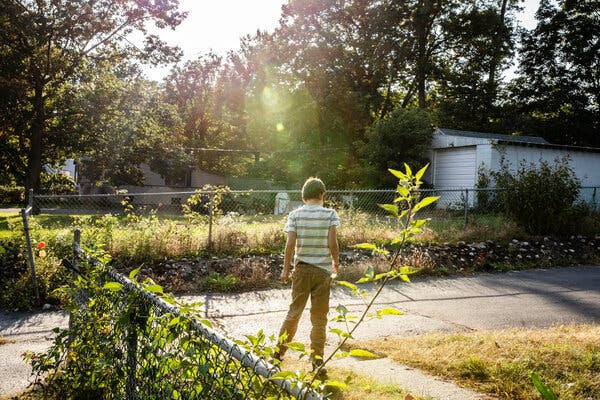
A child wearing brown pants and a blue, gray and cream striped shirt stands outside on a sunny day. A chain-link fence, a yard and a white garage are in the background.

(Lauren Lancaster for The New York Times)

By Catherine Pearson | June 19, 2023

I have a few particularly vivid memories of my childhood summers: the smell of the grill, the rattle of the cicadas — and the feeling of being bored out of my mind.

While I had a relatively regimented schedule and spent long stretches of every summer at camp, there were weeks when my parents, who both worked, hadn’t filled my schedule with much of anything, and they didn’t give a hoot about whether I felt sufficiently engaged or amused.

That has been on my mind as my own sons make their way through the summer with a hodgepodge of camps, babysitters and grandparent time that is breathtakingly expensive and yet feels insufficient in terms of actual child care or stimulation.

I am hardly alone in feeling like it is my parental duty to stuff their days full of activities and learning opportunities. A study cited in a 2018 New York Times article that lamented the relentlessness of modern parenting found that regardless of education, income or race, parents believed children who are bored should be enrolled in extracurricular activities. As Erin Westgate, an assistant professor of psychology at the University of Florida, explained it to me, there is a kind of cultural stigma attached to boredom, particularly in the United States.

Only boring people get bored, the saying goes.

But the reality is that boredom is “normal, natural and healthy,” said Dr. Westgate, whose research focuses on what boredom is, why people experience it and what happens when they do. Though she cautioned that there has been little empirical research exploring boredom in kids, Dr. Westgate believes that in moderate doses, boredom can offer a valuable learning opportunity, spurring creativity and problem solving and motivating children to seek out activities that feel meaningful to them.

“Guarding kids from ever feeling bored is misguided in the same way that guarding kids from ever feeling sad, or ever feeling frustrated, or ever feeling angry is misguided,” she said.

Here’s what you and your children can learn from feelings of boredom.

Boredom is an emotion, said Dr. Westgate, who likened it to an indicator light on a car’s dashboard: “Boredom is telling you that what you’re doing right now isn’t working.” Usually that means the task you are doing is too easy or too difficult, she said, or that it lacks meaning.

One way parents can help children, particularly younger ones, learn to manage boredom is to work with them on developing what Dr. Westgate called greater emotional granularity. For instance, you can help them to distinguish between feeling sad or bored. “Name it to tame it,” a phrase coined by the psychiatrist Dan Siegel, is a technique many child development experts use to help children identify their feelings.

Kids will often say “I’m bored” when they are lonely, or want attention, said Katie Hurley, who holds a doctorate in social work and is the author of “The Happy Kid Handbook.” So it can help to ask if they are looking for comfort or companionship, she said.

Also, do what you can to normalize the feeling. “We have a tendency to treat boredom as a sign of distress, or a sort of call for help,” Dr. Hurley said. “It is uncomfortable, but it’s not necessarily negative.”

Boredom offers children an opportunity to experiment with the kinds of pursuits that feel fulfilling and interesting to them, Dr. Westgate said.

For example, if you let your kids loose in the backyard, they may feel bored initially, she said. But they can learn to prevent that feeling, or resolve it, by finding activities that feel meaningful to them, whether that’s counting bugs, playing with a ball or drawing with sidewalk chalk. If parents don’t allow for free, imaginative play, children may never discover their innate love of nature, sports or art, or even the pleasure they can find in simply relaxing or playing.

“Being able to identify and develop those sources of meaning is a really critical skill to have lifelong,” Dr. Westgate said.

Parents sometimes fear boredom, and the havoc it can wreak around the house, Dr. Hurley said. But free time carves out room for discovery. Dr. Hurley recommends looking at your child’s weekly schedule and asking: “Is there something we can take away, and just call it ‘quiet downtime’?”

But parents should not expect kids to instinctively know what might feel meaningful to them. Instead, parents should remind their children of things they are interested in or care about, Dr. Westgate said.

“It’s the difference between leaving the child in a room with absolutely nothing to do,” she said, versus “bringing them into a room that you know has books and puzzles — things that would be meaningful to your kid — and that would be a good fit for them.” (She also noted that research has shown that without positive outlets, people can be more inclined to engage in harmful behaviors.)

Dr. Hurley said that kids aged 5 and under need a specific menu of “boredom busters,” or questions like: Do you want to play with Legos? Do you want to play with Play-Doh? Do you want to go outside? Parents often feel pressure to get down on the floor and play with young children every time the children are feeling bored, she said, but that can keep children from learning how capable they are of stepping into their imaginations.

With slightly older children, Dr. Hurley said she might say something like, “Take a walk around the house and come up with three ideas, and get back to me.” Once kids shift from a state of boredom to positive action, “it opens up creativity, problem solving and all kinds of academic learning skills.”

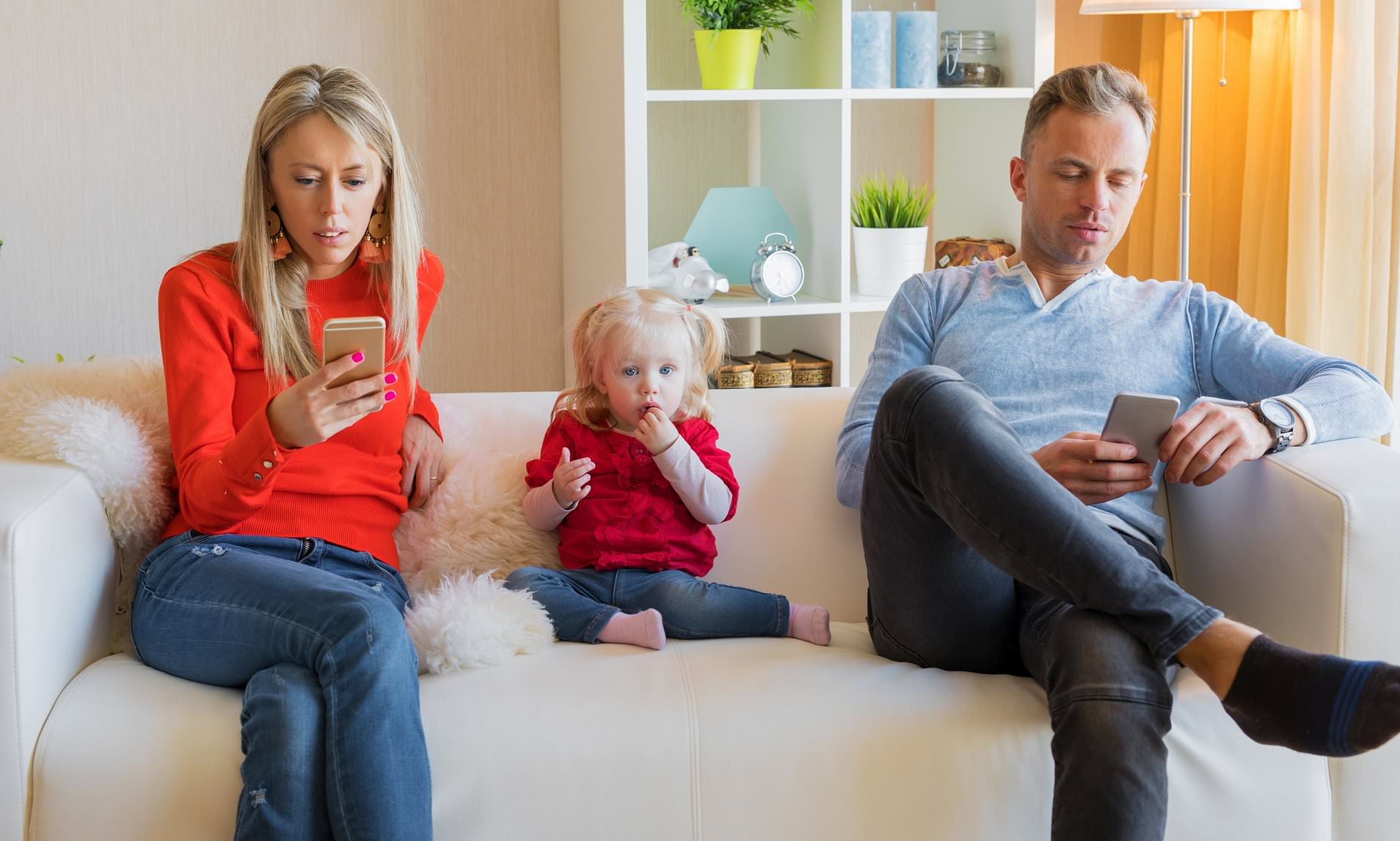
Phones and devices require little effort, Dr. Westgate noted, so children and adults often turn to them as a way to soothe feelings of boredom.

“With kids, it makes complete sense that they ask for screens when they’re bored, but that doesn’t mean, obviously, that is what’s best for them in that situation,” she said.

Link to the original article

Epidemic

By Dr. Corinne Masur

For years I have been wondering why we have an epidemic in this country.

Covid?

No.  That’s (almost) over. Or at least it’s not as dangerous as it was.

I am talking about an epidemic amongst infants and children: an epidemic of sleep difficulties, crankiness, and an inability to accept limits.

And an epidemic of exhausted and overwhelmed parents.

I’m wondering why this is – why so many children and so many parents are having such a hard time?

I am wondering why parents are sleeping in their children’s rooms — or in their children’s beds – and why  children are sleeping in their parents’ beds?

I am wondering why every decision between parent and child is a negotiation and why parents follow every request they make of their child with “OK?”

Evidently I have a friend in Caroline Goldman, a French psychologist who has also been wondering about these things. According to the French newspaper, Le Monde, eight years ago, Caroline Goldman saw an influx of “restless” children in her practice despite the fact that these children wanted for nothing.

Goldman felt that these kids were being “pampered to the point of excess” and she thought that they were suffering from “a worrying lack of … boundaries.”

In the podcast that made her famous (over a million listens) and in her latest book, File dans ta Chambre! (“Go to Your Room!”), this French doctor of psychology said she shared the same observation with many childcare professionals in France where the incidence of behavioral disorders is exploding.

And of course, France isn’t the only place where this is true.

But, again, why?

I have thought about this a great deal — and as an old person, I have often wondered about the differences in my upbringing and the upbringing of children over the past several decades.

I have no definitive answers as to why these things are going on but I do have some observations:

1. Generational boundaries have been erased.

When I was growing up in the 1950’s and 60’s parents did not ask their children if it was OK with the child to do this or that. They just told their children what to do and there was an expectation that the child would do it. Also, parents did not sit on the floor with their children to play. Parents worked and made meals and took care of the house. Children played. On their own. Outside. Inside. They just played and used their imaginations, and yes, they watched TV too and it didn’t seem to hurt them/us.

2. There were rules.

We weren’t allowed to do lots of things. And we were supposed to do certain things. And we knew it. It was clear.

We didn’t talk back to our parents. We didn’t curse at home. We ate what was served at meals and if we didn’t like it we probably said so but we didn’t necessarily expect to get something different. These things were the norm.

Also, we ate candy and rarely did anyone say anything about it.

We had to do our homework and usually no one sat with us to do it. If we didn’t do it, we got in trouble at school.

We also didn’t talk in class and we weren’t late to school or to class and if we were, we got in trouble, again, at school. Personally, I had hundreds of detentions between 4th and 12th grades.

3. There were punishments.

See above regarding detentions.

And in my house, a glare from my father was enough. But if it wasn’t, he chased us to our rooms or he spanked us. You might think this is barbaric — most people now do — but it didn’t have to happen more than a few times until we got the idea that he meant what he said.

4. We had freedom.

From the age of 4 or 5 on we were allowed to play outside with our friends after school and on weekends. Some of us had music lessons or Scouts but we weren’t scheduled all day every day unless it looked like we were going to have a professional career in dance or skating or music.

5. Our parents did not expect to be perfect parents.

– They did not make our baby food

– They did not carry us around in slings all day when we were babies

– They sometimes got angry and yelled

– They did not feel they needed to be “present” at all times and/or to play with us constantly.

Sadly, today, parents feel they have to do everything all the time. They feel they have to be “present” during their time with their children and they constantly have to be “making memories”.

Many parents also feel that they have to carry or wear their infants at all times, they have to find the “right” sleep training method or they have to buy the expensive gadget that puts their baby to sleep. And if this doesn’t work, they just have to lie with their children until they go to sleep.

No wonder parents are exhausted and overwhelmed. Personally, I think all of this is too much for parents to do.

AND I think it is not working.

I don’t think children are happier now.

Perhaps this sounds like one of those Boomer rants: “we used to play outside until the street lights came on”, etc.

But I don’t mean it to be.

What I mean to say is this: Parents, give yourselves a break. Please.

You really don’t have to do all this.

And you really CAN start setting some more limits with your children without feeling guilty. The truth is that while they might not like it at first, your children will feel more secure when they know exactly what you expect from them.

So here are my suggestions:

1. Retrieve the generational boundary.

You and your child are not equals.  

Can they have choices SOMETIMES? Yes.  But not always. 

And you do get to tell them what to do. 

And if they ask “why?” you can explain why OR you are allowed to say, “Because I am the Mommy/Daddy”.

Treat your children as your children and not as your peers or friends. 

And this means you do not have to get down on the floor and play with them all the time.  I give you explicit permission to say “NO” sometimes.  Sometimes you are busy and they need to play on their own.

2. Establish rules in your house.

Make a bed time and a get up time.  Think about what is allowed and what is not allowed in your house. And then tell your children ahead of time what the rules are. And then tell them what will happen if they don’t go by the rules.  

Years and years of research on parenting styles has shown that “authoritative” parenting is the best kind – that means parenting where the parents have rules and are consistent in sticking to them.  Children feel safer when there are boundaries and when they are not allowed to exceed these boundaries.  Children do better when they know the consequences of their actions.  And children feel better when they know they can trust their parents to be consistent.

Do not confuse this parenting style with “authoritarian” parenting which is not such a good parenting style.

3. Talk to your partner, if you have one, about what the consequences will be if your child breaks a rule. 

Make sure the consequence fits the act and that it is meaningful to your child.  For example, if your child doesn’t particularly like sweets, taking away dessert won’t matter to them.  But if your child loves using the ipad, taking that away for a day will mean a great deal.

Make sure you and your partner are on the same page about enforcing the consequences.

4. Also make sure to give your children some freedom. 

It is good for children to sometimes figure things out on their own.  If your neighborhood isn’t safe enough, take your children to a park or a location on the weekends where they can run around or ride their bikes with other kids for a few hours. If you have a yard or a safe neighborhood, let them play outside for hours at a time. No. INSIST they play outside for hours at a time. Children need activities that are not curated, where their parents are not watching their every move. And weather is not an excuse. As you’ve probably heard, there is no such thing as bad weather, there’s just bad clothing. Make sure your kids have rain boots and snow boots and raincoats and hats and winter coats and hats and then insist they go outside. And if they don’t want to?  They can read a book.  No screens for at least several hours each weekend or vacation day!

5. And finally, again, give yourselves a break. 

You are not perfect; no parent is perfect.

Eventually…. if you do these few things, you may notice that you are less exhausted and less overwhelmed.

You may even find that you are going to sleep with each other rather than with your child. And you may also find that you can have a few minutes to have cocktails or mocktails before dinner….the way my parents did.

Three Things To Make Us Better Parents

Three things to make us better parents – and to teach our children – were written about by former violinist and cognitive scientist, Maya Shankar, in The Washington Post. In this beautiful opinion piece, she talks about three lessons she’s learned over the course of her life to date and I think that these are three things that all of our children could benefit from learning as well:

Link to Article

Opinion: What a musician turned cognitive scientist wants you to know about life

By Maya Shankar | June 26 2023 | 5:45 a.m. ET

Maya Shankar is a cognitive scientist and the creator and host of the podcast “A Slight Change of Plans.” This column is adapted from the commencement address she delivered in May at the Juilliard School in New York.

I’d love to share three lessons with you that I’ve learned over the years.

For the first lesson, let’s travel back to when I was 6 years old, when I first asked my parents if I could play the violin. My three older siblings had opted for the clarinet, trumpet and flute, but I was drawn to the violin because my grandmother had played it in a traditional Indian style as a little girl — and I adored her.

I began by learning the Suzuki method, and after a year or so, my parents noticed that while they had to nudge me to do lots of things, they rarely had to remind me to practice the violin.

To help nurture my growing passion, my mom found a local violinist who was willing to take me on as his first-ever student. His approach was unconventional: I never played scales or etudes, or learned proper vibrato technique or the right way to shift across the fingerboard. We skipped straight to the joy of playing pieces. I watched and mimicked, letting my instincts guide me through the music.

This was my experience until one spring afternoon when I was 9. My mom and I were in New York City for the weekend, and I had my violin with me for an audition. After the audition was over, we decided to walk over to Lincoln Center so that I could see the Juilliard School up close. By that point, I knew of the music school and the world-class musicians it had helped nurture. Yo-Yo Ma and Midori had been my favorites — I’d watched a recording of Midori’s 1990 Carnegie Hall recital dozens of times on a VHS tape in my living room. And so, as I stood by the entrance of Juilliard that day, I felt goose bumps imagining all the remarkable musicians who had walked in and out of the building. I resolved to practice harder the next day.

Suddenly, my mom looked at me and said matter-of-factly, “Hey, why don’t we just go in?”

“What do you mean, just go in?!” I thought she was nuts.

“What’s the worst that can happen?” she asked.

I could think of many worst-case scenarios, but I agreed, and within minutes we were in the lobby, with my mom asking the staff if we could look around. There, we struck up a conversation with a young student and her mom. They were rushing off to the fourth floor for a violin lesson but invited us to join them for the elevator ride so that we could keep our conversation going. The student was studying under one of Juilliard’s all-star professors: Dr. Won-Bin Yim. Dr. Yim had studied under Dorothy DeLay, who had taught legends such as Itzhak Perlman.

Just when I thought my mom couldn’t pull out any more surprises, she turned to the student’s mom with a question: Could they kindly introduce us to Dr. Yim after their lesson?

Amazingly, one hour later, I found myself playing the first movement of the Bach Violin Concerto in A Minor for Dr. Yim. After I finished, Dr. Yim expressed what can charitably be described as “muted enthusiasm.” It was clear that while I had strong musical instincts, I did not have the technical skills needed to get into Juilliard. But Dr. Yim told me he would be in residence at a music festival that summer and would be willing to take me on as a temporary student to see if we could level-up my skills in advance of the Juilliard audition in late August. I was giddy with excitement.

That summer was transformative. Dr. Yim was a fantastic teacher. He put me through a rigorous boot camp, and after hours of intense practice every day for months, I finally completed my Juilliard audition.

A week or so later, we got a call from Dr. Yim.

“Hello, Mrs. Shankar,” he said to my mom. “Is there any chance Maya’s name is actually Anna?”

My mom politely answered that no, Anna was not my name. Dr. Yim then explained that he had received the list of accepted students at Juilliard and a certain “Anna Shankar” had been on the list. I remember thinking I’d be happy to go to a court right then and there to register a name change. I had only lived nine years on this planet as a Maya — I could become an Anna, if that’s what the situation required!

Thankfully, Anna turned out to be me. Or I turned out to be Anna? In either case, the point is that someone somewhere had made a typo and I was able to both keep my real name and enroll at Juilliard that fall.

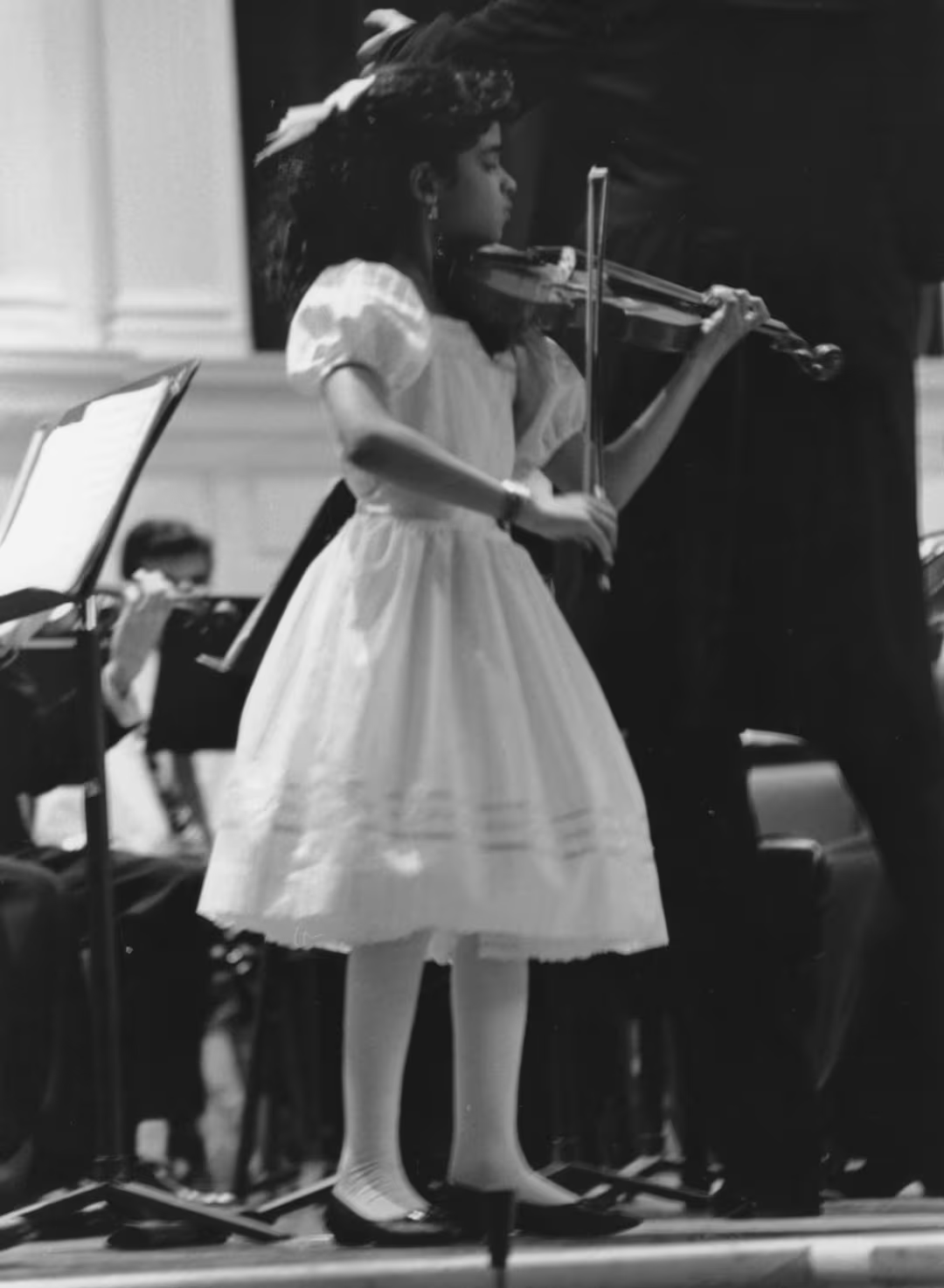
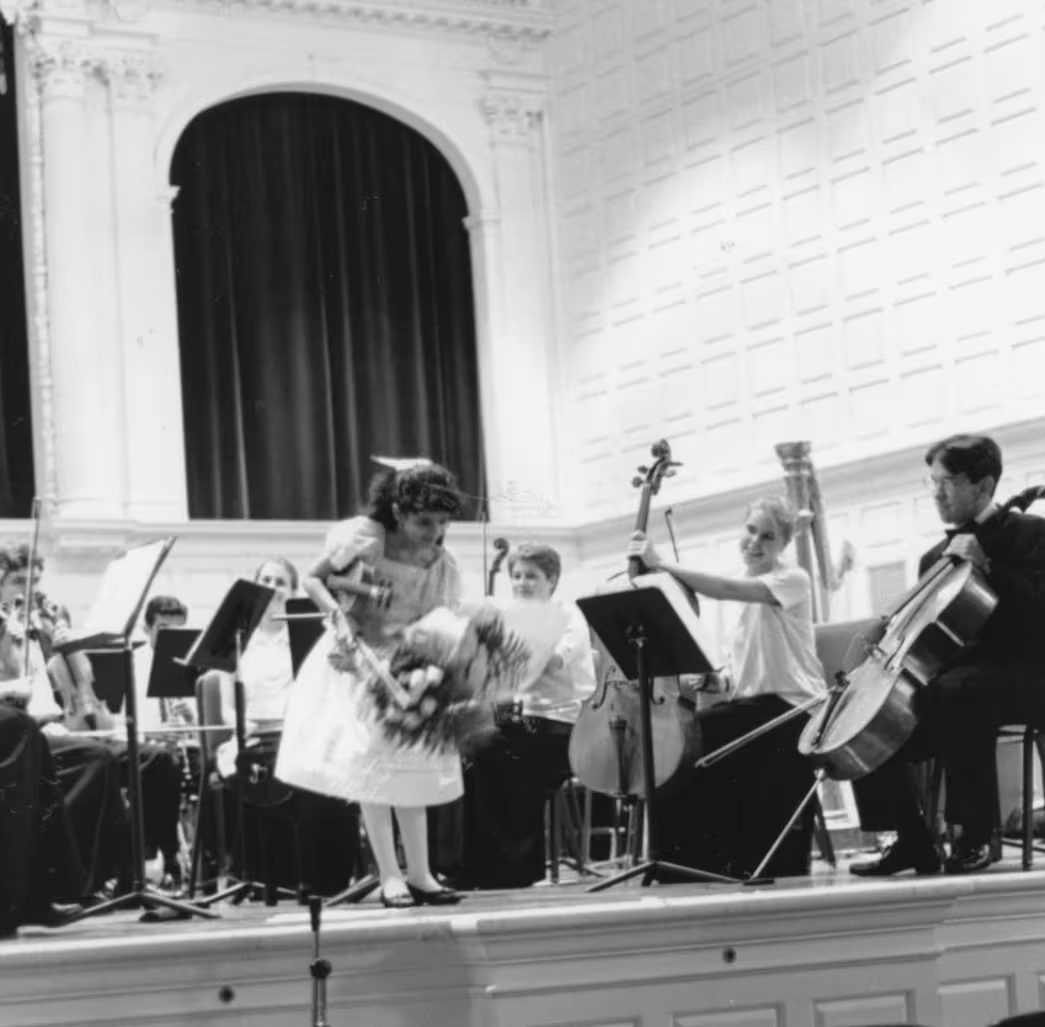
Maya, at age 8, soloing with the Greater New Haven Youth Orchestra. (Courtesy of Maya Shankar)

This brings us to the first lesson I want to share: It’s about the power of what one might call imaginative courage. Imaginative courage is what my mom modeled for me by envisioning a path to Juilliard. She was unafraid to ask the questions that opened up opportunities I hadn’t imagined for myself. “Why don’t we just go in?” “What’s the worst that can happen?” “Might it be possible to meet Mr. Yim?”

When I said earlier that I didn’t have a chance of getting into Juilliard when I first played for Dr. Yim that spring day, I was not being falsely modest. Dr. Yim later confessed to my mom that when he first heard me play, he felt my chances were slim … but that he appreciated my “enthusiasm.” My mom had created a critical opening for me: If she had not taken that bold step, I would never have experienced the growth I had at Juilliard.

Some of you will go on to become professional musicians — others may become teachers, or doctors, or activists. Your paths will develop and change, and there will be times when it seems like what you want and hope for does not exist or isn’t possible. But this is when you can call on your Juilliard training. A good musician knows that there is more to a great performance than playing the notes on a page; they know how to bring forth beauty and feeling by creating what’s not yet there. As musicians, you all know how to look beyond the page — and life will require more of this same imagination.

Years after my time at Juilliard, I ended up getting a PhD in cognitive science, where I studied the science of human behavior and decision-making. I realized that rather than work in a lab — which was the expected path — I wanted to use my knowledge to improve how we design government programs and policies so that they could better serve people. But there was no such position available to apply for. And so, I did for myself what my mom had once done for me: I asked questions and took a bold step. “Why don’t I just go in?” “What’s the worst that can happen?”

I sent a cold email to a former adviser in the Obama White House, who introduced me to the president’s science adviser. I pitched the administration on creating a new position for someone with my training, andideally, hiring me for the role. Days later, I was interviewing for the job and wound up getting hired. My years working in public policy ended up being some of the most rewarding of my life. And they wouldn’t have happened if I hadn’t been inspired by my mom to imagine something beyond the page.

Maya, at age 8, after winning her first concerto competition with the Greater New Haven Youth Orchestra. (Courtesy of Maya Shankar)

Okay, now back to my story with the violin. After I was accepted at Juilliard, my life assumed a new rhythm. Every Saturday morning, my mom and I would wake up at 4:30 to catch a train from Connecticut to New York so I could take part in a full day of classes. You all know the drill: private lessons, orchestra, music theory, ear training, scales class, master classes, chamber music and, of course, gossiping about who got what part and who we had crushes on.

All my Juilliard training began to pay off. I started winning concerto competitions and soloing with orchestras. When I was 13, Itzhak Perlman invited me to be his private violin student, which now meant we were traveling to New York multiple times during the week. Mr. P, as we affectionately called him, gave me the vote of confidence I needed to start believing I might be able to go pro one day.

But then, one summer morning when I was 15, I was practicing Paganini’s challenging Caprice No. 13. I struggled to get this one passage right and I overstretched my finger on a single note. I heard a pop.

It was not a string that had popped but a tendon in my hand. For months, I remained in denial about my injury: I continued to play through pain, until the pain got so severe, I needed surgery. When that wasn’t successful, doctors told me I had to stop playing altogether.

I found myself grieving not just the loss of the instrument, but also the loss of myself. If I was in an airport without a violin strap around my shoulder, it felt like I was missing a limb. The violin had defined me for so long, and without it, I felt stuck. I would later learn that this experience is known as identity paralysis — and it happens to a lot of us when we experience unexpected, unwanted change: Who we think we are and what we’re about is suddenly called into question.

Ultimately, I found my way again as a cognitive scientist, but this experience with change seeded a curiosity within me about how we as humans navigate the big changes in our lives and reckon with the shifts in self-identity that accompany them. I realized that what I missed most about playing the violin was that it had given me a vehicle for connecting emotionally with others. It turned out that this was at the root of my passion for music. And a hopeful message emerged from this insight: Although I had lost the ability to play the violin, I could still find this underlying love of human connection in other pursuits.

This brings me to a second lesson: We can learn to anchor our identities not to what we do – but to why we do it. Thinking of our identities in this way can make us more resilient in the face of change.

As you imagine your future, ask yourself what drives you to do the things you love — what really lights you up about them. Connecting emotionally with people is what makes me tick. For you, it might be a love of storytelling, or learning new things, or challenging yourself, or helping others. Whatever it might be, remembering this can help you feel grounded during periods of uncertainty, guiding you toward your next steps while retaining the core of who you are.

The third and final lesson I’ve learned is to make space for awe. I remember one night when I was 12. I was in bed, in the dark, and listening to a recording of Anne-Sophie Mutter playing the Beethoven violin concerto. My heart raced along with the melody, and I felt shivers during certain phrases. I was awestruck by how beautiful the music was — and how it made me feel.

As I got older, though, there were moments when I lost sight of how extraordinary music is. Especially in my teens, I became a far more self-conscious musician, fearful of how my peers would judge my playing, envious of those who seemed to play effortlessly and burdened by the competitive nature of performance. My constant mental chatter — focused on all the wrong stuff — muted the awe.

And then, as you know, I gave up hope of being a professional musician and rarely touched my instrument. My violin — my life around it, and the awe and wonder that had blanketed me as a child — stayed in the back of a closet.

Until one day in graduate school when I received a phone call. The organizers of a conference I was slated to attend in South Africa told me they had a surprise guest of honor: violinist Joshua Bell. They wanted to know whether I’d like to perform the Bach Double with him. They had no idea it had been years since I had picked up my violin. I had so much scar tissue in my hand that I realistically had only a concert or two left in me, period. I wanted this to be one of them.

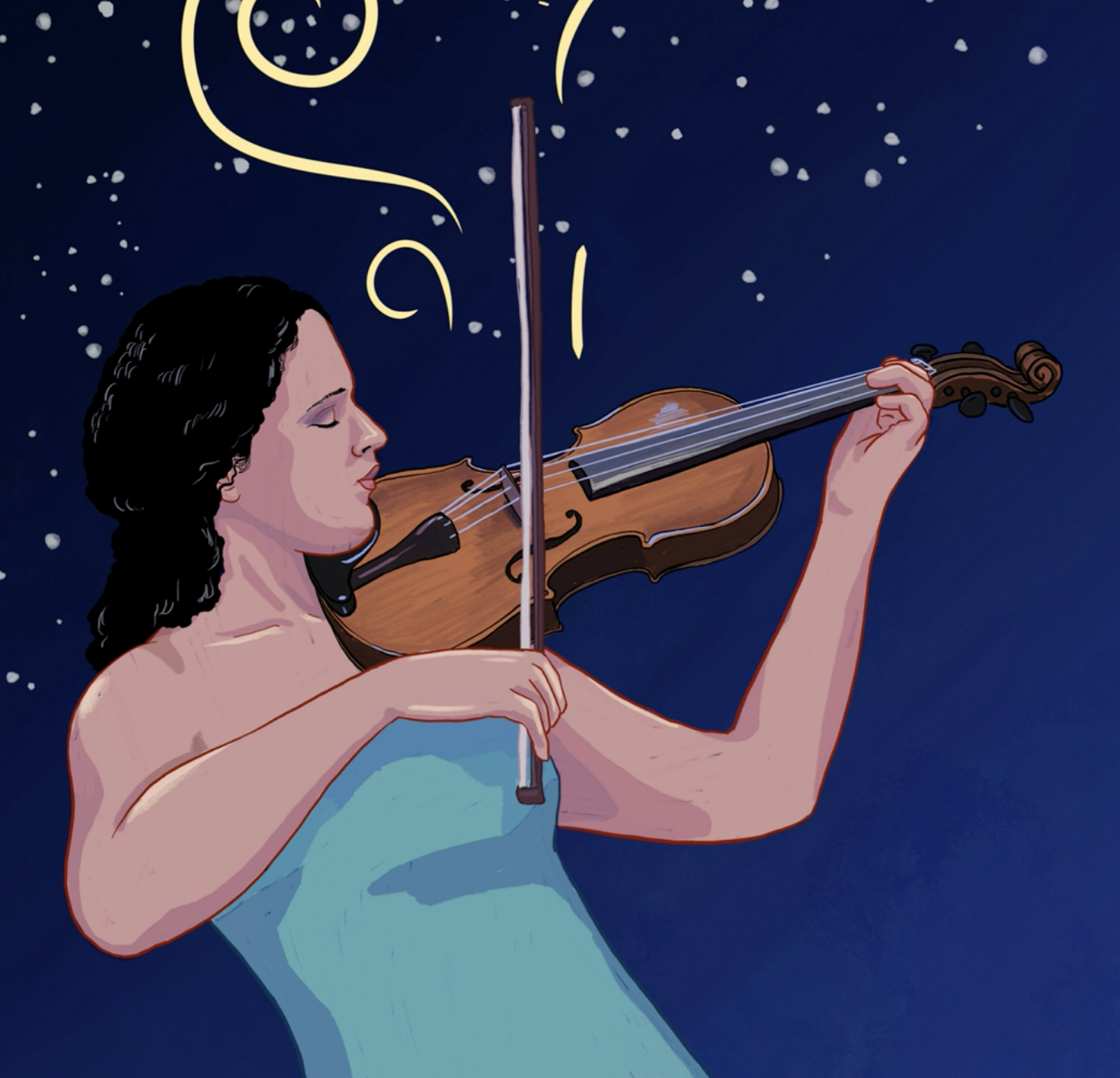
I had no idea what it would be like to play my instrument again. But the basics came back to me more easily than I’d thought they would. And so there we were one night, Josh Bell and I performing together on an outdoor stage, under a starry South African sky. In the middle of the second movement when the two violins sing in unison, an old, familiar feeling returned. My heart raced, and I was in awe of the music.

It is remarkable that a collection of musical notes — arranged just so — can bring tears to our eyes. Whether it’s listening to Beethoven’s “Emperor Concerto” or Taylor Swift’s “All Too Well,” watching a beautiful sunset, or marveling at a new scientific discovery, feeling awe can help us tap into better versions of who we are as people. We feel more connected to the broader whole, to something bigger than ourselves.

And so, as you begin to anticipate the joys and challenges that lie ahead, I hope these three lessons will inspire you: Look for opportunities to practice imaginative courage, remember that why you do something is more important than what you do and, whenever possible, try and seek out awe.

Trigger Warnings: Yes or No?

By Dr. Corinne Masur

For those of you who have children in middle school, Jr. High and High School, what do you think about trigger warnings?

Should kids be warned before they are assigned a book with content that might cause them some upset?

Or is it the role of schools (and colleges) to expose kids to all kinds of ideas and descriptions of all sorts of events?

And for that matter, is teaching the history of various wars worthy of a trigger warning (violence! death!) any less than teaching The Scarlet Letter or Madam Bovary (adultery!) or The Kite Runner (sexual violence!).

Is it the job of educational institutions to help kids to learn how to think about even upsetting subjects?

This brings us to the subject of trauma.  

Trauma is a word that is used carelessly these days. Almost anything can be called a trauma. But what trauma really is is an event that is utterly overwhelming to an individual, the effects of which can be lasting. 

So what do we do for kids who have been exposed to truly traumatic events in their own lives? Do we owe them a trigger warning so that they are not surprised – or triggered –  when material comes up in class or in an assignment that reminds them of their own experience? 

These are very difficult questions. 

And it is easy to see each side:

We do not want to intentionally re-traumatize kids.  

At the same time we DO want to teach them how to think about and talk about the upsetting things that have happened over the history of the world, that are written about in world literature and that are continuing to happen every day in our current world.

There are no trigger warnings in life, after all.

Recently, this issue was taken up by Cornell University when a group of students asked for trigger warnings to be routinely provided in class. The results of the debate may surprise you.

See below for an excellent article on the topic from The New York times:

Should College Come With Trigger Warnings? At Cornell, It’s a ‘Hard No.’

When the student assembly voted to require faculty to alert students to upsetting educational materials, administrators pushed back.

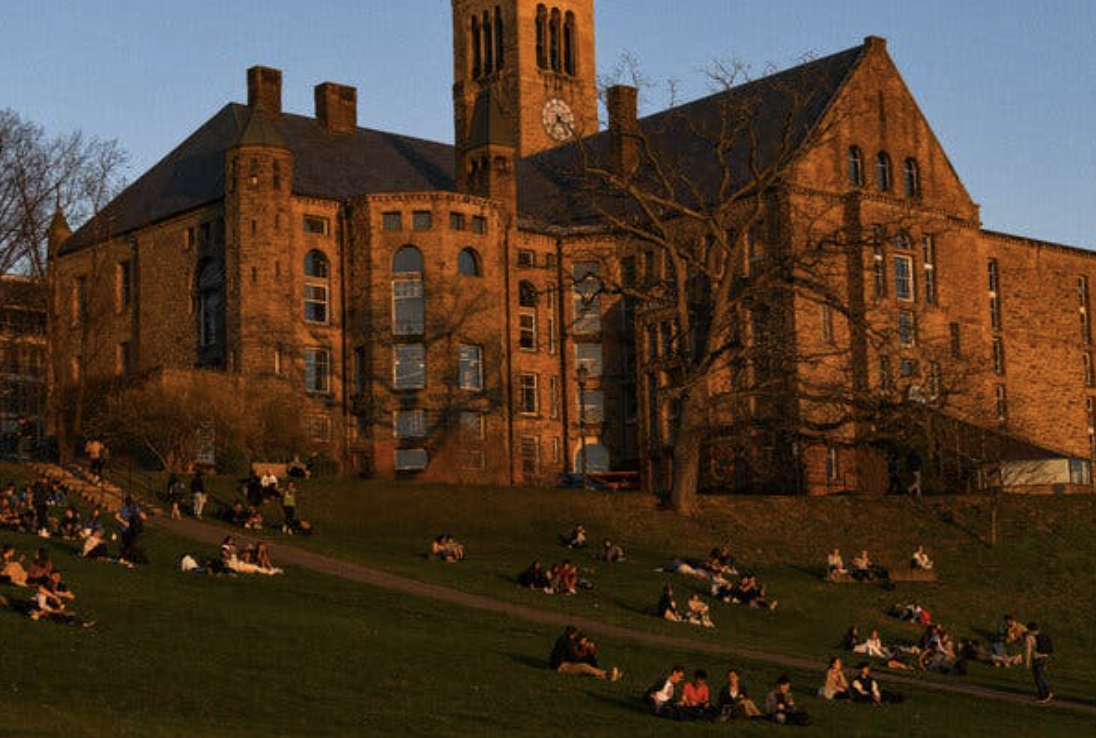
At Cornell University, the undergraduate student government wanted to require instructors to warn students about potentially traumatic course material. (Credit Heather Ainsworth for The New York Times)

By Katherine Rosman | April 12, 2023

Last month, a Cornell University sophomore, Claire Ting, was studying with friends when one of them became visibly upset and was unable to continue her work.

For a Korean American literature class, the woman was reading “The Surrendered,” a novel by Chang-rae Lee about a Korean girl orphaned by the Korean War that includes a graphic rape scene. Ms. Ting’s friend had recently testified at a campus hearing against a student who she said sexually assaulted her, the woman said in an interview. Reading the passage so soon afterward left her feeling unmoored.

Ms. Ting, a member of Cornell’s undergraduate student assembly, believed her friend deserved a heads-up about the upsetting material. That day, she drafted a resolution urging instructors to provide warnings on the syllabus about “traumatic content” that might be discussed in class, including sexual assault, self-harm and transphobic violence.

The resolution was unanimously approved by the assembly late last month. Less than a week after it was submitted to the administration for approval, Martha E. Pollack, the university president, vetoed it.

“We cannot accept this resolution as the actions it recommends would infringe on our core commitment to academic freedom and freedom of inquiry, and are at odds with the goals of a Cornell education,” Ms. Pollack wrote in a letter with the university provost, Michael I. Kotlikoff.

To some, the conflict illustrates a stark divide in how different generations define free speech and how much value they place on its absolute protection, especially at a time of increased sensitivity toward mental health concerns.

After decades of university battles over tinderbox issues of students’ rights, speech codes and how best to grapple with unpopular speakers and ideas, proponents of free speech are lauding Ms. Pollack’s quick and unequivocal action. They characterize it as part of a larger national shift, marked by university leadership more forcefully pushing back against efforts to shut down speakers and topics that might offend.

“What was unique about the Cornell situation is they rapidly turned in a response that was a ‘hard no,’” said Alex Morey, the director of campus rights advocacy for the Foundation for Individual Rights and Expression, a nonpartisan organization focused on issues of free speech. “There was no level of kowtowing. It was a very firm defense of what it means to get an education.”

Martha E. Pollack, the president of Cornell University, said the student resolution concerned her because it could impinge upon the freedom of faculty to select material and present it as they think is most beneficial. (Credit Heather Ainsworth for The New York Times)

Ms. Morey called it the “Stanford Effect,” referring to a 10-page open letter written in March by Jenny Martinez, dean of Stanford University Law School, in which she affirmed her decision to apologize to Stuart Kyle Duncan, a Donald J. Trump-appointed federal appeals judge, after hecklers interrupted his speech.

Earlier this month, Neeli Bendapudi, the president of Pennsylvania State University, released a four-minute video explaining why she believed a public university like Penn State had a legal and moral obligation to host speakers who espouse views that many may find abhorrent. “For centuries, higher education has fought against censorship and for the principle that the best way to combat speech is with more speech,” she said.

The current free speech issue at Cornell is one that has been debated on campuses across the country. “Content warnings” or “trigger warnings” refer to verbal or written alerts that assigned material, including academic writing or artistic expression, may involve sensitive or upsetting themes or details that may cause a student to have an emotional response tied to a personal experience.

Professors on some campuses use such warnings, though mandates are rare.

At Cornell, the students’ proposal suggested that the warnings be issued when course readings and discussions involved topics “including but not limited to: sexual assault, domestic violence, self-harm, suicide, child abuse, racial hate crimes, transphobic violence, homophobic harassment, xenophobia.”

It stipulated that “students who choose to opt out of exposure to triggering content will not be penalized, contingent on their responsibility to make up any missed content.”

To Ms. Ting and other proponents of the measure, including the woman in the Korean American literature class, the administration’s swift rebuke was frustrating. “We have been characterized as triggered snowflakes,” said Shelby L. Williams, a sophomore who co-sponsored the resolution. “What we are asking for is greater context.”

The concept of trigger warnings first entered the cultural dialogue in the post-Vietnam War era, after post-traumatic stress distress disorder became a recognized health condition. PTSD episodes, which include rage and anxiety, are generally triggered by places, people, sounds or smells reminiscent of a traumatic experience, according to the U.S. Department of Veterans Affairs.

Integrating trigger warnings into academia first took root in the 1990s but gained urgency after the #MeToo movement opened a dialogue about trauma. A study published in 2019 in the Journal of American College Health said 70 percent of college students report that they have been exposed to at least one traumatic event.

Students with diagnosed PTSD are entitled to care from universities and should be treated by trained professionals, said Amna Khalid, a professor of history at Carleton College in Northfield, Minn., who has been writing and speaking about campus culture since 2016.

But, Professor Khalid said, addressing students’ mental health issues through trigger warnings is ineffective. It disempowers people by reducing their identities to traumatic events and “infantilizes” students whom professors should be preparing for adult life, she said.

“Life happens to you while you are driving, while you are walking, while you are in the supermarket,” she said. “The most challenging moments in life rarely come with warning.”

Professor Khalid called trigger-warning mandates an infringement on the academic freedom of professors whose role is to help students develop critical thinking skills.

“Sometimes that requires surprising them and challenging them in ways that are uncomfortable,” she said. “It diminishes the learning experience for students if professors hedge themselves.”

Some professors support the use of trigger warnings. “When used correctly,” said Connor Strobel, a professor of social sciences at the University of Chicago, “trigger warnings can open up a conversation” with students, enabling professors to alert them to available resources.

Professor Strobel recently asked students to read “The Second Sex,” by Simone de Beauvoir, and alerted them that the book included themes of “menstruation and menopause, and things that women are shamed for,” he said.

One student approached him and said that because of a family issue, she was concerned about reading it. He was willing to create an alternate assignment for her but first encouraged her to start the book and see if she found it more compelling than upsetting. “She found it very salient,” he said, and completed the assignment.

“At a university, there is no topic that should be off the table, but trigger warnings are a preview of coming attractions that treat students with humanity,” he added.

When Professor Strobel was a graduate student at University of California Irvine in 2016, he wrote a proposal asking a faculty government association to endorse the use of trigger warnings on campus.

That document became an inspiration for Ms. Ting’s Cornell resolution.

The Cornell measure was publicized by The Cornell Daily Sun, the student newspaper, and kicked up a conversation on Twitter. Normally, Ms. Pollack, the university president, takes about a month to weigh in on student assembly proposals. But in this case, she responded in just a few days.

The resolution concerned her, she said in an interview, because it could impinge upon the freedom of faculty to select material and present it as they think is most beneficial.

She also believes a rule that codifies the avoidance of upsetting topics runs contrary to the role of a university.

“Our students are coming at this with good intentions,” Ms. Pollack said, “but I think it’s a critical part of higher education to learn how to engage with challenging and difficult ideas. It teaches you to listen, compromise and advocate.”

It was the first assembly measure of more than 30 this academic year that the president has rejected.

Lee Humphreys, chair of the communication department at Cornell, was pleased by Ms. Pollack’s response.

In the past, she has presented her classes with violent, sexual and distasteful content to push students to consider who might be drawn to the programming and who might financially benefit from it.

“If I was really concerned about making sure I was covering all of my bases in terms of trigger warnings, it would make my life easier to not show the kind of content in the class that I would otherwise show, just in case there was something that I was overlooking,” Professor Humphreys said. “I think that’s doing a disservice to the class and the students, to avoid things that are difficult.”

Professor Humphreys often previews for students what is to come in a lesson, as a part of “reinforcing pedagogical goals,” she said, and aims to be sensitive to students.

“Just because you don’t support a mandate doesn’t mean that you don’t support an inclusive learning environment,” she said.

Students had a mixed reaction to the resolution, with the conservative student newspaper, The Cornell Review, calling it “an embarrassment” in an editorial published last week. “Hiding from ideas is no less than intellectual cowardice. It’s exactly the opposite of what this country needs,” the paper said.

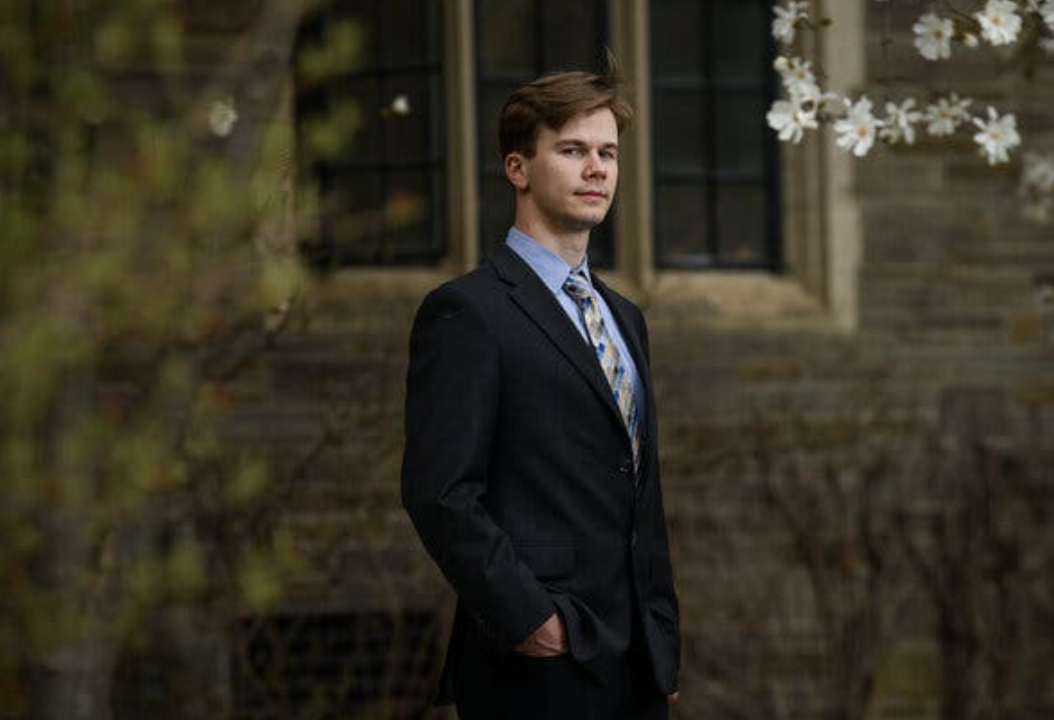
Cullen O’Hara, a Cornell University senior, is the co-editor-in-chief of the Cornell Review, a conservative student paper, which has editorialized against the content warning proposal. (Credit Heather Ainsworth for The New York Times)

Cullen O’Hara, co-editor-in-chief of The Review, said that the editorial board did not believe the student assembly represented a majority of students and saw the resolution as endemic of broader free speech issues.

“We are very opposed to trigger warnings which we think would chill the discussion in classrooms, which we already believe are one-sided,” said Mr. O’Hara, a senior.

The student assembly will discuss the trigger-warning resolution with the administration on Thursday, at a previously scheduled meeting between Ms. Pollack and the assembly.

“I think the response is purposeful in focusing on the wrong part of the resolution,” said Valeria Valencia, a senior and the Cornell University Student Assembly president, “turning it into an issue of academic freedom and not one of protecting students, when both things can coexist.”

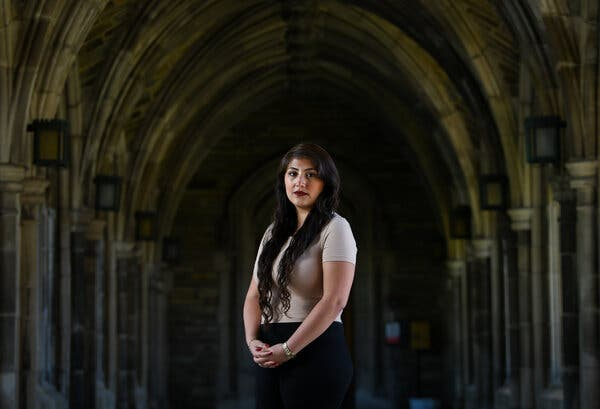
Valeria Valencia, a Cornell University senior and president of the student assembly, supported the resolution on content warnings. (Credit Heather Ainsworth for The New York Times)

Ms. Ting, the writer of the resolution, said she is considering amending the proposal. “But first I want to do more due diligence and reach out to faculty and administration to see how we can find the right balance,” she said.
Fragmented Attention

By Dr. Corinne Masur

“Spending the majority of your day with fragmented attention can permanently affect your ability to sustain concentration.”

This is something that Cal Newport, Associate Professor at Georgetown University, said in a Ted Talk about why he has never had a social media account and why he turns off his notifications while he’s working on a project.

He talks and writes about the impact that social media and multiple sources of information have on our work habits, productivity and ability to concentrate. His premise is that jumping from email to Facebook to Slack feed, whether at work or at home, impairs our ability to actually do what we need to do in an efficient way as well as affecting our overall ability to sustain attention.

He calls shifting from doing a task at work to looking at an email a “context shift”. And in an interview in the New York Times Magazine last Sunday (1/29/23), he said that “even minor context shifts are poison” – by which he meant, that if you are writing a report at work and you stop to check a message, there will be a cost to your productivity. You will have to exert a large amount of mental energy to go from that message back to the report you were writing. And if you do this multiple times while writing the report, you will take longer and have to work harder to finish it.

Cal Newport advocates turning off your notifications and doing one thing at a time.

Old fashioned?  

Sure – 

but also, according to him, more efficient and more productive.

So what does that have to do with parenting?

Well, I would be remiss if I advised you to try to get your children to turn off THEIR notifications or if I suggested that you could actually get them to stop looking at their phones all the time. They won’t listen, they will argue, they will get angry – and we all know this.

BUT – there are a couple of things you CAN do.

First, you can start to adopt some of these habits yourself. And then you can talk about having done so IN FRONT OF YOUR CHILDREN.  You can talk about whether or not this has helped you. 

There are numerous benefits to you here – you may actually find that you ARE more productive, and you may find that you feel less stressed.  Constantly trying to pay attention to several sources of communication and information all day long is stressful and anxiety provoking.

Second, while your children are young, you can insist that they put their cell phones (if they have them) in a basket while they do homework and at family meal time.  You can probably get away with this through junior high – or, if you are really good, through high school.  It will be hard, but if you persist, your children just might develop some good work habits that are more productive and less stressful for them.

Cal Newport’s Website: https://www.calnewport.com

Cal Newport’d Book: calnewport.com/books/deep-work/

The Herd

We humans are social beings.  We need others, not just to thrive, but to survive.  Whether we are older people, living alone, or single parents living with our children, whether our spouses travel a great deal or whether we ourselves travel for work and spend time alone in hotel rooms, whether we feel alone, lying in a hospital bed, or actually are alone after a separation or divorce, we all suffer when we lack community, support and human touch.

Below is a beautiful article on this subject which appeared in the New York Times this past Sunday:

MODERN LOVE

I’ll Get By With a Little Help From My Herd

A single mother, alone with a toddler in a foreign country, finds community during Covid — and then creates one for others.

Photo by Brian Rea

Seven mothers in a row crouching protectively over their small children.

By Betsy Cornwell | Jan. 20, 2023

My ex was a bad husband but a good horse trainer. When we met, he had just bought a pony for 50 euros that the seller swore was unbreakable. Three months later, he sold it for 10 times that price as a child’s Christmas present.

He was kinder to horses than he was to me. He had better luck training them, too. His attempts to break me were easy to brush off at first, but they grew more forceful after our son was born. On our baby’s first birthday, he told me that if I didn’t obey him, he would have me deported back to America and keep our son in Ireland.

I reacted the way any threatened animal mother would: I took my baby and ran.

After a brief brush with homelessness, we moved to a rural cottage I could barely afford even with multiple jobs. In a field across the road was a skinny dun mare, her mane falling out and her hide raw where she had bitten off her own fur. You could always see the whites of her eyes.

One of the many things my ex taught me about horses is that a horse kept alone in a field will never thrive. It won’t sleep, will go off its feed, will even start pulling out its own hair. But if you put any other herd animal in with it (doesn’t have to be another horse — could be a sheep, goat or donkey), they’ll get on fine.

That’s because in a herd, animals take turns being the lookout. One animal keeps watch while the others rest and eat. A herd animal by itself, or alone with its baby, is always watching for danger; it won’t lower its head long enough to eat much or feel safe enough to sleep deeply.

I felt for that horse. I felt like her, too.

I didn’t know my neighbors — and after learning to fear my spouse, I had become afraid of everyone else, too. I kept my door locked and curtains drawn. Even after the long days of working single parenthood were done and my child was in bed, I watched the windows for unexpected shadows, predator eyes.

I had a safety order, the Irish version of a restraining order, but my animal brain knew that wasn’t the same as real safety. I barely ate and I slept fitfully, half my brain alert for danger. Congratulations on my weight loss made me want to scream.

By then it was April 2020, and Ireland was enduring the longest lockdown in Europe. I might have been alone with a toddler, but everyone else was alone in their fields, too. Logging on for Zoom reunions with family and friends I hadn’t caught up with in years, I felt less isolated than I had before lockdown. Apart from the creeping sense of Covid doom, I kind of didn’t want it to end.

It was in that disembodied space that I felt safe enough to start opening up to people again. Online I talked about my grief over my divorce, the hardships of single parenting, my financial struggles. I lived in fear of eviction and of separation from my child if my ex were to succeed in having me deported. Online, I didn’t have to explain my weight loss or the way I kept flinching at unexpected touch.

I connected with people who had been through similar things, but more important, I learned how many people are willing to reach out in kindness just for the sake of it. College friends from the States crowd-funded my rent and grocery money one month when I couldn’t make it; they paid for my parental visa application, too.

Old friends from every era of my life — as well as people I had never met — reached out to help me survive. Their generosity revived my faith in myself and in others and helped me imagine a better future — one where I might be able to offer that same help to other single parents who felt alone in their fields.

At night, when my baby or my anxiety woke me, I soothed myself to sleep by reading real estate listings, dreaming of a home not just for us but for other single parents, a childcare-inclusive residency space where we could take turns being the lookout. I longed to give other single parents the thing I most needed myself: a respite from the hyper vigilance of loneliness.

One sleepless night, I found a place that I thought could work, an old knitting factory on Ireland’s west coast, priced low because it had been on the market for years. The seller agreed to a rent-to-own scheme but said I needed to give him a whole year’s rent up front.

I barely had one month’s worth. I got ready for bed that night full of longing that was close to despair. But I told my online communities about my idea and did something they had with their love taught me to do — I asked for help. Then I went to sleep.

When I woke, I found that a herd of friends and strangers had kept watch over my son and me while we slept. There was several months’ rent funded already, and within days the whole year was covered.

After my baby and I moved in, I spent the next two years crowdfunding the knitting factory’s purchase and renovating it to receive guests. I hacked through brambles, erected fencing, scrubbed musty old walls, cleared away cobwebs. And every day I talked online about my dream of a family home that could care for other families, and more strangers and friends joined in support.

I finally closed on the building in spring 2022, having raised the entire purchase price. My herd had kept my baby and me safe, and it was time for me to offer that safety to someone else.

Last summer, I hosted my first single mother resident, a remarkable woman named Tawasul who came to Ireland as a refugee from Sudan with her two young children. In the knitting factory’s sunny kitchen, we shared strong Irish tea and cardamom-spiced Sudanese coffee while we talked about domestic abuse and immigration and the strange sadness of watching your children grow up in a different culture.

To fund the residencies, I also began to offer the space on Airbnb. A few years ago, locking the door every night against my ex-husband and neighbors alike, I never could have fathomed being brave enough to share my home with strangers.

But the funny thing is, those strangers have made me feel safer. The backpackers who stay up late keep a vigil without even knowing it. The retirees who wake up early for the ferry take the morning shift. I barely talk with most of them, but their presence helps me breathe easier because I know there would be witnesses if my ex did show, especially now that my safety order has expired. But really, the feeling of safety I get is more primal.

I used to fantasize about putting a sheep or donkey in the field across from my rented cottage to keep that dun mare company. I settled for visiting her myself when I could, picking long grass for her, letting my baby pet her rough velvet nose. Often, she would nod off while we sat there.

A few weeks before we left for the knitting factory, I saw another horse with her. They didn’t bond right away, mostly remaining in their field’s opposite corners. But by moving day, the mare’s fur was already growing back in.

It’s not like every person who stays at the knitting factory is a kindred spirit either. But their presence soothes my animal body in a more profound way than I ever expected.

Since we bought the house, I have started getting to know my neighbors, too. It took me those two years to get brave enough, but the rewards of that bravery are many: My son runs to greet his classmates at the playground, and I share custody of a sweet gray cat with the couple across the road.

And last week, an elderly neighbor brought us an unexpected gift: a goat.

I thanked him but thought, “Oh god, what am I going to do with her?” Or rather, them: I knew that I would have to get her a friend.

Until our goat’s companion came, my son and I stayed outside with her for hours, feeding her porridge oats, stroking her while she regarded us with her mild letterbox eyes. “I’m sorry we’re not goats,” I wanted to say. “But I promise — we’re herd animals too.”

Best Parenting Books 2022

Here’s a round up of the top five best parenting books that were released in 2022. Happy reading!

Best New Books:

1) Brain-Body Parenting: How to Stop Managing Behavior and Start Raising Joyful, Resilient Kids by Mona Delahooke

“Based on years of clinical experience, this book offers a new approach to parenting that considers and centers the essential role of the entire nervous system, which controls children’s feelings and behaviors, in how to raise children.”

2) Peaceful Discipline: Story Teaching, Brain Science & Better Behavior by Sarah R. Moore

“A reflection on the body-brain connection in behavior and why our concept of “consequences don’t work for children, and what to do, within a positive framework, instead.”

3) Raising Antiracist Children: A Practical Parenting Guide by Britt Hawthorne

“An essential guide to raising inclusive, antiracist children from educator and advocate, Britt Hawthorne.”

4) LGBTQ Family Building: A Guide for Prospective Parents by Abbie E. Goldberg

“This easy to read guide offers a comprehensive overview of parenting with regard to the specific complexities, joys, and nuances of being an LGBTQ+ person and parent.”

5) Good Inside: A Guide to Becoming the Parent You Want to Be by Dr. Becky Kennedy 

“A comprehensive resource offering new techniques for modern parenting and how to raise kids to feel confident and resilient.”

And a few oldies but goodies:

(These are a few recommendations but this series continues all the way up to adolescence!)

Coming Home to New Traditions

By Victoria Cano

I was never a cooking kid. Despite the many invitations into their separate kitchens I always refused my parents offers to help cook. I never made paprikash csirke with my mom or baked ziti with my dad. The kitchen and all its mysteries was the domain of parents. Except on Christmas. Because on Christmas we didn’t cook. We baked. 

Cooking, to me, was the Wild West. Full of strange ingredients, relying on instinct and secret troves of knowledge. Baking was different. There were a key set of players that could be rearranged into a thousand different delicious things. There were steps, there was order, there was control. And as a kid, in that, I found magic. 

For the past seven years I have missed those baking Christmases. I wasn’t with EITHER parent – both because I lived abroad and because of the pandemic. 

For many people, like me, this will literally be the first holiday season they have together with family in years.

And while that is so so wonderful. It presents a challenge many of us weren’t expecting. In the absence of our routines, in a world turned topsy turvey, traditions were rearranged. Adapted. Transformed. As were relationships and rituals. 

Right before the pandemic my mother had gone on a few dates with a guy, I barely remembered his name. Now I know him as Peter, my stepfather, and the man who made her feel loved enough she decided to move in with him after twenty years living on her own. The era of going to my grandmother’s house for the holiday too has ended (she’s moving in with my mom.) And my father, who, over the 25 years of their divorce only ever lived down the road, is moving the day after Christmas to Albany, 3.5 hours away.

There is a part of me that just wants to yell ‘Stop! Hang on a second! Let me catch up.”

At first, I felt like that little kid being invited back into my parents kitchen to cook.I don’t understand. Where is everything as I left it? Where is it all going? 

I’m a thirty year old kid and having these questions, these before bedtime fears. So too may many of your little ones. Routine and ritual can be so beneficial and comforting to a child. 

Kids love baking. 

So how do we talk to our children, both little and big, about life, the holidays as they now are, about a world where traditions sometimes have to change and rearrange?

Every year as I was growing up, my mother and I celebrated advent (the entire December month long lead up to Christmas.) Since I was 18 and moved away, we haven’t had much of a chance to spend that time together. I haven’t gotten to read to her her favorite Christmas Story (A Child’s Christmas in Wales by Dylan Thomas.) 

This year I have. And when I sit on the couch to do so, my grandmother is there too. And before we begin, Peter lights the Chanukah candles and sings Maoz Tzur. Later tonight I’ll help my father finish packing, moving for the first time to a place that is his and no one else’s. As I sit and read, I can see the advent candles flickering side by side with our menorah. 

It is indeed a strange new world. And that can scare kids and their grownups (and grownup kids) alike. But in the strangeness, new beauty and new wonders can be found. And as I sit and read, looking at the glowing world around me, I am reassured that everything is going to be fine, that the kids are going to be alright. Because they’ll learn that old traditions mesh with new ones, and you can make something together, in which everyone is involved. And, from where I’m sitting, that’s a wonderful thing. 

After I finish reading, I’ll watch the candles go out, wrap my dad his presents to open in his new house, and later I’ll help with the cooking (and the baking!)

Rethinking Thanksgiving

By Dr. Corinne Masur

Now that the Thanksgiving rush is over, the turkey is eaten and we have all returned to our own homes, perhaps we need to rethink this holiday.

Recently I listened to an interesting show on NPR about Thanksgiving from the Native American perspective.

It summarized what we all know by now: that the Thanksgiving story taught to most of us was a largely made up, highly romanticized version of the colonial — Native American relationship.

The show offered the Wompanoag perspective on what happened between the Colonists and the Native people — and it was NOT what any of us heard about in elementary school.

The author of a beautiful children’s book on the subject (see below for link) spoke about her people’s perspective. And if you go to the website that describes her book, this is what it says:

*****

A New Thanksgiving Story for a 21st Century America

Many Americans see Thanksgiving as a holiday rooted in our nation’s birth, celebrating a harvest feast. They imagine tables laden with turkey and its accompaniments, surrounded by brave Pilgrims and their newfound “Indian” friends. These ideas are reinforced every year in America’s classrooms, on televisions and at annual parades as the big day arrives.

Unfortunately, these ideas are based on a myth born at the height of the Civil War. Sarah Josepha Hale, an influential magazine editor who wrote the nursery rhyme “Mary Had a Little Lamb,” fervently campaigned for a national day of thanks. She envisioned a Thanksgiving holiday to celebrate peace and unite a divided country. In September 1863, Hale wrote to President Lincoln, urging him to create a national holiday, and he agreed. Thanksgiving, as we know it, was born.

Images of Pilgrims, “Indians” and turkeys embedded themselves into our nation’s conscience in the decades that followed–all at the expense of the true Thanksgiving story and the Wampanoag peoples who saved the Pilgrims. European historical records and Wampanoag accounts present a very different story.

In September 1620, a group of settlers left Plymouth to start new lives in the colony of Virginia. A storm blew them off course and they found themselves moored off the lands of the Wampanoag people in present-day Massachusetts. The newcomers explored their new world and stole food and provisions from Wampanoag homes. They created a new settlement, named Plymouth, on the site of a Wampanoag village devastated by disease and warfare caused in large part by earlier visits by European traders.

Nearly half of the settlers died that winter, largely due to exposure. When spring came, Wampanoag sachems (leaders), helped the newcomers and taught them how to raise local crops known as the “Three Sisters”: Corn, beans and squash. In November 1621, the settlers celebrated their first harvest. When they heard the gunfire, over 90 Wampanoag warriors and others joined the nearly 50 settlers and feasted as well. This was Keepunumuk, one of many harvest festivals celebrated by the Wampanoag people each year.

Unfortunately, the celebrations — and the newcomers’ thanks — did not last long. Fifty-five years later, in 1676, the settlers killed the son of the Wampanoag sachem who saved them. This was not new. European, and later American, settlers regularly attacked and exploited the Native people they met. This left Native Americans fighting foreign diseases, illegal occupation and removal from their homelands. The American government also created boarding schools that punished Native Americans who dared to speak their language or practice their culture.

*****

This is a painful part of American history — and one that is difficult to know how to approach with our children.

So what is a modern American family to do about this holiday? What can we rightfully celebrate? And what should we emphasize next year?

Many of us love the tradition of Thanksgiving — the turkey, the side dishes, the gathering of family and/or friends, the pies, (most of all the pies).

Or maybe we are vegetarian or vegan or come from elsewhere in the world and do not entirely own this holiday as our own — or maybe we choose not to gather or make a big deal of the day — but most of us have the day off as do our children —

So, how about if we make our own tradition? How about if between now and next year, we think about what kind of holiday ritual makes sense to us?

I suggest, as did the cross-cultural panel of guests on NPR, that we all find ways to celebrate what we have, that we celebrate our gratitude for whatever it is that makes each one of us feel grateful, and that with our children, we make this explicit and spoken.

We can still have a Thanksgiving feast — whether it features turkey or not — and we can still offer toasts or we can go around the table and say what we are grateful for — or we can respect the shy people at our table and just talk about our gratitude more casually — or we can take a hike out in nature and be grateful for the beauty we find there — or we can serve food at a communal kitchen — or we can spend a normal day at home. 

But how about spending the day being grateful — and perhaps also make sure to have the children’s book below on hand to read to our children.

For children:

For adults:

NPR show:

The real history of the first Thanksgiving
In-depth analysis and commentary on today’s biggest news stories as only the BBC can deliver. BBC “Newshour” covers…www.google.com

or read:

The Reincarnation Story

Tejal Toprani, MSW

Tejal Toprani Misra is a psychotherapist in part-time private practice and a most-time stay at home mom. She lives in Arizona with her spouse and two young sons.

In the 4th grade I had two best friends with whom I played at the back of the playground during recess.  

One Monday, my Korean Christian “best friend” asked me what I did on Sunday. I don’t remember what my answer was but it did not involve church.

“Why?” She asked. 

“Because I’m not Christian.” 

Eleven year old me was raised Hindu and I still am. 

We can break here for a quick religious education: For those of you who don’t know, Hinduism is the world’s oldest religion and the third largest religion behind Christianity and Islam. Hindus believe that God exists and that all human beings are divine. Hindus also believe in the importance of religious harmony among all things. Our religious place of worship is called a Temple and the word for “temple” is different depending on what your native Indian language is. 

Okay, back to the story: It’s Monday and I am at recess and my “best friend’s” response to my recollection of my Sunday was “You didn’t go to Church?” and I say “No I’m not Christian, I’m Hindu.” To which my “friend” replied, “If you’re not a Christian, you’re going to go to hell!” 

Eleven-year-old me was shocked. 

How could someone so affirmatively declare what was going to happen to ME in the after life? Who died and made her Queen? 

But all my eleven year-old self could blurt out was “Nooo I’m not!!!” Being told I was going to go to hell felt isolating and hurtful. I didn’t know what to do with this information. Our other best friend stood by listening. 

So when I went home that day I asked my Dad if we were going to hell when we die.

It bears mentioning that my Dad is the opposite of Mr. Rogers when it comes to explaining things to children. 

But hindsight is 20/20. 

My sweet, well intentioned Dad said that as Hindus, we don’t believe in hell. 

Whew! 

What a relief!

Now I can take this information back to Janet (oops!) and be exempt from any “Hell” she thought I was going to for not worshiping the same god as she did.

My bad! 

But my Dad didn’t stop there. He proceeded to tell me that Hindus believe that heaven and hell are all here on earth. Hindus serve out their karma for good and bad deeds here in cycles of reincarnation. He said, “When each life ends our souls come back in other living things like a spider, a cockroach or …. a warthog.” 

Eleven-year-old Tejal was freaking the F out! 

My Dad sensed my fear and tried to walk backwards away from this landmine by saying “Maybe you will come back as a bird.” 

To my parents credit there wasn’t a blueprint on how to handle these questions.. The great immigration cycle of Indians from India started in 1965, less than a 100 years ago. Up until recently there weren’t any childrens’ books or regular temple activities to teach young Indian American children like me about their culture and religion. 

I wish I had had the chutzpah to explain my background when my Christian “best friend” told me I was going to “Hell.” I didn’t have a rebuttal or an explanation of my own to share with her.

As a result, the experience really shaped me. It empowered me to learn more about my culture and religion. It then informed me to figure out how I was to educate my children on Hinduism. Even though I’m still afraid of coming back as a warthog in my next life, I’m doing my best to write a blueprint that works for me and our family.