2020

Dr. Corinne Masur

People say this is a lost year.

People say we are living in the Twilight Zone.

But this year is not lost and it is not science fiction.

We are living through a very difficult time – but it is a time we will always remember and which our children will always remember. It will have been a year of having to adapt to strange and new circumstances, a year of worrying about our safety, a year of mourning those who became ill or died.

But humans have always suffered. We have had wars and epidemics and pandemics and natural disasters throughout history and pre-history. Now we are the ones suffering.

We are worrying and missing the things we cannot do and the people we cannot see – we are worrying about the effect that all this will have on our children, we are enduring deprivation in so many forms.

AND we are figuring out how to survive it.

The fact is this: we just need to do the best we can each day. And maybe this means letting the kids stay online for 6 hours while we get a job done. Or maybe this means letting them go OFFline for an hour even while school is still in session because they simply cannot pay attention for another minute. Maybe this means having pizza for dinner again or maybe it even means breaking down in tears or shouting at somebody.

None of these things will ruin our kids for life.

And neither will missing a normal year of school and friends. This will not ruin our children’s futures.

A whole generation of children is going through this pandemic – they ALL had a disrupted spring, a different kind of summer and now a disrupted and in some cases, disorganized school year.

But parents forget that this is the experience of this entire generation and think that their particular child will be the only one who gets behind in what he or she is supposed to be learning.

But it’s everybody. Everybody is going through this. Everybody’s year is different and disrupted and strange. We will have many stories to tell in the future about this year.

And all our children will make up what they did not learn this year. AND they will have learned some things we did not expect them to learn.

Their tech skills will be better. Their ability to tolerate change and uncertainty will be better. Their ability to figure out how to occupy their time will be better. And their confidence that they can live through difficult times will be better.

The important thing to remember is that our children can manage if we manage. Anna Freud, the daughter of Sigmund Freud, studied the children who went through World War II in London. She compared the children who were sent out of the city to live with families in the countryside (where there was less bombing) to the children who stayed in London and had to run to shelters with their parents when there was an air raid. And what she found was that the children who spent the war WITH their parents in London (often just with their mothers and siblings) fared MUCH better emotionally than the children who lived in the countryside with host families. Even though the children in London heard sirens and bombs falling and saw neighborhoods destroyed, they actually felt safer than those who were without their families. Children whose mothers could tolerate their own fear and their children’s fear and provide soothing and reassurance provided enormous protection from traumatization for their children.

So this is one thing that is important to recognize now. We do not have to be perfect as parents. In the long run, it really does not matter if we ate take out or pizza four times a week for a year. And while it is strange and different to have to wear masks and socially distance and talk about how to be safe, this will not hurt our children as long as we, as parents, can tolerate it and manage it ourselves and reassure our children that we are doing the best we can to keep them safe.

Even if we cry or feel irritable around our children, even if they cry or fight or feel irritable around us, as long as we can talk about our feelings with them and let them talk about theirs, as long as we can soothe our children when they feel scared or defeated, as long as we can figure out MOST of what we have to do each day, and as long as we realize that 2020 was not a lost year, it was just an incredibly difficult year, we will all come out of this OK.


Concrete suggestions for parents:

  • Eat at least one meal a day together with your children
  • For children over 3 or 4 bring up topics at the table such as what was the hardest thing that happened today? What was the weirdest thing that happened today?
  • Some families like to go around the table and have each person tell a “rose” (good thing) and a “thorn” (bad thing). This encourages and facilitates children talking about what is hard right now and what is OK right now.
  • Conversation and interaction with each other and with our children is an antidote to all the time they are spending online. Real in person human contact at home is more important than ever – and this is true even if the time spent interacting includes fighting or disagreeing with one another. Having to negotiate in person is a skill that we all need to improve on.
  • Keep a routine. It’s harder now than ever but regular mealtimes and bedtimes help in an unstructured or scary time.
  • Inaugurate reading to your children again – even if they seem too old. Reading is not just for bedtime! Pick a really good chapter book and on weekends or on afternoons when your children are done with school (if you have time) spend a half hour or 45 minutes reading a chapter out loud. Snuggle on the couch or let everyone sit where they want and draw or fiddle around while you read. Your children may resist at first but this often becomes a favorite activity – especially if the book is suspenseful or an adventure tale.
  • Schedule breaks so that you can have time away from your children: whether you take turns with your partner, let the children watch an hour of youtube or a movie, etc., you need at least one hour each day to yourself. (And this does not mean folding laundry).
  • Get outside at least twice a day and make sure your children get out too. Take a walk, mail a letter, ride bikes or scooters, whatever. This is necessary for everyone’s mental and physical health. And remember, there is no such thing as bad weather – there are only bad clothes. Make sure right now that each of your children has rubber boots, a raincoat, a parka that fits for this year, a hat, gloves and snow boots. You can go out no matter what the temperature or precipitation – and you’ll feel better if you do.

Back to School 2020

Karen Libber Fishbein, LCSW, is a therapist and mother who lives in Philadelphia with her husband and two daughters. As a licensed clinical social worker, Karen specializes in counseling college students and young adults with mood disorders, anxiety disorders, eating issues, relational challenges and difficult family dynamics.

It is Back to School Season 2020! What does that mean this year amid the coronavirus pandemic? It certainly is different than other years. I can think of numerous possibilities and options for school, and none of them are ideal.  Five options are listed below.  Each option has its own risks and challenges for children, families, and teachers. 

Option One: Our children go to school daily in person, like all other years, and we worry for their safety, their teachers’ safety, and the safety of their parents and caregivers.  

Option Two: Children go to school two or three days per week, or alternatively each day but for less time than usual. This option likely involves fewer students in each class. Yes, exposure to COVID is theoretically reduced in this model, but there is still some risk, and what are parents and caregivers supposed to do if they work during the days/times their children aren’t in school?

Option Three: Children engage in entirely virtual learning. Of course, this greatly reduces the risk of the virus inflicting students, families, and teachers, but how much learning can children actually absorb via Zoom, online programming, or Google chat? Also, who is supposed to coordinate and supervise this learning? I have you in mind, parents and caregivers who are lucky enough to be able to work from home, but also have demanding jobs. For parents who work on-site, this scenario is even more challenging. Also, what about socialization with other children? I find it hard to believe that virtual school can provide the adequate level of socialization children need to develop into their best selves.

Option Four: Parent(s) take(s) time away from the workforce to provide care/instruction for their children at home; for all intents and purposes, this is homeschooling. For the right parent/children this may be feasible, but what will the long-term costs be for the parent who exits the workforce for an extended period? Also, what does socialization look like in this group as well? How can families guiding their children’s learning at home engage in socialization in a safe way?

A final fifth option involves creating a learning pod of a few children and one teacher. This seems like the best scenario to reduce risk and increase learning, but it is not without significant financial expenses and logistical hurdles.  How are parents supposed to achieve a full day’s worth of work while hosting multiple children in their home to learn, especially younger children? Children are hardwired to explore their surroundings physically and cognitively, ask questions, laugh, and learn experientially (particularly through play). I cannot imagine having a teacher and multiple children doing what they are supposed to do in my modest 2400 square foot home, while both my husband and I are expected to work remotely.

I am a mom to two daughters, ages almost five and seven.  They are both terrific kids (yes, I am biased), but I do wonder what kind of long-term impact their recent schooling (or lack thereof) may have on their futures. My husband and I tried to engage our seven-year-old in her virtual first grade class this past spring, but she was way more interested in hands-on learning. We visited a local farm each week, she learned about gardening and baking, she took up singing as a hobby, and she started piano lessons with her grandfather. In the home environment, engaging with her Google classroom or examining different academic materials was very boring, and she would tune out quickly.  

Interestingly, our almost five-year-old has benefitted greatly from the extra time at home with her family and away from a structured school setting. Her appetite and sleep have improved, and her semi-frequent behavioral outbursts have almost disappeared.  What does this mean for her return to school? Well it’s a bit complicated! We currently have her enrolled in kindergarten as one of the youngest students in her class; her birthday is the cutoff date.  Our school’s current plan is to be virtual through the middle of November at the earliest. Given her progress over the last few months, her young age, and the thought of a five-year-old being plugged into a screen for daily learning, we plan to pull her from kindergarten this year and start her next year.  

This is the first time in history when virtual education of our youth is the most viable option. It will probably be one of the greatest social experiments of our time, and our children will be the guinea pigs.   How will this new way of learning influence our children? While they may not be as advanced in reading, writing, or math as their recent predecessors, I remain hopeful that living through the pandemic will develop different skills and strengths that will shape their futures in meaningful, intangible ways.

Anti-Racism Resources for Children and Families

Thoughtful parents are reflecting, protesting, changing, listening, and learning. Here are resources to engage our children in conversation and action:

Resources for Talking about Race, Racism and Racialized Violence with Kids

https://www.commonsensemedia.org/blog/how-white-parents-can-use-media-to-raise-anti-racist-kids

https://www.embracerace.org/resources/supporting-kids-of-color-in-the-wake-of-racialized-violenc-part-one

https://www.charisbooksandmore.com/books-teach-white-children-and-teens-how-undo-racism-and-white-supremacy

Re-Emerging from Quarantine

Dr. Corinne Masur

States are opening up.  Beaches are opening up.  

Camp is cancelled. 

And we are tired of being quarantined.

Parents are asking: 

Can we re-emerge? And how do we do it safely? 

Lots of people have started considering their options. They have started to think about seeing people, about going back to work, about actually eating out. And they feel like they can’t survive much longer without setting up some sort of play dates for their kids or young teens. 

The isolation, the deprivation is just getting to be too much.

Some people have said “To !@#!@ with it, I’ll just get the virus and get it over with”.

Some people have said, “Well I’m just going to just see people who aren’t seeing other people.” They’ve formed “pods.”

Some people have said, “I have to get back to work. I can’t not work anymore. The economy just can’t tolerate it and neither can I.”

Some people have invited a hair dresser to their house to give them and their families a haircut.

It is hard to live lives so different from what we’re used to. It is hard not to see the people we love, the people we have fun with, the people we want to hug and kiss. It is hard to socialize only on screens.

And many of us feel like we’ve reached our limit.

But now what?

Is it Ok to arrange some play dates? 

And how about going to the beach? What about swimming in a neighbor’s pool? Or setting up a baby pool and inviting other kids to come over and get in?

Well, states ARE opening up, restaurants and business are opening and the beaches ARE open in some places – but Coronavirus has not gone away.

For those children and adults who have not had it, it is still a risk to socialize with others whose socialization histories we don’t know. According to a former director of the CDC, as quoted in a recent article in the New York Times, “We’re reopening based on politics, ideology and public pressure. And I think it’s going to end badly.”

In other words, we’re opening because we’re tired of this.

And, as a result, according to the article, “The much-feared “second wave” of infection may not wait until fall, many scientists say, and instead may become a storm of wavelets breaking unpredictably across the country.” But we won’t see this wave right away. “It takes two or three weeks for the newly infected who become severely ill to need hospitalization. An initial calm may encourage more Americans to drop their guard or more governors to ease restrictions.”

In other words, we need to persevere with masks and social distances and a certain amount of deprivation.

We need to get out. But we need to get out safely. So here are some tips:

If you want to set up play dates, consider having them outdoors with only a couple of children at a time. Let the children know ahead of time what the rules are for social distancing.        

Try some of the following:

  • Letting your kids ride bikes or scooters with a couple of friends, staying several feet away from each other.
  • Letting your kids play one on one badminton if you have a net or tennis if you have access to a court – being across the net from each other is automatic distancing! Just make sure you let them know that BEFORE and AFTER the games it will be time for 6 feet apart again.
  • Meeting another family at a state park which has a lake and have each family rent a canoe and paddle around together.
  • Meeting another family at a trail and letting the kids hike or mountain bike on a trail, keeping social distance while on the trail and when off the bikes.
  • Getting together with other kids who have been quarantined and whose parents have been careful about social distancing and who are not going to work yet. 
  • Letting teens who drive and have access to a car  get together by driving their cars to a common place (a park or parking lot) and talking to each other from the cars.
  • Having your family setup chairs outside to visit with others that way, being clear with the kids that they must give everyone 6 feet.
  • Going to an older relative’s house and setting up chairs on their lawn or side walk for a short visit.
  • Going to the beach and taking a large beach blanket and it making it YOUR space. Let your children know before you go that they must either stay on your beach blanket or take a walk or a swim with you or each other (depending on their ages) and keep at least 6 feel from anyone else.
  • AND continue getting together online.

But what about toddlers who cannot understand about social distancing?  A grandmother recently asked if she should have a social distancing barbeque with her daughter and son in law and their 18-month-old.  Her husband is dying to hug his grandson and simply cannot wait another month! 

This is tough.  We want to see each other, touch and hug each other – and toddlers, who are often naturally affectionate, will want do that more than anyone!

My advice to this grandmother was to have the barbeque – we NEED to see the ones we love.  But we need to do it safely. I suggested that the toddler be allowed to hug grandma and grandpa around the legs and that EVERYONE keep the 6-foot distance from one another the rest of the time.  That won’t be enough – but it’s better than nothing.  And I suggested having the parents prepare their toddler for what a “grandma and grandpa hug” will be – and to practice it before they go. Again, it won’t be easy – but it will be better than not seeing each at all.

And what about going to restaurants, getting haircuts at the salon and that sort of thing?

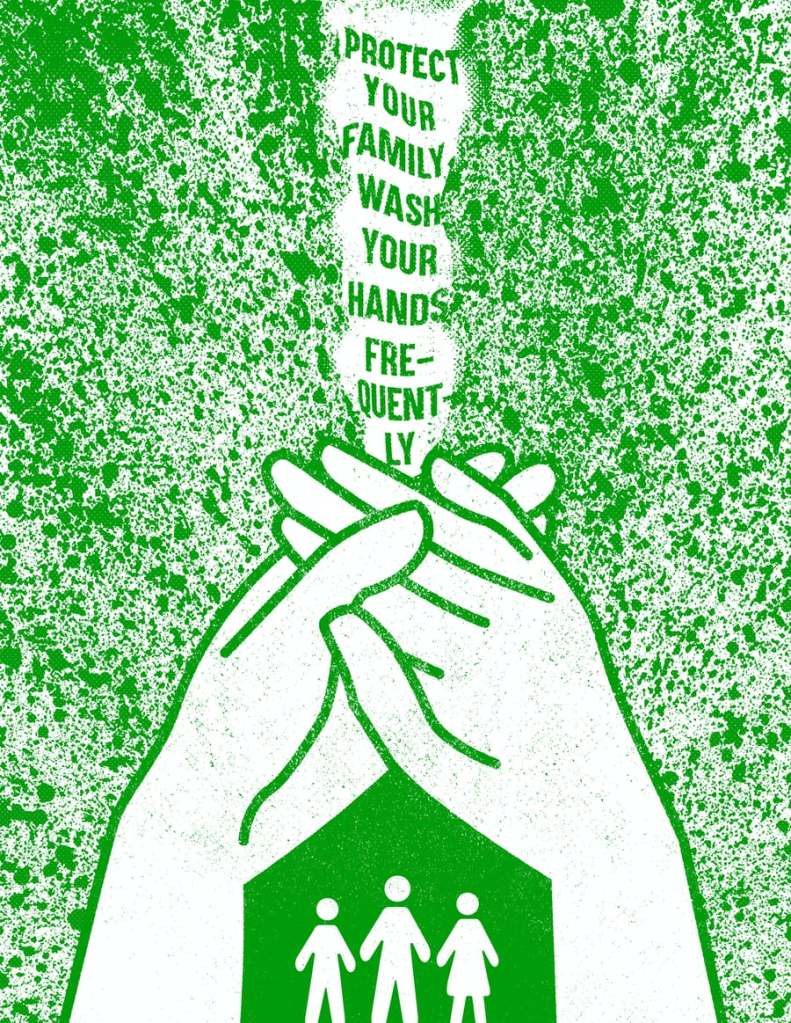
Well, social distancing and wearing masks and washing hands frequently are still the safest ways we know to stay well. If you feel you can go out AND take these precautions while being out, if you are willing to take a bit more risk, then do so.  Different families have different levels of risk tolerance.  We will see plenty of people doing things we wouldn’t do or at least that we haven’t done yet. This will challenge our own standards and beliefs about what is safe.  

It’s hard.  We will be tempted to judge other families for their choices and we may feel judged for ours. 

We all just have to make the choices for ourselves and our children that we feel are best for us and let others do the same.

Week 8

georgina-vigliecca-dr1U6IZldVE-unsplashDr. Fran Martin

We’ve been at this, this quarantine for a long time:  Two months now, and still counting. 

I am watching children, and of course their parents, (but I’ll come back to them) lose some of their excitement over the newness of no school.  Like the rest of us, they are missing life as they had come to know it – the routine of school or day-care, days filled with friends and predictable activities, and then time with their parents.  Needing to be home all the time, seeing no one but immediate family is getting old and tiresome.  Fuses are becoming shorter; resilience is diminishing.  What seemed kind of fun at first, now may  feel way less exciting. Continue reading

Answers for Kids’ Pandemic Questions

photo-1475609471617-0ef53b59cff5Check out this helpful resource from Psychology Today!
Here’s a sample Q&A:

I’m scared to go to bed.  What if you get the virus while I’m sleeping and go to the hospital or die?

Answer:

Mommy and Daddy are keeping themselves safe and you safe by staying home. If we have to go to the grocery store, we wear gloves and face masks to protect ourselves and then we wash our hands when we come home. We protect ourselves and we protect you from getting sick. We are all safe.

https://www.psychologytoday.com/us/blog/psychoanalysis-unplugged/202004/how-answer-your-child-s-questions-about-the-pandemic


Working from Home

photo-1585183575305-750ab15467b6Dr. Corinne Masur

So many parents I talk to are working from home and having trouble making it work.

People who are single parents or whose partners are essential workers are alone most of the time and have no one to trade off with on child care.

Or, if parents do have a partner at home, they’re saying that taking turns taking care of the children is hard– especially when they both need to work at the same time but the children can’t manage on their own.

And infants, toddlers, and young children pay NO attention to any schedule you might have decided on.

So – what to do? Continue reading