Holidays: 2020

Dr. Corinne Masur

This is Bear and Piggy, two Native American carved fetishes.  A creative woman I know sent them as a gift to a friend.  And as she packed them up in their box and thought about the trip they were about to make, she decided to write a story about this for the children in her family.  Because she could not actually be with the children this year due to Covid, she printed up a little board book with the story accompanied by photographs of Bear and Piggy emerging from their box.
This year we are all going to need to think outside of the box when it comes to the holidays.  Many of us are used to doing the same things each year – getting together with the same relatives at the same place, in the same way.  And these rituals are so comforting and so familiar that many of us are trying to figure out how we can continue them this year.
But, really, does this make any sense?
In many places Covid numbers are way up. They are higher than they were at the beginning of the pandemic; they are higher than they were during the summer.
This year calls for creativity.  And flexibility.
One mom I know has made her garage into a playroom for her children and the occasional friend who comes over and she is thinking of setting up a dining room table there for Thanksgiving dinner – with the garage door open!
Another parent I’ve talked to is going to forego eating Thanksgiving dinner with the extended family and is going to have a brief Thanksgiving get together with masks and social distancing – just long enough to give each family member a to-go turkey dinner in take out containers!
So this year, whether you decide to write a children’s book and send it to the kids in your family, or eat in the garage, try not to let the old traditions tempt you into taking risks you really don’t want to take. 
Be flexible, be creative, and get out of YOUR box!

Winning and Losing

Dr. Corinne Masur

Today is a good day to talk to your kids about winning and losing. The subjects of sportsmanship, humility and grace come to mind – as well as braggadocio, sore losing and bitterness.

Whatever side of the electoral battle you were on, you and your children will be having strong feelings today – and this week – and perhaps for months to come.

So what do we say to our children? And at what age are they ready to have this conversation?

Well, really children of any age, starting around 3 know about winning and losing – and they can talk about the feelings that come when they experience each. Of course, depending on your child’s age, you will speak about this differently.

But the place to start is to remind your child – whatever age they are – that how they and your family feel at this moment is not the way that everyone feels. Some people are extremely happy and relieved today and some people are extremely disappointed and upset today. And you can remind them that it is normal to feel happy when you win and upset when you lose.

HOWEVER – and this is where the more nuanced part of the discussion comes in – it is important, however you feel, to be aware that other people might feel differently than you do and to treat them and their feelings with respect.

Good sportsmanship is something that kids who play sports should be learning. You can provide this as an example: after a game, your team shakes hands with the other team to indicate that you both played a good game and that there are no hard feelings left over from the competition.

The losers can feel upset but still lose graciously. This is a concept that can be introduced to a 3 year old and also to a 16 year old.

And the winners can feel happy and joyous but they can also behave graciously by telling their competitors that they played a good game. Children can be reminded that bragging about winning is not the way to go, even though inside it feels so good to win.

You can tell your children the story of “burying the hatchet”. When Native American tribes had disputes or wars with each other, when it was over, they literally buried a hatchet in the ground to symbolize the end of the disagreement.

This is a way to handle winning and losing too. After someone has won or lost, it is time to bury the hatchet, to accept the defeat or the victory and to move back to getting along.

Today, I fervently hope that our nation can do this – and that all of our children can learn something about how to win and how to lose with grace.

Election Time Reading

Source: The New York Times

Wondering how to talk about the election with your children? The Thoughtful Parenting Team enjoyed this article from The New York Times:

How to Talk About the Election With Your Kids

As always, we’d love to hear from you and to know what you think. Have other resources that support you in figuring out how to guide your children through this quadrennial stressor? We want to hear about it!

Why 2020 Is Warping Your Perception of Time

Source: Andrey Grushnikov

Have you been wondering why time sometimes drags and sometimes flies by during COVID? Cindy Baum-Baicker, a clinical psychologist based out of Philadelphia, explains why this is in her piece that was originally published in Psychology Today:

Have you noticed that since March, our conversations no longer begin with the weather but rather how weird time feels? Every day can feel like Groundhog Day, as tedious as the one that preceded it. Or, perhaps it feels that life is spinning so fast. Maybe you’re finding the moments ticking by all too slowly as you await the upcoming presidential election. You know it’s now the fall and that seasons have passed, but do you really feel it?  

Our sense of time is off. It may seem dissolved even though the structure of minutes-hours-days has remained the same. Suspended as it moves, why does the present seem isolated from the continuity of time? The reasons go beyond the changes to our daily routines and structures that COVID-19 has wrought.

The invisible threat of COVID-19 and the upcoming presidential election are a one-two punch to our felt sense of security. We no longer have our illusory assumptions that the future is knowable and predictable. Who will get sick? What will happen to our democracy? Will there be a peaceful transition of power? Researchers have found that without illusions of a knowable future, we tend to live more in the present moment. And our present moment—the very thing that is filling the gap of the unknown future—is riddled with stress.  

Altered time perception has been termed, “temporal disintegration” or “temporal discontinuity,” and has been shown to be related to mood state. People who are depressed are temporally desynchronized and often experience life at half its standard speed. A felt sense of slowed time is also experienced in everyday life; when we feel bored, time feels slow as molasses. The opposite is also true, as when we are in a creative flow, time seems to fly.

Have you ever been really frightened, and it felt like time stretched on and on, when in fact it was just a couple of minutes? This is because when exposed to threatening stimuli, people increase their time estimates. Daily, we are bombarded by news of rising COVID-19 deaths while at the same time subjected to unrelenting political advertisements alerting us to the disasters that may lie ahead if the other candidate wins. Is it any wonder then that time seems to move so slowly?

There is a downward spiral during stressful waiting periods. Distress makes time seem to slow down, which in turn exacerbates distress. It is a spiral of distress and time perception, making us feel ever the more like we are living in a time warp.

Time is a unique sense, and this may contribute to time distortion’s powerful effect. Unlike hearing, seeing, or tasting, the sense of time is not mediated by a specific sense organ but rather is “embodied” in a more all-encompassing way. It has been shown to be encoded in body signals governed by the insula, a fragment of the cerebral cortex folded deep within each lobe of the brain. Time sense fully embraces us because it lives throughout our brain.article continues after advertisement

Unconscious psychological defenses, too, can contribute to our altered sense of time. In a state of overwhelm, the psychological defense of dissociation often unconsciously kicks in. Dissociation is a feeling of being here and not being here simultaneously. This unreal feeling of time is analogous to an electrical system that gets overheated when overloaded. In a functioning system, the overheating trips the circuit breaker before it gets too hot. Dissociation helps us in times of powerful stress—overload—to remain as functional as possible.  

Given that we are living a collective trauma, is it any wonder so many of us are experiencing temporal discontinuity? As noted previously, when the future is unknown and the stakes so very high, we tend to abandon a sense of the future and live more in the present. And this present moment? This is a moment infused with the stress of COVID-19 and the election of a lifetime. It is no wonder, then, that many of us feel as if we’re living in a time warp. We check out because it’s too overwhelming to check in.

References

Dawson, J. and Sleek, S. (2018) The fluidity of time: Scientists uncover how emotions alter time perception. Association for Psychological Science September 28, 2018.

Holman, E.A., Grisham, E.L. (2020). When time falls apart: The public health implications of distorted time perception in the age of COVID-19. Psychological Trauma: Theory, Research, Practice, and Policy. 12 (51), 563-565.

Rankin, K., Sweeny, K., Xu. S. (2019). Associations between subjective time perception and well-being during stressful waiting periods. Stress and Health 35 (4).

So Woke?!? I’m So Woke, I’m Tired

Another humorous posts by Tejal Toprani Misra who is a psychotherapist in part-time private practice and a most-time stay at home mom. She lives in California with her spouse and two young sons.

“Why is your hand on your penis?” This is a question I ask my four-year-old at least once a day. In the active effort to be a forward-thinking, progressive parent I have to beat back my urge to say “Get your hand off your penis!!!” Growing up in a conservative South Asian family, touching yourself anywhere south of your neck would lead to shaming. Now as a parent I get to make the choice to reframe that question and proceed to psychoanalyze my four year old till I am up half the night. This is not where my effort to be a “woke” parent stops. It’s only the beginning. As a mom to second generation, Indian American, four, and one-year old boys (that’s a mouthful) I have also taken on the responsibility of educating them about their cultural background like I am Alex Trebek on Hindu Jeopardy. I’m not pioneering this endeavor by any means but I wish there was some camp I could send them to where they would come back with part immigrant hustle and part American entitlement. I’m envious of other ethnic backgrounds whose migration story to America started more than a 100 years ago so there is more of a flow chart to follow. Something like “if child A does not know about Hindu gods then have child A read book B.” As far as I know, this magical road map doesn’t exist for South Asians, or for anyone else, and if it does then please send it to me at the email below. I will be forever grateful. 

In this continued effort to raise “woke” kids I’ve added more to my plate. After learning that children start noticing race and gender as early three. I’ve been reading books to them on race and diversity since they were fetuses. We sent them to a school in the diverse city of Philadelphia with children of various backgrounds. I teach them daily that love makes a family and families come in all shapes, colors, sizes and make ups. And then in the spring of 2020 the glaring cracks in our racial justice system came closer to the forefront of our minds. Now I am reading about “when to talk about racial injustice?” Is it okay to tell them why there are so many helicopters flying over our previous home in Philadelphia? The answer for us was ultimately yes – but who knows if it was the right one. I do not say any of this in jest. I just have no idea how to navigate this territory. 

Recently the only people I have seen have been neighbors and somehow my professional degree put me at the top of the pedestal in regard to“how to talk to children about matters of race”. I don’t know how this happened but somehow it did. Or wait.  Maybe it didn’t have to do with my professional degree? This topic is a sensitive one and the sensitivity level changes based on the pigmentation of your skin. This puts people of color in a difficult position.  How is it that I/we are supposed to talk about this and how come we are suddenly supposed to be experts? None of us know the “right” way to discuss race but if we don’t discuss it, we will never know. 

Oh, and did I mention that we’re in a global pandemic and the world has stopped moving?  Well yes there is that too. To add insult to injury (shout out to my Mom for her famous line) we’re in a pandemic. We were blessed enough in my family to have one very compliant mask wearer and I told myself that by the time the younger one turns two in December this will all be over, right? Wrong. Now we will have to get my food dumping, bowl wearing on head toddler to wear a mask. If only there was some way to keep it on like a car seat. The silver lining to having a one year old is that he will never remember the pandemic, however I will have the joy of having it seared into my brain matter forever. 

I would love to drop the rope on being a “woke” parent but I also try my hardest to have the content my sons take in depict religious equality, racial equality AND gender equality. For me that means taking on the assignment of changing the pronouns in their books from “he” to “she.” I don’t even know if that’s doing anything but I’m doing it anyway. I try to have them watch content that passes the Bechdel and Latif test.  I also read them books on feminism and if something they’re watching seems off then I stop what I’m doing to interrupt and explain. I ask my boys to help me in the kitchen and clean up after themselves so one day their partners don’t say “Indian husbands don’t do anything around the house.” 

We also carry Costco (my four-year-old’s happy place) sized boxes of chips and water bottles in our car to give to unhoused people we see. This is my attempt at teaching our children that there are people in this world with less than us and to hopefully reduce any future douche baggery on their parts. I don’t mention all this to say I’m amazing but I’m definitely exhausted. The question is, am I a woke parent yet?

Who knows.

Perfect Parenting

Dr. Corinne Masur

After I mentioned in a recent post that it is OK for parents to allow themselves and their children to eat pizza four nights in a row, one mother responded by saying, “We are in a never ending battle with being too hard on ourselves” and she admitted to letting her children eat french fries for their dinner while sitting on the couch.

Why do moms in particular feel the need to be perfect as parents?

Why do we put THAT much pressure on ourselves??

Just today a mom was telling me how guilty she felt for getting more babysitting help.  And this was not because she wanted more time for herself – it was because she needed to work more and thus needed more coverage at home.  But she still wondered, “Is it OK?” And she still worried that her children would miss her too much and that these missing feelings would damage them in some way.

At some point in evolution, mothers started to feel like they had to be perfect in order to bring up decent children.  

Moms started to feel like they HAD to make ALL their baby’s baby food; they HAD to do one on one play on the floor with their babies and children multiple times a day; they felt like they HAD to be really present in the moment with their children; they felt like they HAD to read to their babies every day starting at birth; they felt like they HAD to give their children healthy food at all times, organic if possible, farm fresh whenever available, often gluten free and no sugar EVER. And, more recently they have felt like they HAD to provide interesting projects for their children and COVID safe play dates and virtual music lessons and outdoor tennis lessons and online language lessons and some kind of religious education and and and and…..

But – – – -what if we do allow our children to get bored? Or eat some cookies? Or pizza? Or heaven forbid, french fries on the couch? 

We have to feel guilty.

But now I have something to say.  I have said it before and I am sure I will say it again: It’s too much.  In normal times it’s too much.  And right how? It’s a pandemic.  Parents are being asked to make decisions about their children’s health and safety every minute of every day.  Parents are being asked to be their children’s distance learning aids.  They are being asked to keep track of work sheets and pass codes and log in codes.  They are having to figure out how to get a 3-year-old to wear a mask and how to get a 15-year-old off their video games. And when I say parents, I mean mothers.  It is mostly mothers who carry the guilt of not being perfect.

AND IT IS TOO MUCH. 

In 1953 the British pediatrician and psychoanalyst Donald Winnicott coined the term, “the good enough mother”. And this is what he meant: mothers do not have to be perfect to raise their children well. They just have to be good enough.  

Winnicott took care of thousands of babies during his career and what he observed is this: it does not benefit babies or children if their mothers are perfect – if their mothers are always there and if they always fulfil every need, this is actually not optimal for the child’s development. Newborns of course require immediate care and feeding.  But as the infant gets older, they can tolerate a little delay of gratification, they can wait a few minutes for a feeding.  And as they turn into toddlers and then children, Winnicott observed that it was actually helpful to them to have their mothers fail them in small ways at times. This built up their frustration tolerance and their ability to delay gratification.  It prepared them for the inevitable disappointments they would experience in the real world.

So, mothers – stop putting so much pressure on yourselves!  If you say you will do something for your child and then you cannot, if you promise something for dessert and then you find you’re all out, if you say you’ll be there in a minute and it takes you 10, if you can’t find the log in code or today’s work sheet, if you fail to be on time for a class your child attends – online or in the real world – your child will survive.

These experiences of small failures on your part and small disappointments for your child are opportunities for repair.  You apologize to your child and your child learns that you are not perfect but that you still love him or her. 

You do not need to be perfect, moms.  Your child does not need you to be perfect.  In fact, putting this much pressure on yourself just isn’t helpful. It is likely to make you LESS happy as a mom, less playful and less able to cope with the multitude of pressures we cannot change in this crazy pandemic time!

So, take a few minutes to take this in. Give yourself a break psychologically…and go ahead, face it, there will be days when you need to let your children eat some french fries on the couch…and you may even need to join them. 

COVID and the School Decision: One Mother’s Struggle

Dr. Corinne Masur


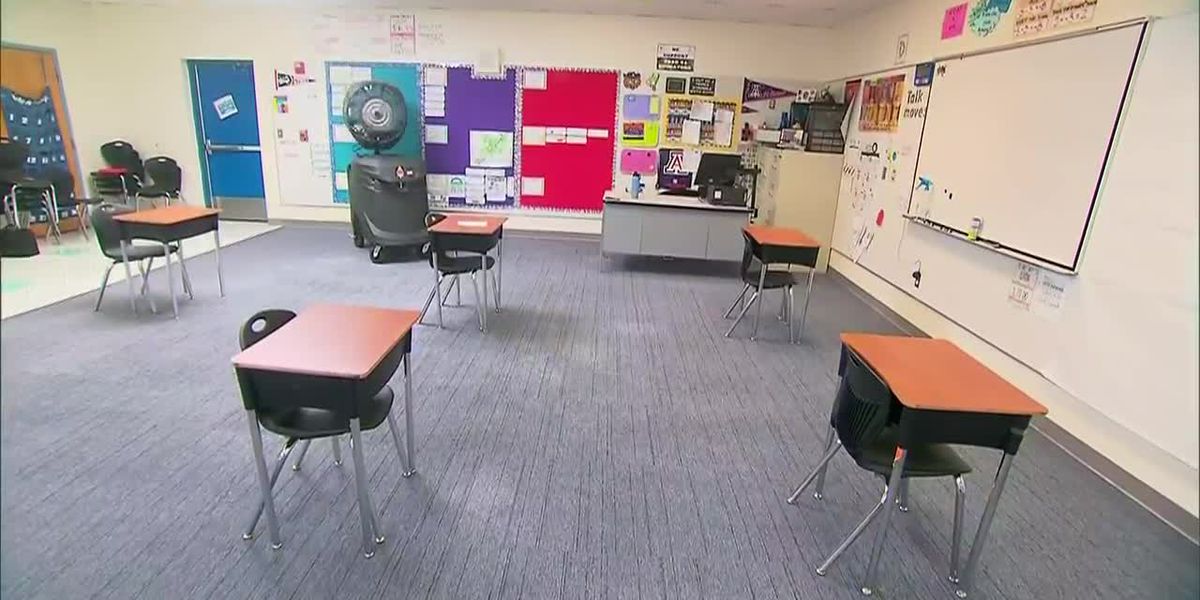
In late August and early September when schools finally decided about how they were going to open, many of them then passed the decision making on to parents: in school, out of school, or hybrid?

How were parents supposed to decide?

There were so many factors: what is possible for our family given our work and child care situations? What is safest for our family? What do our children want? What do we want for our children?

Parents had to weigh one important aspect of their children’s wellbeing against another.  These were impossible choices. What was more important, caution in the face of COVID, the children’s social needs, or the financial needs of the family?  In some cases, parents had to choose between their own jobs and becoming distance learning aids. In other cases, parents had no choice: they had to work so their children just had to go back to school.

One mother called me for advice. She had two sons, one in first grade and one in fourth.  She was very worried about the children being exposed to COVID for two reasons. One son had a respiratory vulnerability and secondly, the children’s grandfather had recently had cancer and was immunocompromised following a transplant. What if they went to school, were exposed to COVID and then exposed him either directly or indirectly?

On the other hand, she wanted her children to be able to build relationships with their new teachers and classmates.

As a person who likes to make her decisions carefully and in an informed way, she felt overwhelmed both by too much information and too little.

By late summer, we knew a great deal more about the transmission of COVID than we had in March at the beginning of the pandemic.  This mother understood how COVID is transmitted and as a result, what the school would need to do to keep children and staff safe. They would have to provide good ventilation and air exchange inside the building and they would also need to provide the possibility for having as many classes outdoors as possible.  But her particular school was not giving parents information about their HVAC system and they did not have a plan in place for outdoor learning.  When this mom went over to look at the school, they only had one small tent standing – which of course would be totally insufficient for the hundreds of children attending school in the fall.

What were they planning for outdoor learning, anyway?  And what would they do on rainy days? She could not get answers.  And through a friend she heard that the school had told one parent that if they had so many questions, they should just do the at home option – as if these questions were not the school’s responsibility to answer!

This mother had enjoyed a feeling of connectedness with her children’s school and now she felt isolated and alone.  As the deadline loomed for making her decision, she learned that very few parents in either of her son’s grades had chosen the at-home schooling option.  Why did so many parents feel it was safe to send their children to school when she did not? She wished she could ask them.

This is what went through this mother’s mind: if her children got COVID, she would be the one to take care of them as her husband simply would not be able to take time off from work; she would have to quit her job or take a leave.  If she got COVID, she had no idea who would take care of the children.  If the virus was transmitted to her mother either through her (this mom’s) infection or her children’s, she would be the one who would have to take care of her ill father – thus necessitating her quitting or taking a leave from her work. If her younger son got COVID he might be at risk for the more severe complications of the illness given his respiratory vulnerability.

She thought about the decision a great deal. She stayed up nights wondering what she should choose. She discussed this with her husband, with her friends, with her family.  She received all sorts of input – both conflicting and agreeing with her own thoughts. And in the end, she felt that her family was just too vulnerable.

The risks of illness were too great for this mother.  She decided on doing school from home.  She altered her work schedule and began being her children’s distance learning aid.  Her older son was okay some of the time but at other moments, he hated the arrangement. He screamed and cried and melted down. Her younger son was fine with online school.  And this mother? Well, she felt stressed, wondering every single day of the new school year if she had made the right decision.

Will the Pandemic Ruin my Child?

Part 3: Worrying About COVID

Dr. Corinne Masur

What effect does the constant worry about illness and safety have on children? 

There is no doubt that the worry about COVID and how to stay safe from contracting it is affecting all of us – including our children.

Kids of all ages pick up on their parent’s anxiety.  When we are worried, our children are like sponges – they know we are worried and they may get worried too.

And, of course, we are all worried about getting sick, about infecting others, about how best to protect ourselves, etc.  We are reading the latest information and watching the news.

And regardless of what we do or do not tell our children directly, by age two to three they know about some of the things we are worried about. They will have overheard our conversations, they will have heard some news from the television or radio, and for older children, they will have learned things from their friends about what is going on. 

Children of all ages will be worried about what is safe and what is not – and at the same time they may be unhappy or downright resistant to wearing masks, washing hands, and social distancing. 

After quarantining at home, they may want to go out to their favorite places – but at the same time be worried about going out and going to places they haven’t been for a long while.  Even older kids and teens may feel this way – although they may not admit it.

Children of all ages may be worried about germs and about contagion, they may be confused about how this disease gets communicated and how it does not.

So, what effect does all the worry have on kids?  And what effect does it have on them to live in a world so different from what they were used to?

Well, I have a point of view that may be different from much of what you have read.  From my training as a child psychologist and a child psychoanalyst, this is how I see it:

For the most part, children (from 0 – 9 or so) live mostly in the present moment.  That is why, when older relatives ask, “How was school today?” they often don’t have an answer.  They are usually thinking about what is happening right now.  For example, “There are cookies on the table, when can I eat one?” or “Why does grandpa have strange ear hairs?” NOT about school – that was HOURS ago.

So, in this changed world, young children often are just taking in what is happening in the moment.  “OH?  We have to wear masks? Why?”  With a good explanation, they may rebel or they may move forward but they are not thinking as much about how weird this new world is as you are.

And for older children and teenagers, well, they will have lots of questions. They will want to know how long this is going to last and whether life will ever go back to the way it was; they will worry about what effect not seeing friends and not doing school in the regular way will have on the friendships and on their futures.  They will chafe at the restrictions and be irritable and frustrated and angry. They will worry about what happens if they DO get COVID, or if you do.  

And the problem is, that we as parents, are also worrying about the very same things.

But the most important thing in this whole chaotic nightmare of a year is this: if you are able to manage your worries as a parent and if you can help your child to talk about his or her worries and if you are able to soothe your child when he or she is scared or overwhelmed or angry or feeling hopeless about the future, your child will be OK.  

That is not to say that this is easy.  In this pandemic, in this political climate, there is a lot for us as parents to worry about.  Containing our own anxiety is not simple.  With the 24-hour news cycle it is common to feel anxious and oversaturated with bad news.  

But it is important for us as parents figure out how to manage our anxiety so we DON’T pass it all on to our children. For some, this means limiting news intake.  For others it means having frequent talks with a partner or friend about all the frightening things going on.  For others a daily run or yoga session is mandatory. Whatever you need to do to tamp down your own anxiety, this will be helpful for you in being the best parent you can be.

And this is also not to say that if we can manage our own anxiety, this pandemic experience will not affect our children.  It will.  But the truth is that we do not know yet exactly how it will.  Your child is living through an historic and unprecedented event.  There will be stories to tell for years to come.  But as to how much damage is being inflicted on children by this experience?  I suspect less than we think.

In part 1 of this series I spoke about the protective effect that having parents present and emotionally available has on children even during the worst that life has to offer.  This is an enduring truth. When children have parents available to them who are able to be reasonable and rational about the risks and the danger (at least most of the time) and to talk about these things openly, generally children will be OK. This does not mean that you cannot be irritable, that you cannot have a lapse in patience, that you cannot shut your door and need a break on a regular basis – all those things are normal – it just means that if you can be there for your children when it really counts – when they are frightened or need to talk – you are providing a vital and protective function that is more powerful even than COVID.

Will the Pandemic Ruin my Child?

Part 2: Intellectual Development

Dr. Corinne Masur

Parents are SO worried that this pandemic year will interfere with their children’s intellectual development and academic progress. So let’s talk about that according to your child’s age and stage of development:

0 – 2

Infants and toddlers will in no way suffer due to increased time at home: IF you talk to them all the time, if you read to them at least once a day and if you provide reasonable amounts of play time (with you, your partner and their siblings).

And at this age, babies and toddlers will NOT suffer from missing the programming provided at daycare or pre-school. PLEASE, do not feel the need to fill in for the curriculum that might be in place were they attending a program. What babies and toddlers need to learn, they learn in the course of normal interactions with family members, during play and during story time. Whether your two year old knows his or her shapes is actually irrelevant – no matter what you hear. At this age what is needed is basic human interaction, hearing lots of words and being able to do lots of play, both alone and with others. At this age structured classroom time is neither necessary nor optimal. And screens of any kind are not needed either – but a little bit of screen time (an hour or less a day) may not hurt.

3 – 11

Older children of all ages are having their school routines and their learning processes disrupted. This is hard for children and parents. Everything is different. Online school is extremely hard to manage – especially for parents! There is nothing optimal about the compromises that have been made in setting up virtual school, hybrid models, shortened school days, etc.

Some children in this age group will be excited about online or in person school and they will be cooperative. But if they are attending school online they still will need help choosing a place to be each day for school, getting online, having supplies and worksheets ready and staying organized – and this is very hard for parents, especially working parents. You will find that your child misses some things due to technology problems, confusion about schedules, forgetfulness, etc. TRY not to stress over these. They are inevitable. Everyone is experiencing them.

And if your child is going to in-person school – even some of the time, he or she will need help remembering to wear their mask, to socially distance and to go by all the safety guidelines in place at school. Your child may also need help understanding why it is safe to go to school now when it wasn’t a month ago. And of course this is a difficult question. But remember, at this point in the pandemic we have learned that what we need to do is minimize risk. We can not eliminate risk altogether but we know more now about how to lessen the risk of contracting COVID than we did at the beginning. You can explain this concept to your child, no matter what their age, and you can encourage them to think of ways to minimize their own risk.

No matter how much we try to prepare them, however, some children in this age group will have trouble getting used to online school or a hybrid model, When they are online, they may have trouble paying attention, they may intentionally “forget” to log back in after a break or they may do other things while class is in session. This too is hard for parents because we cannot be there at every moment to check up on what our children are doing. Especially for working parents, this is a dilemma. Again, try not to stress too much when these things happen. Young children have naturally shorter attention spans. Having to look at a screen for learning purposes for more than a couple of hours a day is very very difficult for them. Getting anxious about your child’s school participation is natural and getting angry with your child is, at times, inevitable – BUT –

Remember, all children are going through this right now. It is not just your children. Everyone’s learning process has been compromised. AND a year of this will not ruin any child’s chances at getting a good education. Children will catch up, they will make up for what they did not learn this year. They will learn again how to be in a classroom. This is important to keep in perspective. This situation is NOT forever.

11 – 22

Children of this age are hungry for learning and for the social interaction that takes place at school. Online school, hybrid models and in person school with masks and social distancing will be very very hard for many of them.

Parents, however, are not teachers and we cannot expect ourselves to make up for all that children of this age are not getting at school.

This is extremely hard. Parents are worried about standardized testing, SATs and college admissions. But again, remember, everyone is going through this. Colleges will understand this when it is time to apply. And intellectual development proceeds – school, no school, or limited school. Remember, intellectual development and academic progress are two entirely different things.

What parents can do:

Parents are overwhelmed right now. I actually think that the effects of the pandemic may be worse for parents than for many other segments of the population.

But if you CAN, supplementing your children’s school time learning to promote their intellectual development can be helpful at this time. If you do not have the time or the band width, that is totally understandable and feel free to ignore what’s below.

BUT IF you CAN:

  • Encourage your children to read more.
  • Make frequent trips to the library if your library has good Covid safety.
  • For kids under 14, start reading to your children for a half hour to 45 minutes a day on weekends. Reading aloud does not just have to be for bedtime. Pick chapter books with engrossing stories – or books of interest to your particular children. Iceland, which has a long winter with very few hours of daylight was, for many years, the country with the highest literacy rates – because reading is what children and adults did during those long dark hours.
  • Encourage teens to read fiction AND non-fiction.
  • Have discussions at dinner time – current events should provide plenty of material! There is a civics lesson in every day’s news. Talk about the electoral process, the constitution, the Supreme Court, the way Democracy should work, etc. Ask your children their opinions.
  • Encourage teens to also have some social down time (ie something other than playing video games or looking at social media by themselves), for example, encourage them to set up game nights with friends online or to do group chats.
  • Encourage younger children to play games online with friends – and actually support their doing so rather than nagging them to get off the computer!
  • And parents, use the time that your children are online with friends to do what you need to do. One of the hardest things about enforced togetherness is the lack of privacy and downtime for PARENTS.
  • Encourage your children to start or continue playing a musical instrument. Lessons can be online.
  • If your children are interested, take some virtual tours of museums – science, art, whatever they like. And don’t ask them if they want to – because they will often say “no” especially if they are busy playing video games! Perhaps there can be one dinner a week when the family take a virtual tour during the meal.
  • And try throwing a documentary or Broadway play into family movie night.Many of these things can be streamed for free. Sweeten the deal with snacks: popcorn, pizza, brownies, anyone?
  • If you enjoy games such as Chess or Go, teach your children to play if they are interested. For younger children, intellectually stimulating games which involve matching, making pairs, memory skills and using numbers are also a possibility.

Good luck, stay safe, and please, do not despair.

Will the Pandemic Ruin My Child?

A Three Part Series

Dr. Corinne Masur

Part 1

Parents are all worried about what effect this pandemic year will have on their children’s development.

And of course, it’s complicated.  There’s the concern about how children will be affected by all the health worries.  And then there’s the worry about how they’ll be affected by not being able to see friends easily.  And THEN there’s the worry about how disruptions in their educations will affect their academic and intellectual progress.

So, let’s break it down:

The effect that the social limitations and the school interruption will have on your children will depend on their age and stage of development. So, we are going to talk about this by age group – and in this part of the series we will talk about:

Socialization

0 – 2

Babies do not require social interactions outside the home. 

You will often hear people say that they are sending their babies and toddlers to daycare because they need the socialization.  Well…this is not exactly true.  Older babies and toddlers often enjoy seeing other babies and toddlers.  They will be interested in them, laugh at their antics, cry when they cry, etc. but actually, they do not NEED to be with other babies and toddlers to develop well. What you provide for them as loving parents is what they need.  Babies and toddlers require their parents’ love and attention and social feedback. What you provide at home for them is what babies and toddlers need the most.  Talking to your baby, reacting to your baby’s facial expressions and verbalizations, playing with your baby, reading to your toddler, setting normal limits and teaching basic rules is what children of this age need.  They are FINE at home.  In fact, some parents have noticed that they are getting to know their babies and young children better than they did before when daycare or babysitters were involved – and they have found this to be a good thing – for themselves and for their children.

2 – 4

You will be surprised to know that what was said above is also true of older toddlers and young children.  

At this age, interaction with family members, play with family members and learning basic rules of socialization (what hurts another person, what’s fair, etc.) is what your child needs.  Is it fun to see other young children?  Does it give Mom or Dad a much-needed break to get together with families of other young children? Yes, of course.  But remember, for millennia there was no school at all and up until recently, very few children went to daycare, and many children did not even go to preschool or nursery school – and they did fine. 

At this age, children want their parents’ approval.  And if they say “NO!”, it’s the parent they are saying it to.  At this age toddlers and young children are just beginning to develop a sense of themselves as separate and independent human beings – and they do this best in the context of the family!

So, in essence, if you are not feeling safe about sending your children to daycare or preschool or setting up playdates, this is FINE.  You may have to spend extra time on the floor or outside playing – but you are NOT damaging your child in any way.

4 – 7

Children of this age love to play and socialize.  

Starting around age 4, most children love to have friends.  In fact, they start to create their own small worlds with their friends – and this is the beginning of being able to operate as people separate and apart from their parents.  As children get to be 5 and 6, they often develop best friends and are pleased to play with these friends without the intervention of their parents. Socializing at this age is an important part of their development.

As a result, even during a pandemic, it is helpful to allow 4 to 7 year olds some time with other children if you can do so safely and comfortably.  Playing outdoors, going to a local park, riding bikes and scooters, playing running games with masks can all be possibilities. And if you can find one or two children whose parents’ views on COVID safety are in line with your own and regular play get togethers and be managed, even better. HOWEVER, again, what you can comfortably provide for your children is what is most important. Children of this age are hungry to learn about the world – and if you are not comfortable organizing play dates or pods, if you can take them on outings, read to them, play together for an hour or two a day and teach them the rules of interaction with others, they will be getting most of what they need socially.  You may not believe that this is true – but again, in many societies, children do not even start school until age 6 or 7.

7 – 11

At this age the peer group is what kids really care about. By this time children are keen observers of other children and their behavior.  They know who they like and who they do not like.  Their relationships are complex and alliances can be strong…until they shift. Children of this age generally love to be with other children they know.  Games with rules are of great interest and playing games can take up hours.

Given this, allowing your children, if they are at home for school, some time to play with other kids each day is important.  If you are not comfortable allowing them to get together with other children this often, then allowing them to play video games with other kids can fill the bill during this unusual time.  Zoom conversations and virtual play dates are also an option if your child likes them. And if you can manage to allow your children to get together with friends outside once in a while, even better. It may not feel like enough to them or to you – but a year spent this way will not ruin their social development.  Learning social skills is a lifelong process – and again, do not underestimate what you provide at home. When you say things like, “No, we cannot play that game AGAIN” or “No, you cannot have the last donut” or “Figure out what to do when you’re bored” you are providing your child with necessary social feedback. These are basically the same things they learn from their peers when they play together. At this age children are learning what is fair and how often they can expect to get their own way.  They are taught by their peers what they can and cannot do if they want people to like them, what is right and wrong, what rules are and how often they have to stick to them.  When you interact with your children at home you are also teaching these things just in the normal course of everyday life.

11 – 20

Kids of this age often seem to care more about interacting with each other than they do with you. 

Social contact with others their age is important. This time of limited social contact is especially hard for this age group. 

Parents will need to work on their own flexibility and patience with children and teens during this quarantine/pandemic time because kids of this age will feel deprived and angry if they do not get to see their friends.  

 If you feel comfortable allowing this, perhaps you can let your child get together with certain friends at your house – or you might allow them meet up outside at a park.  But if you do not feel comfortable with this amount of contact then in this case, technology is your friend. Perhaps some loosening of limits on phone/pad/computer use will be necessary. Kids need to be able to text and Instagram and Facetime and IM for at least a few hours every day. Most will want to have their phones with them all the time.

Summing it Up

So – in summary, from a social standpoint, the pandemic and the quarantining required is NOT ruining your child or his/her social skills.  It IS hard; it IS limiting and frustrating. It DOES require us as parents to do more than we ever thought we could.  But a year of limited social contact will not stunt the development of your children.

*****

What can parents do?

– When you are not working, play on the floor and outside with your babies, toddlers and young children as much as you can manage.  

– If you have reached your limit with meeting your children’s needs and feel you just cannot do it all, bringing in an older teen or a babysitter or nanny (whose COVID safety you trust) to help at home may be necessary and may ease your burden.

– If you are working either from home or from your work place then day care or a sitter may be the only way your family can realistically manage AND allow your children some socialization time. Parents who are trying to help their children with virtual school while working are finding that this is just not possible.

– Set reasonable limits on device use for older children.  These can include no phones during school or homework and a set bedtime after which no phone use is allowed – but otherwise?  Let them go for it!