
Mentalization: What is it, anyway?

In the last few years, everyone has been talking about mentalization. But what is it, really?

Two British psychologists, Peter Fonagy and Anthony Bateman, began writing about mentalization in the late 1980’s. They introduced the term to describe the process of understanding our own behavior and that of others in terms of underlying feelings, desires, and intentions. 

Often described as “holding in mind” or “thinking about thinking”, this skill is crucial for understanding other people as well as being helpful in understanding and regulating our own emotions. Mentalization allows us to reflect on our own behavior and that of those around us and to interpret the meaning of this behavior rather than just seeing it as as reactionary. 

This sort of reflection is the core of mentalization and it is an important skill for use in parenting. Fonagy states that for the optimal development of children, it is helpful for parents to imagine what their children are thinking and feeling and to keep these feelings in mind in their everyday interactions with their children. This is different from what is called, “gentle parenting” where parents meet their child’s behaviors with an explanation to the child of their feelings. In fact, you could say, that this technique takes mentalization to an illogical extreme. 


Sometimes described as “having the mind in mind” or “seeing ourselves from the outside and others from the inside,” the capacity for mentalization is important for building an internal picture of how other people’s minds work. 

Once, when my son was about a year and a half old, we were at the Bat Mitzvah of my niece. When the photos of the Bat Mitzvah girl’s late grandparents (my parents) were projected, I began to cry. My son looked at me with concern….and then offered me his bottle.

I wonder now, was this metalization on his part? At one and a half? On a primitive level, my eighteen-month-old could relate to my feelings and he could want to comfort me. But I see this more as empathy which is an identification with another’s feelings. In this case, my son was able to understand and relate to what I was feeling and to understand in that moment that I was feeling something different than he was. To me, this seems like a primitive form of mentalization but I suspect that at that age he was not fully able to imagine what I was thinking and what it was that made me cry.

When children can more fully mentalize, this is it helpful to them in understanding others and in building their own emotional regulation. If a four year old child can begin to understand that his friend took his toy because he had waited a long time and just could not wait any longer, he learns several things – first, that his friend was in a different position than he was. Often called alternate perspective taking, the child can realize that he had the toy and he was enjoying playing with it but his friend did not have the toy and was having a hard time waiting to play with it. This understanding is helpful as it is more tempting to hit someone when they take your toy if you have no understanding of why they did it.

And for parents, mentalization is important for several reasons. First, modeling mentalization is helpful for their children in order for the children to develop this capacity. Children who are able to reflect on their own feelings and to predict the feelings of others are better able to develop good relationships, self confidence and a healthy sense of self. Secondly, using mentalization, that is, keeping your child’s mind in mind while being his parent, helps with differentiating your feelings from your child’s and it can help you with your emotional regulation while dealing with your child.

So what does mentalization look like in parenting? An example of a lack of mentalization would be a parent who hurries their reluctant child into the car for a pediatrician appointment saying only, “Hurry up, we’re going to be late!” The same parent, using their mentalzing function, would realize that their child might be slow in leaving because they are reluctant to go to the doctor’s. The parent might remember that the last time they went, their child received a vaccination, and they would be able to keep in mind that their child might be feeling anxious about the visit and saying to themselves, “I don’t want to go!” or “I won’t go!”. The parent might or might not reflect back to their child what they realize, but their awareness of the child’s mental state would guide their actions with their child. 

How Are Parents Supposed to Learn to Parent?

In hundreds of thousands of homes in our country, parents are reinventing the wheel … of parenthood. 

Upon having a baby, many parents realize that they do not have the slightest idea what to do. They do not feel prepared to care for that baby. Often, after years of feeling competent at work, they suddenly feel incompetent – – – and anxious. 

Donald Winnicott, the famous and beloved British pediatrician and child psychoanalyst wrote, “The most important element at any one moment is the ordinary home in which ordinary parents are doing an ordinary good job, starting off with infants and children with that basis for mental health which enables them to eventually become part of the community” (The Spontaneous Gesture,1950, p. 21).

However, in our country, and I suspect in other places as well, there is no “ordinary” way to raise a child. This sort of communal knowledge or this set of common values has been lost. 

And the mental health of both infants and parents is affected by this.

Many new parents have focused on their own lives and education and have just not had prior experience with babies or young children. They really don’t know what to expect from a one-year-old or a five-year-old and, as they become parents, they are at a loss when called upon to meet the ordinary situations of child rearing.

Henri Parens, another child psychoanalyst, advocated for parenting curriculum to be instituted in every school. As one of my psychoanalytic mentors, I often heard him talk about this, and quite honestly, at the time, I didn’t see the point. But now that I am working daily with first-time parents, professional parents, and harried parents, I do. 

I see that the parents I come in contact with are desperate to know what is developmentally “normal” at each age as well as to know how to handle the inevitable challenges of raising children at all of the various stages of development. 

Given the much heralded death of the extended family and the loss of true community for most young families, questions arise: where are people in the early years of parenthood supposed to learn how to parent? Where are they supposed to learn about child development? And where are they supposed to learn how to manage their own internal reactions to the extraordinary stressors of normal parenthood?

Somehow, we have come to a place in history where many kids grow up never once having to take responsibility for a younger sibling or cousin and never having worked as a babysitter. We have put the emphasis on children doing well in school and going to college, and in some cases, even graduate school. In this march toward “success”  many young people never learn about babies and children.

I do not know if Henri Parens had the right solution – teaching about parenting in the schools – or if there are other solutions to this problem. But what I do know is that right now, right here in our country, hundreds of thousands of parents are struggling – more than in other generations, I think – to figure out how to do even “ordinary” parenting.

Parental Expectations: Do They Help or Hurt?

We all have expectations of our children. We are conscious of some of these – and less conscious of others.

I want to talk about several issues regarding these expectations:

First of all, expectations are not necessarily good or bad. They just ARE. And they start even before conception. As soon as we think about having a baby, we imagine what that baby will be like, what they might look like, what their personality might be like, what talents and abilities they might have.

This is universal – – and it is normal. It is part of the process of becoming a parent. 

Often we hope for a child who will be a particular way, and have particular skills and abilities. Whether school was important for us, or whether we missed out on going to college or graduate school, we might hope for a child who is “smart” and does well in school. Or, if we were shy as a child, we might hope for a child who is gregarious or assertive. If we love sports, we might hope they will be talented athletically.

In one way or another, our expectations will be formed by our own histories, values and wishes. And to the extent that they are unconscious, it is a good idea to try to make them more conscious. This allows us to decide whether they want to act on these expectations – or to rework them.

Because our expectations WILL affect our children. 

Children naturally want to please their parents – and this is good motivation for them. But when we expect things of our children, we also want to make sure that our expectations are realistic, and that we leave room for our children to be who they are, and to establish their own goals in life.

So, small expectations – like helping around the house, being kind or doing homework? That’s a definite YES.

But regarding our deeper fantasies of what we want our children to be as people? We need to ask ourselves if these are reasonable. For example, if we expect our children to get all A’s, what happens if our child turns out to have a learning disability? What happens if reading or math just doesn’t come easily for them? How will they feel about themselves when they come home with B’s or C’s…or worse?

And how will WE feel?

Will we be disappointed? And will our child pick up on that disappointment? What will this do to their motivation? Will they try harder? Or give up? Will they feel badly about themselves? Less confident?

For a while, everyone was talking about Oscar winning actress, Bri Larson’s YouTube content. She said, famously, “my job is 98% failure”. She talked about how many times she was turned down for parts in TV and movies before she got anything significant at all. 

Perhaps we need to spend less time expecting our children to be a certain way and more time helping them to learn how to handle the times when they don’t meet our expectations – or their own. Perhaps we need to help them to be more like Bri Larson. And maybe we need to think less about our own wishes for our children’s success, and instead, help them to learn how to fail – and to survive through failure. Because, after all, Bri Larson is right. Life is full of failures, both little and big. And, if our children are to be successful, we have help them to learn to keep trying, and not let individual failures define who they are.

Perhaps it is more helpful as a parent to think about how we are going to talk to our children when they don’t get an A or when they don’t make the team or get the part in the school play. All children experience these disappointments and all children feel badly about them. 

Here are some things you can do as a parent:

1. Make goals small. Starting in infancy, when your baby is trying to learn something new, encourage them. But also, watch out if you notice yourself comparing what your baby is doing to what other babies are doing.

2. Concentrate on your own child. Stay in the moment with your own baby or child. Stay with them where they are.

3. Make your goals small for your child. Help them to accomplish tiny milestones; for example, an extra minute of tummy time, one new word, one spoonful of a new food, or for an older child, getting a B when their last grade in that subject was a C.

4. Help build frustration tolerance. The famous psychoanalyst, Heinz Kohut, coined the term “optimal frustration”. He talked about how important it is for people to learn to tolerate some frustration – not so much that they feel like giving up – but enough that they feel challenged. When your baby or your child gets frustrated, whether it’s building a tower that won’t stay up, or learning the letter R, just tell them, “It’s hard. But it’s OK. We’ll try again later.” Build in the idea that some things are difficult but you can take a break…and then keep trying later….after you’re done being frustrated.

5. Check your own expectations. As children get older, keep checking your expectations, keep setting your goals small and keep helping your child to keep their goals small. For some kids, a more appropriate expectation than getting all A’s is establishing longer and longer periods of doing homework. For a child who can’t sit still for an hour, success might mean doing 20 minutes of homework when they only used to be able to do five.

6. Normalize failure. Tell your child your own stories of failure. Tell them how you reacted. Tell them about Larson and what she said and how she persevered through lots and lots of failure.

7. Talk to your children when they are not in the middle of feeling frustrated. Talk about how hard it is to not get what you want or to succeed in the way they want. Talk to them about frustrated feelings and how hard they are. Encourage them to take breaks when they are frustrated with a math problem or with their average when shooting baskets. Encourage them to come back to the activity later when they feel less tired and frustrated.

We want our children to learn how to live in the real world and to endure both the downs and the ups of life. It is important that we think about how to best do this — and how our own expectations may play a part in how our children do or do not “succeed” and ultimately feel about themselves as people.

**********

Related posts:

The Importance of Failure

Do Smartphones Encourage Anxious Attachment?

This week, we were talking about smartphones in our parents’ group. Specifically, we were talking about how parents use them to contact their kids all day long. Afterward, one mother commented that perhaps our fondness for our phones has to do with attachment.Maybe having a phone with us, and being able to contact our loved ones at a moment’s notice, has to do with our need to stay connected, and in particular, our old, infantile wish to always be able to be in close proximity to our mothers. As John Bowlby said, this is a matter of survival for all infants – going back to our primate roots, crying in order to make sure our mother comes to us made sure we were not left behind in the forest. Staying connected was crucial!

The mom who brought up this issue is in training to be a psychoanalyst herself. She remembered being told by her psychoanalyst-mentor, that he thought that people carried water bottles and phones everywhere these days because they were a way to gratify our early wish to stay attached to Mommy, and therefore to feel safe and secure.

But is there a cost to adults of relying so much on phones, of indulging in this regressive kind of behavior?

Is it useful to us, psychologically speaking, to be able to contact everyone all the time?

Are we meant, as adults, to remain so tethered to one another throughout our daily lives?

Prior to about 2010, parents often did not know exactly where their children were and they couldn’t necessarily get in touch with them right away. The same with partners and spouses. People had to accept this and tame whatever anxiety they might have had about their loved ones’ whereabouts and activities.​ Prior to smartphones we had to rely on our object constancy, and our internalized images of our loved one, that is, our ability to keep our loved ones in mind, in order to keep them with us (psychologically speaking) throughout the day.

Aditionally, prior to the advent of smartphones, people had more autonomy. And they had more privacy. If they so chose, they could spend time without anyone knowing where they were. They could not be tracked and they could not be called.

Now, we can text or call almost anyone at any time. And if a parent texts a child or teen, they expect to hear back within a matter of minutes. And if they don’t? There’s panic – or anger – or both. Where is he? Why isn’t he getting back to me? What’s going on?

The mother I mentioned at the beginning of this post suggested that smartphones promote anxious attachment. And I thought this was a brilliant idea. Of course, this is an extension of the original concept of anxious attachment – but I think the term can be useful, if loosely applied here. It is true that we expect to be able to contact and know the whereabouts of those we love at all times. And it is also true that we seem to be unable to trust in the ongoing being of our loved ones. Our ability to hold them in our minds with a feeling of confidence that they are alright and will return to us has been dramatically reduced. We check and we check and we check on one another all day long.

Much has been written about attachment styles, and a great deal of what has appeared in popular literature and online is inaccurate. The originator of this term and the person who did the initial research which led to the coining of the term was psychologist and researcher, Mary Main. She defined anxious attachment as an insecure attachment style that develops when a caregiver is inconsistently available, leading the child to become highly distressed when separated from the caregiver but not comforted by their return. This style is rooted in the child’s uncertainty about whether their needs will be met, causing them to be preoccupied with the relationship, constantly seeking reassurance and often showing clingy or demanding behaviors. 

But these days, it’s the parents who show an anxious attachment style. And perhaps smartphones have something to do with this. When our children are inconsistently available, it makes us distressed. We expect to hear back from our kids and our partners immediately after we text or call them. And if we don’t, we become anxious. Perhaps this is like the babies who cry or call out for their mothers and are sometimes left without a response from her. If this happens often enough and for long enough, the infant or toddler can feel that the parent is unreliable, and they can feel worried about whether their mothers will come to care for them. In fact, they can worry about their very survival; they can feel insufficiently cared for. And they can become anxiously attached.

Perhaps it is the intermittent nature of the text messages from our children and other loved ones which makes ​adults feel the same way. Anxious. Unsure. Wanting to hear back immediately. And we all know that intermittent reinforcement is the most powerful kind of reinforcement. The behavior which is intermittently reinforced increases. Hence more calling and​ more texting. 

If thwarted in their desire to contact their kids or partners, parents can become the ones demonstrating demanding behavior. They are the ones who become clingy and anxious.

We have become so used to being able to locate one another at all times that our emotional muscles have gotten flabby. We ​no longer rely on our internalized images of our loved ones, we no longer utilize our capacity for object constancy. We are no longer able to tolerate uncertainty about exactly where a child or a partner is. We have become unable to wait to hear a report about how the test went or how the day was.

Is ​it good for us as parents to be so tethered to our phones – and to our children?

And is it good for kids to be so tethered to their phones – and to us? 

And what does this do to the development of kids’ feelings of independence, autonomy and responsibility? And to adults’ feelings of trust and confidence in our kids, and in each other?

These questions may not have definitive answers, but they are worth thinking about.

And as for what you might want to do about this as a parent, how about asking your children, teens, and college-aged kids about how often they want to be in touch? How about asking if they mind that you track them? How about asking what they feel is intrusive and what they find helpful? And if they seem to be the ones texting a lot, how about talking about why this might be and if there are some worries behind this?

Kids of all ages need to feel competent, they need some independence (how much will depend on their age), and it is worth discussing how to promote and encourage this.

And parents, it may be time to reevaluate how much you text and track and check and expect from your kids and from each other. 

What Kids Say Would Get Them Off Their Phones

Recently, The Atlantic published a fantastic article about kids and phones in which the authors uncovered what kids in our country really want to be doing with their time.

To look at this question, Lenore Skenazy, author of Free-Range Kids, Zach Rausch, senior research scientist at NYU, and Jonathan Haidt, renowned social psychologist, helped to conduct a Harris Poll in which kids themselves were asked what would get them off their phones and what kinds of activities they prefer.

The results?

Kids want unstructured time to play with their friends.

And their parents aren’t allowing this.

We blame phones, we blame social media, we blame gaming for kids not playing outside and with friends more, but it seems to be time to look at ourselves.

In the poll, 500 kids between 8 and 12 were asked for their opinions. A majority reported having smartphones, and about half of the 12-year-olds said their friends are on social media.

Kids spend more time than we would like on these devices. But what light did the poll shed on this?

Most of the kids polled said they aren’t allowed out in public without an adult. Over half of the 8- and 9-year-olds said they aren’t allowed to go down a grocery aisle alone, and over a quarter are not allowed to play unsupervised with friends.

So what has childhood become, if not a time to play? Well, it seems it has become a series of curated classes and activities aimed at structured learning and eventual success. But what about what we know about experiential learning? The kind of learning that takes place when kids are hands-on, when they make judgments for themselves, when they have to solve problems on their own?

We know that experiential learning is an effective form of learning—and a necessary part of a child’s education. We know, as David Kolb, psychologist and learning theory specialist, said, that the acquisition of knowledge can best be done through direct experience, reflection, and application. Listening to someone tell you how to do something is not as good a way to learn how to do it as trying to do it for yourself. And we know that making mistakes is a better teacher than being warned not to make mistakes. Trying to jump from one rock to the next and falling teaches caution. Being told not to make that jump teaches a child not to try risky things.

Parents have always wanted their children to be careful and avoid harm. But for some reason, parenting has recently become a never-ending surveillance activity. Parents feel they have to be on hand at all times to teach, to warn, and to protect, or they need to put their children in activities where other adults serve the surveillance function.

And why are parents doing this?

Well, it is clearly because of their love for their children—and their anxiety. Parents are so anxious that their children are going to get hurt or kidnapped that they are preventing their children from having unsupervised time. And they feel this way despite the facts. Crime is down in many places, and kidnappings are extremely rare. Of course, each parent needs to assess his or her own neighborhood, but in many areas, more free outside play just cannot be considered dangerous.

And the thing is, kids who are kept inside at home are going to go onto their phones if they have them.

So what is a parent to do?

Well, first, I think parents need to look at their own anxieties to see where they come from and whether they are fact-based.

Second, parents need to think about how they were raised and what kind of play activities they liked and learned from.

Third, parents need to try to allow more unstructured time for their children to play with other kids. Parents will need to make efforts at first to quell their own anxiety about doing this, and then they will need to find opportunities for free play that they feel are reasonable for their own situations.

Fourth, parents need to look for opportunities in their own communities for children to get together and play without too much imposed structure. Is there a park or a program nearby? A community pool or a rec center? Is there a playground where kids can be left for an hour or two?

In Piedmont, California, a network of parents started dropping their kids off at the park every Friday to play unsupervised. Elsewhere, churches, libraries, and schools are creating screen-free “play clubs.” To ease the transition away from screens and supervision, the Outside Play Lab at the University of British Columbia developed a free online tool that helps parents figure out how to give their kids more outdoor time, and why they should.

As Skenazy, Haidt, and Rausch say, “Granting (kids) more freedom may feel uncomfortable at first. But if parents want their kids to put down their phones, they need to open the front door.”

Kids want to be with their friends—and if they can’t do it in person, they’re going to do it online.

References

www.theatlantic.com/ideas/archive/2025/08/kids-smartphones-play-freedom/683742/

The Oldest Sister Syndrome

We all know—or had—an older or oldest sister, or we are one, or we have a child who is one, and we know what that looks like: bossy, rule-bound, impatient, controlling, perfectionistic, stubborn, a general know-it-all who needs to be right.

These people can be annoying, even infuriating.

And to be one can be painful.

The oldest sister who tries to control her younger siblings, and then later in life, tries to control others, can be difficult to be around. No one really wants to be bossed, controlled, or to be told they’re wrong. And the superior attitude? Not fun.

At the same time, it is important to remember that the oldest sister may be suffering. She can experience a great deal of internal pressure feeling that she has to be “good,” or that she has to go by the rules and be helpful—and she may feel these are her only ways to get approval.

These traits may be annoying to others but at the same time it is also true that being an older or oldest sister may bring with it some positive attributes. Often oldest sisters have real leadership ability, a strong drive for success, a heightened sense of justice and fairness, and they may be both responsible and conscientious

These are generalities – and one may well wonder: are they true? Does being the oldest girl in the family actually lead to developing these characteristics? Is this a real thing? Is it an actual diagnosis? And has it been written about in the professional mental health literature?

Well, there is no diagnosis called “Oldest Sister Syndrome,” but it has been written about.

Alfred Adler wrote about birth order as long ago as the early 1920s. He believed that social influences were the main determinants of personality and said that children are significantly influenced by their position in the birth order of the family. He believed that a child’s position could affect their perception of themselves and their interactions in the world.

Interestingly, Adler’s own life story may have contributed to his theory. He had been a sickly child who suffered from rickets, while his older brother (the oldest child in a family with seven children) was healthy. Adler recalled an early memory of watching his older brother capering on the beach with ease and feeling intensely jealous of him, inferior to him physically, and rivalrous with him.

Adler later went on to write about the characteristics of each birth order position. He said that the oldest child initially receives all of the parental attention, and then feels “dethroned” when the second child is born, forced to share their parents’ attention with the new baby, and resultingly feeling resentment and hostility toward the younger child – and any that come along subsequently.

Others have written about eldest-daughter syndrome as well. One article described how eldest girls often feel angry about about being asked to help with younger siblings, and how some even say that their childhoods were stolen from them as a result of the added burden of helping to care for the younger children. Sharing is often hard for them. They are prone to feeling that they have gotten less, or that they have been cheated. They often feel that the younger children in the family get “more” than they do. Competition can become a lifelong theme, with oldest daughters repeatedly needing to “win” or achieve in order to get the praise they feel they need. This may repeat a childhood pattern where they either sought or actually received praise for helping out or being more mature than their younger siblings.

And what’s more, oldest girls, and oldest children in general, are raised by parents who are less experienced than subsequent children. Often first time parents are not as aware of how to manage an infant than they are with their second and third babies. And oldest children are often scrutinized more by the parents than later children. Every little thing they do is watched and worried about. It is possible that in some cases, this can result in their feeling both especially important – and especially judged – and lead to a feeling of needing to do things the “right” way.

You may recognize these characteristics if you are an oldest sister, or if you had one. And if you are the parent to one, here are some things you can do to help:

  • Make a point of being aware of who your oldest daughter is as a person, not just as your helper. Make sure you tell her what you like about her as a person. Let her know that you see and appreciate her as an individual, not just for the help she gives you or for the things she does. You do not want her to feel that her ability to help is the one good thing about her and you do not want her identity to become just that of a “helper”. If she is artistic, notice this and comment on her work in a positive way. If she likes to read, notice this and comment on how much you like this about her. Keep the comments about her as an individual going through her teen years.
  • This does not mean you should not ask her to help you. Having children help out at home is a part of daily life—and it is a good part. They learn that things are expected of them and that they can make meaningful contributions to family life. But when your daughter helps you, acknowledge this and thank her.
  • Encourage positive interactions between your daughter and her siblings. Praise her if she is loving or playful with her sibs. And if she tends to be negative with them, show her how to be nice. No lectures—just model for her how to be kind to them and notice when she does so.
  • Occasionally, do something alone with your oldest daughter. You do not have to call this “special” time, just make a point of doing it now and then and telling her how much you enjoy spending time just with her.
  • Occasionally bring up recollections of what it was like when she was your only baby.
  • An oldest girl can feel preempted by her siblings. She can feel that life is unfair and that the younger ones get more than she does. Remind her that when she was a baby, you did all the same things for her that you are doing for your younger children. Tell her stories about what it was like when she was a baby and what you used to do for and with her.
  • And, perhaps most importantly, talk to your daughter about her feelings – not in a punitive way, but in an understanding way. If you notice her being mean to her younger siblings or being particularly competitive with them, take her aside and talk to her about how hard it can be to be an oldest child, and how infuriating her siblings can be for her. If you were in that position or if you know others who were, tell her a story about the feelings that can be involved. Help her to understand her own feelings and help her to work on them.

And good luck with helping your oldest girl. It’s sometimes not easy being an older sister!

Helping Teens With Phone Use

Recently, I read an article in The New York Times about some teens on Long Island who started a newspaper. And what was interesting to me about this was why they did it. Several of them were quoted as saying they were bored with scrolling on their phones.

They wanted something else to do – something to get them out of their bedrooms, interacting with each other and using their minds.

Even teens are getting bored with scrolling.

We all assume that teens love both their phones and the social media they can access on them. But, as it turns out, there are other feelings involved.

Delany Ruston, MD, founder of Screenagers, says she sees a lot of teens in her medical practice who wish they didn’t spend so much time on social media but who find cutting back really hard.

And, in fact, she has put together a program, Boostingbravery.com, to help teenagers support each other in making healthier screen choices.

In her recent post, Dr. Ruston talks about an interesting phenomenon amongst screen users, including teens: people who scroll out of boredom often feel even more bored after scrolling.

But, she says, it’s not just how much teens and others use screens, it’s also how they use their screens.  She quotes Katie Davis of University of Washington’s Digital Youth Lab, who has done research in this area. Davis has found that while scrolling can lead to boredom, active use of screens to create something, message someone, post something meaningful or search for specific content can lead to more positive feelings. 

Evidently, using a screen actively promotes very different feelings than being the passive recipient of news, videos and everyone else’s posts.

How about helping your teen (and possibly yourself…) to learn more about the feelings evoked by these various types of screen use – and to exercise some new choices?

Try some of these suggestions:

1. Take a hint from the Long Island teens who started a newspaper and support your teen if they want to start a project with friends, go somewhere (safe) outside of the house or engage in projects at home. Do all you can to keep these activities going.

2. Tell them about what you’ve learned here. Make sure they know that active use of their screens to create something new can lead to more positive feelings than just passive scrolling.

3. Plan activities outside of the house at least once a day on weekend and vacation days. Make sure you get buy-in from your teen. And try to make at least some of these activities ones that require your teen’s full attention so that you don’t have to forbid phones – but the phones have to be put down as part of the activity. It’s almost summer: try canoeing, kayaking, learning to row, hiking, a picnic, swimming, snorkeling, visiting a local garden, museum or art gallery, planting and taking care of some herbs and vegetables, going to minor or major league games, walking around a nearby city, taking a train somewhere new.

You get the idea.

4. Start the conversation. Talk about scrolling and boredom. Tell your teen if you have felt bored while scrolling or after doing so – and ask them if they have.

5. Ask your teen what new things or new projects they would like to start. If they have no idea, don’t start making a million suggestions – just tell them to think about it and get back to you.

All of these ideas are good – but don’t get discouraged if your teen stares you down and goes back to their phone when you suggest them. Just bring up the issues I’ve mentioned here now and then, and hope for some discussion.

References

Have You Watched “Adolescence”?

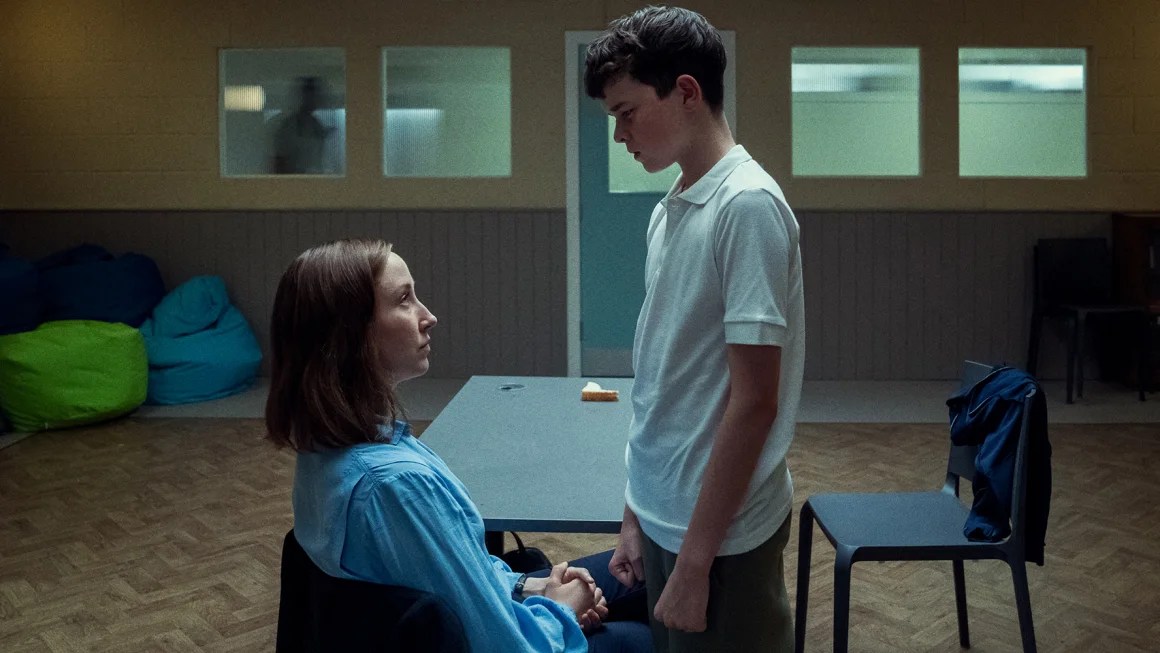
It takes a certain amount of bravery to get through the Netflix mini-series Adolescence. It is compelling but also harrowing, showing a family’s intense pain when their thirteen-year-old is accused of committing a terrible crime.

This show is being thought about, discussed, and written about all over the media. 

But what is the show about? Is it about what the internet has done to childhood? Or is it about mental illness? Or perhaps the intersection of the two?

Spoiler alert: if you haven’t seen the show and you don’t want to know what happens, stop reading here.

In Adolescence, a thirteen-year-old is accused of killing a classmate. And for the first two episodes, it is just impossible to believe that he has actually done this. Sweet-faced and smart, this boy looks to have barely reached puberty and his obvious love and respect for his father make you want to believe that he is a good kid who has been falsely accused.

But as the show moves on, as inconceivable as it seems, the viewer is led to believe that he is, indeed, the murderer.

But, as the viewer you want to know: why did he do it? And how could he have? 

And this is where the impact of social media and the boy’s difficulties with his mental health intersect.

It becomes clear that the victim made fun of the boy. And she did it, as is so often the case now, on social media. And how she did it was subtle, speaking in the secret and nuanced language of adolescence: emojis. Tiny, seemingly harmless symbols – which turn out to convey enormous, humiliating insults. Through these emogis the girl lets it be known that the boy she is targeting is unwanted, unappealing, ugly…  and perhaps even an incel, one of those angry men who can’t get a woman to go out with them and who are resultingly furious with all women as a result. Or, as one boy in the show puts it, a virgin for life.

This is a deeply cutting insult for a boy, of course, but is it enough to lead him to murder? 

After all, teasing between adolescent boys and girls has gone on since time immemorial.

Certainly we can look to the internet for introducing kids to the overstimulation of porn and to concepts such as the incel. We can blame social media for widening the scope of teasing to include everyone in a given school, and beyond, in the larger internet community. And this obviously amplifies the impact of teasing to ever more humiliating heights – but again, is this enough to drive a thirteen-year-old to murder?

We know that this sort of teasing has driven some kids to suicidal actions – and to completed suicides.

But again, in these cases, too, is it just the teasing? And the social media advertisement of the teasing?

I think not.

In the final episodes of Adolescence, we find out some interesting things. We find that the boy in question has a problem with his anger. He can escalate to violence and when he does he can be cruel, impulsive, destructive. We find out that despite his sweet face and his obviously good intellect, once angry, he cannot calm himself down without firm limits from outside of himself. And we find out that his parents did nothing about this.

This was a boy who was allowed to sit alone in his room with the door shut to look at whatever he wanted on his computer, including, evidently, humiliating posts and reactions to his posts by the kids in his class. And this was also a boy whose obvious anger was not seen as anything more than an echo of his father’s anger, who was not helped to understand this anger and who was never provided with any help to learn how to bring himself back from it.

This was a boy like so many children, who was left largely on his own not only to deal with social media but to deal with the darkness contained in social media and with his own darkness, his own rage and his own difficulty containing it. Yes, he was egged on by social media. He was insulted by his peers publicly and he was rejected by a girl he wanted – but he was also neglected by an educational system that was obviously immune to the real needs of children and by a loving set of parents who just did not seem to know whether or how to help him.

The portrayal of this boy, as I imagine the creators of the show intended, is similar to the description of so many of our school shooters. It is the profile of so many adolescents, often boys, who go unnoticed and unhelped by ever more overburdened, underfunded and undercaring educational and mental health systems.

This is the boy who needs us. This is the boy who needs to be seen, and heard, and supported at school and through early intervention. His are the parents who also need support and guidance. And he is the boy and they are the parents we are failing.

Why Aren’t Kids More Independent?

Kids aren’t doing things independently as much as they used to. This is the thesis of a recent podcast by Screenagers founder, Delany Ruston – and I highly suggest you listen. (See below for link)

Her first premise is that kids are less independent because they spend so much time watching screens. And her second premise is that kids are less independent because of parental anxiety and the restrictions parents put on kids as a result.

Her guest on the podcast is Lenore Skenazy, author of Free Range Kids, the “terrible” mother who let her nine-year-old son ride the subway in New York City.

Well, let me just say, I rode the public bus when I was nine – and I did it because I wanted to. I also went to spend overnights with my best friend – and from the time we were about six, her mother, who didn’t like to cook, would send us to the corner store for lunch.

This was fun. This was exciting. And we didn’t get kidnapped.

But these days, when we see kids riding the bus or the subway at nine or ten and those who walk around alone or with a friend at six we think they are being neglected, possibly abused and definitely in danger.

However, Dr. Ruston said an interesting thing. She quoted a mentor of hers as having said, “People do not mature in preparation for responsibility – they mature as a result of it.”

And from my own personal experience, and as a child psychologist, I have found this to be true.

My father died when I was 14. I started to be the one to lock the doors at night, just as he had once done. I mowed the lawn, as he had done, and when I was 15, I got a job. 

I didn’t do these things because my mother yelled at me and told me I had to. I did these things because I wanted to. And doing these things actually felt good. Doing these things made me feel more confident and more able.  And when I went away to college, I felt prepared to handle myself independently.

Did my boss at work yell at me? Yes. Did she tell me I was terrible at my job? Yes. But I still enjoyed working for her and I REALLY enjoyed getting that paycheck.

Meanwhile, in my practice, I am seeing college-aged kids who don’t seem to know how to do so many things, who seem self critical, who seem to lack confidence and who seem to prefer to sit on their beds and scroll. I see college kids who need to text a parent multiple times a day. And I see college kids who, once they have an internship or a job, can’t stand a moment of criticism and feel like they have the right to push back immediately.

I think these college kids are not used to being independent. I think they feel unsure of themselves and they need to check in with parents to see if what they are doing or what they might do is OK. Often these are the kids who were driven everywhere they needed to go and who were given advice about everything they needed to do.

Of course, their parents restricted their independence out of fear. The kidnapper, the accident, the rapist lurked just around the corner. And their parents gave advice because they wanted the best for their kids. They hired the college consultant because they were unsure about whether their own judgment or their kids’ judgment about which colleges to apply to were good enough. They kept their kids from having jobs because they wanted them to get the best grades they could. They scheduled their kids with activities because this is what they thought was best for their kids.

But does constant protection and constant advice give enough room for kids to experience life for themselves, to make some mistakes, to learn how to handle a yelling boss or a bus that never comes?

I think we all know the answer.

And for the ubiquitous phenomenon of overprotected kids, over anxious kids, and over anxious parents, I, like Dr. Ruston, blame screens. But for once, I don’t blame the screens the kids are on. I think part of the blame goes to the screens the parents are on.

We know that we all receive too much news too much of the time via our phones. And we also know that we all receive an enormous amount of pseudo-news too much of the time. And we know that we keep reading this pseudo-news and we keep clicking on the clickbait even when we know we shouldn’t.

For parents, the content they consume often has to do with all the worst things that can happen to kids, and all the possible criticisms of the parents whose children suffered these terrible things.

No parent wants to be the bad parent. So an abundance of caution, a fear of criticism and genuine love for their children often keep parents from allowing their children a bit of freedom, a chance to take a walk or a bike ride with a friend, a trip on the bus or subway or train by themselves.

And this spills into other decisions – do parents let their kids go on overnights or to overnight camp? Do they let them spend time with aged relatives? With relatives who are sick? Do they let their kids attend wakes or shiva or funerals?

The worry parents experience can lead to restrictions on all sorts of experiences.

Of course, the desire to protect comes from love. But we have to ask, what does our protection lead to in terms of kids’ development?

My parents didn’t watch local news. In fact, they were busy and didn’t really watch TV at all. I’m sure they worried about my taking the bus. And yes, I later found out that my mother followed the bus on the first day and she followed me almost all the way home as I walked from the bus stop. But I didn’t know it. And I was so proud of myself for having successfully ridden the bus home! In fact, a few years later, on nice days I also started walking home from school. And it wasn’t a short walk. My older sister had done this before me and she could often be seen walking down the street while simultaneously reading a book. I wanted the same independence she had. I wanted to be like her. And even though I was six years younger than she was, my parents let me have it.

Getting a hot dog with a friend at age 6, riding the bus at age nine, losing a father at 14 – these experiences, and many more, both good and tragic, can be growth-promoting and independence-promoting experiences – at least, they were for me.

Podcast Link:

https://www.screenagersmovie.com/podcasts/raising-independent-kids?utm_source=TTT+and+Movie&utm_campaign=ed57135e64-EMAIL_CAMPAIGN_TTT495&utm_medium=email&utm_term=0_-e0518a1e9b-160707841&mc_cid=ed57135e64&mc_eid=38d3a9d11c

What’s Up With Hook-ups?

Hook-up culture has been around for a while. Often fueled by alcohol, these encounters avoid all the the preliminaries – the flirting, the talking, the “dates”.

Kids in their teens as well as young adults are getting drunk and having sex of one sort or another… and then ghosting each other.

But why?

And what can they possibly be getting out of this?

Delaney Ruston of “Screenagers” recently released a podcast and a blog post on this subject and she interviewed Dr. Lisa Wade, author of American Hook-up: The New Culture of Sex on Campus.

According to Wade, kids in high school and college often feel that “everyone is doing it”, referring to hooking up.

So perhaps one motivation for hook-ups is to be doing what “everybody” else is doing.

But there must be more.

Having an intimate encounter with someone can involve allowing oneself to be vulnerable. And allowing vulnerability, often leads to feelings of closeness and connection – which is something most teens want.

But teens who opt for hook-ups are getting the vulnerability and the physical closeness with none of the emotional connection.

Why opt for this?

I wonder if some teens – whether in high school or college – are avoiding something by engaging in hook-ups. I wonder if they are avoiding the anxiety of acknowledging that they like someone, taking the risk of contacting that person and actually talking with them face to face. I wonder if the anxiety and the potential for an awkward encounter – or even worse, for disappointment – is keeping some kids from trying.

But why is this more true now than ever before? Why is there even a hook-up “culture” at this point in history?

Could the isolation of COVID, combined with the usual awkwardness of adolescence and the prevalence of social media have made it harder for many adolescents to socialize face to face?

Of course, it is true that casual dating decreased during COVID. It was harder to meet people and it was harder to get together without the risk of exposure to illness. (2)

But the desire for a relationship did not decrease. This put teens in a difficult position. The longer kids were in isolation, the more many kids looked forward to the rewards of getting back to socializing and potentially finding a romantic relationship. (1)

However, hook-up culture existed pre-COVID and still exists post-COVID. So the appeal of the hook-up must transcend the loss of opportunities and the lack of social skills kids experienced as a result of COVID.

So this leaves me to speculate: I think there was always a certain amount of hooking-up. I think that kids have been having substance-fueled sex for a long, long time. But perhaps the prevalence of hook-ups now points to something more malignant.

At this point, many teens and young adults seem ill at ease with one-on-one interactions. And this is true even when it comes to the phone. Recently I read that one teen likened hearing his phone ring to being stabbed in the chest. People in this age group do not like to talk on the phone. They seem to lack confidence in their ability to hold down a one-on-one conversation. Even worse, for some, is getting together. Many kids prefer to stay on their beds. Many don’t have “friends” anymore – if they have anything, they have remote friends they talk to on social media or with whom they play video games. At best, they have “friend groups”. While sometimes they may get together one-on-one, more often the group does things together.

Something has happened to teens and young adults in regard to their ability to tolerate contact and intimacy.

And it is not just a few teens and young adults, it is many.

I suspect the advent of contact through screens has something to do with this – but perhaps not all of it. With the use of video gaming and social media, kids no longer have to leave the house to get stimulation. Now it can be had from the comfort of bed or basement. Social skills are no longer needed. And there are not nearly as many opportunities to practice what social skills a teen may have, or to make mistakes and recover, or to experiment.

I also think that one one-on-one conversations and interpersonal interactions are not demanded of teens and young adults often enough. Parents AND children spend hours each day on their phones. Even when they are together, parents are not talking to kids as much and kids are not talking to their parents as much as in previous generations.

And at school, as I wrote about in my last post, kids are on their phones at least some of the day, rather than interacting with each other. And at some schools and in some classrooms, kids use their computers rather than engaging in classroom discussion and debate.

The malignant thing I referred to earlier is not just the proliferation of screens, it is not just the aftermath of the isolation of COVID, it is our teenagers’ loss of faith in themselves as social beings.

And it is contributed to by our allowing teens to hide behind screens, stay on their beds, and avoid interpersonal interaction.

I think hook-ups, in many cases, are the workarounds that many kids have found to get to have sex and contact without having to utilize much in the way of social skills.

But hook-ups are a desperate workaround, a decidedly second-rate, often risky, and more often hurtful and disappointing way to try to get something rather than to risk what kids fear: getting nothing in the way of romance or sex.

One male student said:

“Most of the time, it’s not a fun experience. Sometimes it’s great, but more often than not, people are kind of left feeling maybe a little bit regretful, kind of embarrassed, awkward. There’s pressure to hook up, but if you don’t, you feel like you’re missing out.” He added, “If you hook up with someone and they don’t text you after, that can be pretty hurtful.” 1

This is only one student, but I suspect he speaks for many others. Hook-ups meet a basic desire for sex, but they don’t meet any of the other needs that teens have for interpersonal relatedness and connection, for affection, support, and validation.

References

1 Ruston, Delany. 2025. Is Hookup Culture Really the Norm? Feb. 18.


 Kuperberg, Arielle (2022). Dating during COVID-19: A sociologist’s perspective.


2 Breaux R, Cash AR, Lewis J, Garcia KM, Dvorsky MR, Becker SP. Impacts of COVID-19 quarantine and isolation on adolescent social functioning. Curr Opin Psychol. 2023 Aug;52:101613. Epub 2023 Jun 1. PMID: 37364468; PMCID: PMC10232930.Ki