
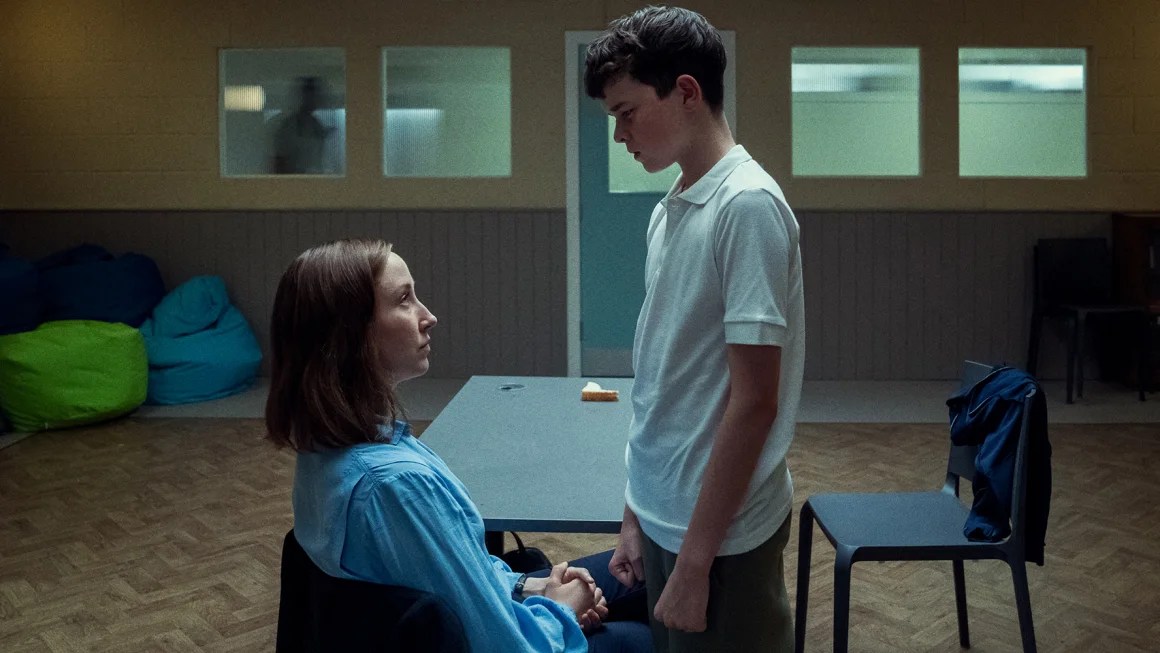
It takes a certain amount of bravery to get through the Netflix mini-series Adolescence. It is compelling but also harrowing, showing a family’s intense pain when their thirteen-year-old is accused of committing a terrible crime.
This show is being thought about, discussed, and written about all over the media.
But what is the show about? Is it about what the internet has done to childhood? Or is it about mental illness? Or perhaps the intersection of the two?
Spoiler alert: if you haven’t seen the show and you don’t want to know what happens, stop reading here.
In Adolescence, a thirteen-year-old is accused of killing a classmate. And for the first two episodes, it is just impossible to believe that he has actually done this. Sweet-faced and smart, this boy looks to have barely reached puberty and his obvious love and respect for his father make you want to believe that he is a good kid who has been falsely accused.
But as the show moves on, as inconceivable as it seems, the viewer is led to believe that he is, indeed, the murderer.
But, as the viewer you want to know: why did he do it? And how could he have?
And this is where the impact of social media and the boy’s difficulties with his mental health intersect.
It becomes clear that the victim made fun of the boy. And she did it, as is so often the case now, on social media. And how she did it was subtle, speaking in the secret and nuanced language of adolescence: emojis. Tiny, seemingly harmless symbols – which turn out to convey enormous, humiliating insults. Through these emogis the girl lets it be known that the boy she is targeting is unwanted, unappealing, ugly… and perhaps even an incel, one of those angry men who can’t get a woman to go out with them and who are resultingly furious with all women as a result. Or, as one boy in the show puts it, a virgin for life.
This is a deeply cutting insult for a boy, of course, but is it enough to lead him to murder?
After all, teasing between adolescent boys and girls has gone on since time immemorial.
Certainly we can look to the internet for introducing kids to the overstimulation of porn and to concepts such as the incel. We can blame social media for widening the scope of teasing to include everyone in a given school, and beyond, in the larger internet community. And this obviously amplifies the impact of teasing to ever more humiliating heights – but again, is this enough to drive a thirteen-year-old to murder?
We know that this sort of teasing has driven some kids to suicidal actions – and to completed suicides.
But again, in these cases, too, is it just the teasing? And the social media advertisement of the teasing?
I think not.
In the final episodes of Adolescence, we find out some interesting things. We find that the boy in question has a problem with his anger. He can escalate to violence and when he does he can be cruel, impulsive, destructive. We find out that despite his sweet face and his obviously good intellect, once angry, he cannot calm himself down without firm limits from outside of himself. And we find out that his parents did nothing about this.
This was a boy who was allowed to sit alone in his room with the door shut to look at whatever he wanted on his computer, including, evidently, humiliating posts and reactions to his posts by the kids in his class. And this was also a boy whose obvious anger was not seen as anything more than an echo of his father’s anger, who was not helped to understand this anger and who was never provided with any help to learn how to bring himself back from it.
This was a boy like so many children, who was left largely on his own not only to deal with social media but to deal with the darkness contained in social media and with his own darkness, his own rage and his own difficulty containing it. Yes, he was egged on by social media. He was insulted by his peers publicly and he was rejected by a girl he wanted – but he was also neglected by an educational system that was obviously immune to the real needs of children and by a loving set of parents who just did not seem to know whether or how to help him.
The portrayal of this boy, as I imagine the creators of the show intended, is similar to the description of so many of our school shooters. It is the profile of so many adolescents, often boys, who go unnoticed and unhelped by ever more overburdened, underfunded and undercaring educational and mental health systems.
This is the boy who needs us. This is the boy who needs to be seen, and heard, and supported at school and through early intervention. His are the parents who also need support and guidance. And he is the boy and they are the parents we are failing.
 Thoughtful Parenting