
Part 4: When a Child Experiences the Death of a Loved One

Part of this post is excerpted from my forthcoming book, How Children Grieve: What Adults Miss and What They Can Do to Help

Previously in this series I talked about the little losses of everyday life, about ambiguous loss and about how to talk to children about death. But eventually, most children suffer an actual loss when a loved one dies.

This is just so painful – both for the child – and for the adults who love the child and want to understand what she is feeling.

And there is so much to understand.

Behind childhood grief is a world of feelings and beliefs, shaped and colored by the child’s age and stage of development but also by the child’s personality, the degree of closeness she had with the person who died, her particular family circumstances, her culture AND by the way her parents feel about this loss in particular and about loss in general.

The problem in understanding what your child feels about her loss is that it is often difficult for her to put this into words. And lacking an explanation, adults who try to help a grieving child often look at the child’s behavior – and when they look at the child’s behavior, they form ideas of what the child is feeling and how they are affected based just on external impressions.

And in doing so, they can miss a lot.

They can miss what is going on in the child’s inner world; they can miss what the child truly feels about the loss; they can miss what the child understands about the loss; they can miss the child’s misconceptions about death and loss in general; they can miss the child’s fantasies about this loss in particular and what role the child believes she played in causing the loss to happen.

And it is important not to miss these things.

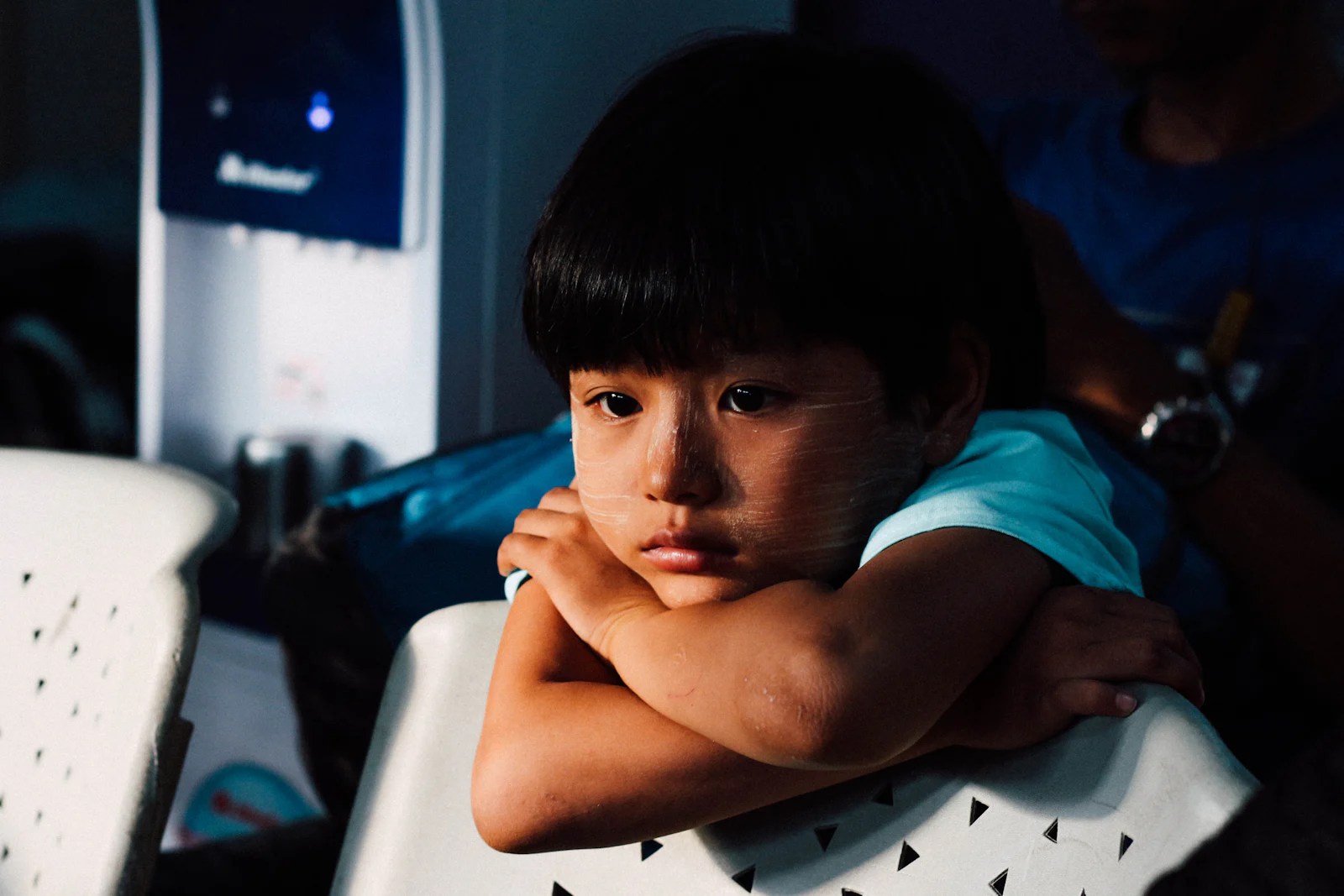
When a child loses someone they love, the child doesn’t stop loving that person. The child may not even really believe that person is gone. The child may start searching for them everywhere they go, and each night they may see their lost loved one in their dreams.

When a child loses a beloved person, their love for that person becomes a one-sided equation. It is an unreciprocated, lonely kind of love that involves powerful feelings of missing their lost loved one.

All this missing can feel different for each child. It can feel like pain. Or it can feel like confusion. It can feel like an ongoing emptiness. It can feel like an ache in the pit of the stomach or a headache that never ends. Some children stop eating. Some start eating too much to fill that emptiness.

Most children can’t bear the feeling for long, and they take breaks from it by returning to play and school activities. This could make it seem like the child is no longer grieving. But, in fact, it does not mean the pain, the emptiness, the yearning, or most of all, the loving has stopped.

For example, Chloe was four years old when her grandmother died. She had been close to her grandmother, seeing her at least once almost every week of her life. After being told that her grandmother had died, Chloe went off to the family room. Her parents observed her playing quietly with her dolls, and they were relieved. They felt that she had taken the news very well and saw her as returning to her normal activities.

Several weeks later, when Chloe began to have trouble at bedtime, refusing to go to sleep without one parent or the other lying down with her, they did not link this to her experience of her grandmother’s death. They felt that she was being “clingy” without good reason.

What the parents missed was that her behavior at bedtime was a communication to them.

The truth was that Chloe was very frightened. She had been told that her Nana had “gone to sleep forever and was now with God in Heaven,” so she was afraid to go to sleep, fearing that she would never wake up and that she would go to be with God in Heaven.

When Chloe went to play with her dolls after being told the news of her grandmother’s death, she had played a game of putting her dolls to bed and having them go to sleep and then go to Heaven. She played this over and over, trying to work out both how someone could sleep forever and where Heaven was.

In addition to becoming frightened to go to sleep for fear that she too would sleep forever, Chloe was feeling more fearful of separations in general. She began to have tantrums each morning when it was time to go to preschool and when either her mother or her father left the house. She also had powerful feelings of missing her Nana and didn’t understand why she couldn’t still go to Nana’s house to visit. AND she was worried that others in her life might go away and not come back. Of course, her solution to this was to not let anyone she loved out of her sight!

Chloe’s parents had not thought to wonder how Chloe would understand the words they said to her about her grandmother’s death. They had four children altogether, and Chloe was the third. They were happy with Chloe’s adaptation to the news of her grandmother’s death and very caught up with their own grief, the reactions of their other three children and the funeral arrangements.

Chloe’s story is just one example of how a child might react to loss.

In How Children Grieve, I tell many other stories about children’s grief. And I take an in-depth look at the internal world of the child in order to help caregivers better understand the nuances of feeling and fantasy a child may experience when confronted by loss. I discuss how unique each child’s understanding and reaction to loss are and how strongly they are shaped by her personality, family circumstance, age, stage of development, and culture. I talk about losses of all kinds, including losses due to death, abandonment, deployment, divorce, and immigration.

Following a loss, adults sometimes forget that young children who have never lost a loved one before may not know what death really is. For example, one little boy I saw in therapy lost his father when he was three. His grandfather told him that his daddy had gone “up there” and the grandfather pointed to the sky.

This little boy, who I will call Teddy, accepted this explanation — but then he started to regress. He became fearful of separations, he would not take a bath and his speech became babyish.

His grandmother brought him in to see me and in the first session, Teddy sat down in front of my doll house, took the daddy doll out and threw him behind the house. When I asked, “what happened to the daddy?”, he retrieved the doll and said, “The daddy’s on the roof”.

This is what he had understood when his grandfather had told him that “Daddy’s up there”.

He thought daddy now lived on the roof of their house.

Young children know so little about the world. Everything is new — and this includes the concept of death. It is common for them to believe that when someone dies, they have just gone to live somewhere else and that they can come back.

Older children may understand that death is permanent, but they often believe that if a death occurs, it is someone’s fault. This can lead them to blame others -or themselves – if someone they love dies or leaves permanently.

One little boy I saw in treatment was convinced that his parents had gotten a divorce and his father had gone to live abroad because he was not lovable enough. He told me in no uncertain terms that if only he had been better at soccer and a few other things, his father would have stayed.

When someone dies, children under the age five or six need frequent reminders about what has really happened. They need to be told that the person who died cannot come back, even if they might have wanted to. Fantasy is so powerful at this age that it can quickly replace a reality that is poorly understood (as well as being unwanted).

Children under the age of five or six need death to be explained to them in a concrete way, including the facts that when a person or animal dies, it cannot see or hear or breathe or feel anymore.

And when a child between the ages of six and ten loses someone, they need a slightly more nuanced explanation of what has happened. They need to know the truth and they need to be told face to face, soon after the loss has occurred. They need to be told some details about the sort of illness or the event that caused the death. They also need to be reminded that the death was no one’s fault (if this is true).

Teenagers may seem like they don’t need much help following a loss. After all, they understand what death is, and they manage a great many feelings on their own already.

But whatever age a child is — from infancy through young adulthood, support is needed following a loss due to death.

When a teenager retreats to her room following a loss, when she looks at her phone when you try to talk to her about her feelings or about what is going on in the family, this is NOT an indication that she does not need your help.

Like kids of all ages, teenagers may feel uncomfortable talking about their feelings and they may feel awkward when feelings are talked about with them.

But don’t give up. Keep asking how your teen is doing, keep checking in on how they are feeling and keep letting them know how you are doing and feeling.

There is a great deal to understand about children’s understanding of death and their feelings following the loss of a loved one. If you are interested in learning more, check out my new book:

For children of all ages, there will be grief and there will be mourning if they were close to the person who died.

But this grief may not take the form that adults expect.

Some children will show signs of sadness, much like an adult would. But others may not.

Some children may express their feelings readily and ask lots of questions. Others may not show many feelings and the adults around them may wonder whether they are grieving or not.

All children will pop in and out of grief — sometimes seeming sad or angry or irritable and other times going about their usual activities including playing and seeming completely unphased.

But whatever the child’s age, clinical experience and research show that a strong relational environment is one of the most important factors in helping the child to process their grief, tolerate their sad, confused, or angry feelings, and come out the other side.

Adults can help a grieving child by understanding the many forms the child’s grief may take, by tolerating their child’s feelings and by talking about how the child feels, whatever those feelings may be.

This task is complicated, however, because often, when a child is in mourning, the parent will also be in mourning. If a grandparent has died, the parent is grieving the loss of their parent or their parent-in-law. If a sibling has died, the parent will be in mourning for their child. And even if it is a close family friend who has died, the parent will also be affected.

This makes it more difficult for a parent to be available to a child. They may need to bring in help for a brief period of time — and have others provide the support their child needs.

Death is hard to accept for all of us. We all need a great deal of help and support when we lose someone we love — and this is all the more true for children and teenagers.

***
Part 3: Helping Your Children Learn About Death

In this series we have talked about the little losses of everyday life and we have talked about the unacknowledged losses in life, called “ambiguous losses”. Today we are going to talk about how to help your children learn about the biggest losses of all: the ones due to death. Part of this post is excerpted from my forthcoming book, How Children Grieve: What Adults Miss and What They Can Do to Help.

And please weigh in on this subject – leave a comment!

For a child, losing a loved one is scary—because it makes death real.

For a child, death itself is scary—because what is death, anyway?

For a child, losing a loved one is excruciating—because the pain of not having the loved one is so terrible and the capacity for bearing pain is so small.

For a child, missing a loved one is possibly the hugest part of loss.

For a child, losing a loved one is confusing—because it is hard to understand why this person had to die.

For a child, losing a loved one stirs up guilt—because the child imagines that she could have prevented her loved one from dying if only she had behaved differently.

And for each child, grief is experienced, felt, and expressed differently.

Each child goes through her own particular feelings at her own rate.

We hate to think about our children suffering.

We prefer to think we can protect them.

Sometimes we even try to shield them.

But the sad fact is that many kids suffer losses due to death during their childhoods. Whether it is the loss of a grandparent, the loss of a teacher, the loss of a public figure, the loss of a friend, or the most grievous loss of all, the death of a sibling or parent.  

So how do we prepare our children for the possibility of any of these?

This is something we have been talking about in our parenting group. And many of the parents have acknowledged that in the confusion of everyday life, it is hard to get to this topic.

One of the mothers realized that she really did not want to talk about death with her children – and another seconded this, saying that growing up, death and loss had just not been talked about in her family and she didn’t know how to start.

It is important for us as parents to acknowledge – to ourselves – that it is not possible to protect children from loss – and that we do need to get ourselves to talk about it.  Because, if we don’t, how are our children going to know that it’s an OK thing to talk about? And how are they going to be prepared when someone they know and love dies?

In our society, death is kept at a distance.

People who are dying are often in the hospital, in a continuous care community or in a residential hospice. Children are not accustomed to being around those who are dying and most children have never seen someone who has died.

This makes death strange. And foreign. 

But as parents, we know well that death IS a part of life – and we need to introduce our children to this knowledge. 

But how to start?

The best way is to talk about loss and death early…and often. 

It should not be a one time conversation. 

Parents can start when children are as young as 2 or 3. The conversation can begin when the child sees a dead bug or a dead animal. The parent can bring it up or the child can bring it up. Either way, start talking about it. Children are super-curious about these things. They want to know what happened and why.

And talking about death when it has happened to something or someone distant from the child is helpful. 

Explain what death is.

You can talk about it in a very concrete way: for example, you can say that when something dies, it stops breathing and moving. It cannot eat or sleep anymore and its body will decompose and go back into the earth. 

Your child will have questions, of course. They may want to know what and who can can die. They will want to know if you will die or if they themselves will die.

This is when the conversation gets more difficult.

But children can and want to know the truth.

And yes, they may worry about dying once they have learned about it. They may have a period of time when they worry about  you dying.  They may have nights when they think about death before they go to sleep. They may have periods when they can’t get to sleep because they are thinking about it.

But this is ok. 

It is normal. 

It is part of childhood to learn about death, and to worry about death.

 And the best thing a parent can do is to not leave the child all alone with these thoughts and feelings – but to stick in there and to be available to talk about them.

As children progress through development, the conversation can become more sophisticated: “What causes people to die?” “What role does illness play in death?” “What is cancer?” “Why can’t all cancers be cured?” “Is there life after death?” “Where do our spirits go when we die?” “Why can’t we live forever?” 

Each of these questions can be entertained. All you have to do is to answer to the best of your ability. AND maintain an attitude that says “we can keep talking about this.”

In adolescence the questions can become fully existential: “What is the purpose of life if we are all going to die anyway?” “How do I make my life meaningful knowing that I’m eventually going to die?” “What is the best use of time, knowing that our time is limited?” “Is there really such a thing as heaven?” “If there is a god, why does he/she let people suffer and die?”

And the best answer to these questions is not an answer, it is a question that you put back to your teenager: “what do you think?” 

This is a conversation. 

And if your teen is motivated, if they are really interested, you can refer them to the philosophers. You can talk to them about spiritual beliefs. You can suggest they talk to your priest or rabbi or imam. And to their friends. And again, you can keep the conversation going.

Death is hard for all of us to understand. Often, we just try to avoid thinking about it. But, for many of us, including for many children, the knowledge of death lends more meaning to life, and to the value of each day and each moment.

Stick in there. It’s not easy.  But being available and willing to talk about loss and death is one of the best things we can do for our children.

***

PART 2: Ambiguous Loss

In the first installment of this series I told you about my forthcoming book, How Children Grieve: What Adults Miss and How They Can Help, and I offered some ideas about the small losses of everyday life which children experience. I talked about these small losses and how important is it for parents to try to tolerate their children’s sadness when they experience them.

In this installment I am going to talk about another kind of loss – the kind of loss kids can suffer without it necessarily being recognized, called “ambiguous loss”.

Ambiguous loss is loss that may not involve death. It is the loss that happens slowly, or the loss that occurs when something otherwise considered good is happening.

This kind of loss can involve a grandmother who is slowly losing her memory. It can involve missing a sibling who has gone away to camp or to college. It can involve a parent who has gotten a new job and has to work longer hours. It can even involve someone who is still present but who seems psychologically absent because they are depressed. Or it can involve the loss of someone who is not available because they are in mourning themselves, such as a father whose own father has died.

Pauline Boss coined this term as a result of her own childhood experience – and she wrote about it in her book,  Ambiguous Loss, Learning to Live With Unresolved Grief.

Boss grew up with a father who had emigrated from Switzerland. As a child, she noticed a pervasive sadness about him, but she did not understand where it came from. She felt that her father was absent sometimes when he was actually present. No one in her family talked about this. Only later in her life did she realize that her father’s sadness originated from having left his homeland and his family and that, as a sensitive child, she had picked up on his powerful missing feelings.

In the course of her research on the subject, Boss studied two types of families: one type being families in which the fathers were too busy working to take an active part in raising their children and the other type being the families of fighter pilots who were missing in action. In the first kind of family, she noted that the fathers were psychologically absent from their children’s lives but physically present. In the other type of family, the fathers were psychologically present but physically absent. She saw that each type of family lived in a kind of limbo where their losses were not really named but where there was sorrow and grief anyway.

It is Pauline Boss who defined ambiguous loss as a situation of unclear loss in which it is not known if a loved one is dead or alive, absent or present.

And she has pointed out that ambiguous loss is stressful and produces anxiety that blocks coping and understanding. 

We can extend the concept of ambiguous loss to describe the experience of most children and adults over the time of the Covid-19 pandemic, just as Pauline Boss did in her later book, The Myth of Closure: Ambiguous Loss in a Time of Pandemic and Change. 

Ambiguous loss was ubiquitous from 2020 to 2022. Even those of us who did not lose loved ones to illness lost other things during this time, including our normal way of life, our sense of safety, and our freedom to go where we pleased. And for the times of quarantine, we all lost our ability to be with friends and family, to go into school or work, and to go about our daily lives as we had previously.

For children who were born during this time, or for those who were small, opportunities to socialize with other babies and small children were lost. Opportunities to attend playgroups and pre-school were lost. For those who were older, the school experience was drastically different, and in many cases, not sufficient to promote age appropriate learning or socialzation.  

These are losses which we are beginning to name but which we don’t yet know enough about.

Even without a pandemic, ambiguous loss happens all the time. For example, ambiguous loss occurs when a teenager gets ready to go to college and then leaves. The teenager loses her childhood home and the proximity of her parents. The parents lose the everyday presence of their child. Siblings lose the presence of that sister or brother in the house.

Going to college is supposed to be a happy event. The teen is going there to study, to meet others, to learn how to be independent and to find out where their interests lie. But there are also many losses involved in this “happy” event.

Ambiguous loss also occurs as couples decide to separate and then move into different apartments or houses.

No one has died, but a way of life has ended. 

Ambiguous loss occurs when a child “graduates” from preschool to kindergarten or from middle school to high school. These kids are usually happy, they are excited, but they may also be anxious or sad. They are leaving behind the familiarity of the old building, the usual classmates, the well known routine.

And what about kids whose families decide to move to a “nicer” house or to a safer neighborhood? Or even those kids who must emigrate from their homes to move to a safer location within their country because their town is under attack? Or those who must move to another country because their country is at war?

For the adults involved, these moves make sense. For the children, this sort of move may feel unwanted, scary, even devastating.

Ambiguous loss is a sort of loss which is much subtler than loss due to death. But it is still painful, and it is still felt by children and adults alike. These losses are not always acknowledged—and unacknowledged losses are harder for people to process.

 As Pauline Boss says, “Ambiguous loss is always stressful and often tormenting.”

 In the decades following Boss’s original research, she treated the families of Alzheimer’s patients, families whose loved ones had died in natural disasters but whose bodies had never been recovered, and the families of those lost on 9/11. She said that for these families, their losses existed without any conclusion or resolution. She talked about the grief in these families as often being “frozen.”

And similarly, the grief of many children who have had a sibling leave for camp or college or the military, or who have left a home for a supposedly better or safer home may end up with certain of their feelings about the experience left unacknowledged and frozen.

We need to take the trouble to try to recognize children’s otherwise unacknowledged losses, to speak about them with the child and to support the child’s feelings about the loss, whatever these feelings may be. In other words, we need to bring these things up – even if our children are not talking about them. We can initiate the conversation, we can talk about similar losses we have experienced, we can talk about our own feelings … and then we can see what the child does with this and follow their lead. Do they seem to need to talk more? Or do they seem satisfied?

In reading Pauline Bosses books and in thinking about the concept of ambiguous loss I have come to appreciate some of the ambiguous losses that I experienced early in my own life: the strange absence of grandparents who didn’t live so far away but who almost never came to visit, the sudden disappearance of the old red chair in the basement which was my favorite place to curl up, my father’s slow retreat into work and long naps, my mother’s strange helplessness after my father’s early death. None of these were discussed – or even mentioned. But I reflect on them at the ripe age of 69, realizing that I would have been better off if they could have been talked about and if my feelings about them could have been elicited and acknowledged. 

***************

In Part 3 of this series, I will talk about children and death.

On July 3rd, my new book called How Children Grieve will come out – and in honor of the occasion, I am starting a 4 part series on loss.

https://www.penguinrandomhouse.com/books/738355/how-children-grieve-by-corinne-masur

Part 1

The Losses of Everyday Life

Everywhere you look, someone is either writing or podcasting about how you should be raising your children. You should be more gentle; you should be less gentle. Your children need to develop an understanding of feelings; your children are overprotected and unprepared. Whether you are reading Sarah Ockwell-Smith or Johthan Haidt, you will find that you are doing it all wrong.

What’s a parent to do?

Well, if you ask me, it’s not one or the other. Sometimes children need limits and sometimes they need help understanding their own feelings and the feelings of others.

We don’t want to over protect our children so they are unprepared for what life is really like nor do we want to overexpose them to disappointment and difficulty.

So, again, what’s a parent to do?

Well, I would like to start with just one subject. And that is the subject of loss. 

Children – all children – experience losses and disappointments in their lives and we do not need to protect them from these or from the feelings that result from these. 

But we do need to prepare them and to help them when these losses happen.

We need to prepare them for both the little losses and the big losses so that as they mature, they will be able to handle what comes their way.

We don’t like to think about it, but children suffer losses all the time. And they need to be able to manage when these losses occur.

A friend doesn’t show up at school because she’s sick. Another friend moves away over the summer. A beloved stuffed animal is left behind on a trip. A promised adventure to the amusement park is cancelled due to rain.

These are small losses, but losses all the same.

So, do we go out and buy a new stuffed animal right away? Do we call the teacher and tell her how sad our child is that her friend is out sick? Do we try to introduce our sad child to other kids as soon as we find out her friend is moving? Do we substitute a trip to an indoor trampoline park instead of the amusement park?

You might be tempted to do one of these things.

But how about holding off?

Our job, as parents, is not to protect our children from experiencing loss, nor from the feelings accompanying loss.

What we need to do is to help our children with their losses, whether big or small, and we need to start early.

We need to convey that yes, it is sad to lose a stuffed animal or to miss a friend or to lose a much hoped for day at the amusement park – but we also need to convey that these losses can be survived.

Little losses are the best place to begin – because they lay the groundwork for dealing with bigger losses which will certainly come along at some point.

We should try to avoid giving our children the impression that life is always good.

Because it isn’t.

And we want our children to be able to feel what they feel when life isn’t good, and to be able to talk about it (if they want), and eventually to be able to move on.

The problem is that often these small losses are not spoken about. 

For the obvious ones like the loss of the stuffed animal, parents are often tempted to make the sadness go away by replacing the lost toy.

But why not let your child feel sad for a while?

Part of the problem with this is that for parents, it can be hard to tolerate a child’s sad feelings. It is painful for us.

But try to take a moment.  This is our job – we just have to try to allow the sadness and to show that WE can survive it ourselves. 

If we can tolerate our child’s sadness, this will help them to tolerate their own sadness.

And a missed friend or a missed day of fun?

Let’s also let them be sad.  Let’s try not to “make it all better”. Let’s talk about how sad and hard these things are. Let’s share times when we suffered in the same way. And let’s tolerate our children’s sadness and disappointment – and let them know that these things will happen from time to time in their lives.

And what about less obvious losses? The ones that we might not notice but which children are suffering with? 

They are what Pauline Boss calls “ambiguous losses” and I will talk about these in Part 2 of this series.

Another in a long series about electronic media and your children!

Dr. Corinne Masur

The other day one of the mothers I work with told me that while she was playing with her son, she picked up her phone to look at a text. He told her to put her phone down. He knew that her attention to the text was taking her away from him.

And how old is he?

Two.

This little boy is two years old and he already feels like he has to compete with Mommy’s phone for her attention.

Imagine what a five year old feels. Or a ten year old.

No wonder kids want their own phones. And no wonder they’re wanting them earlier and earlier.

It’s hard to buck this trend. 

Kids are asking for phones early in their lives. But if you want to be able to put off their phone ownership, or, if once they own one, you want to be able to limit their usage, the first thing you really need to do is to be more aware of your own phone usage – especially in the presence of your children.

One thing that I find particularly worrisome is the way that some parents use their phones when feeding their babies. Parents may think it doesn’t matter. What does a newborn notice? If you use your phone while nursing or, while bottle feeding, perhaps you feel like it doesn’t matter.

But, like with the two year old I mentioned, and like with the five year old or the ten year old, it’s more about what you aren’t doing than what you are doing.

With a newborn, what you aren’t doing is looking into their eyes, being present with them, feeling their soft skin, smoothing their little bits of hair. 

And what you aren’t doing is necessary for building connection and attachment – theirs and yours.

So, will they remember that you were on your phone while feeding them? No. But will it affect them that you weren’t as present as you might have been, that they missed that face to face, direct eye contact that can sometimes occur with feeding? Yes, I think it will.

And I do not say this to induce your guilt. I just say this to encourage all parents – including the parents of newborns and young babies – to limit your phone time to times when your baby or child or teen is not with you – or when they are napping or sleeping or when you absolutely have to take a call or a text.  

And if you do absolutely have to do one of these things in the presence of your toddler or your older child, explain why you are doing it.

This will make it much easier later when and if you decide to put limits on your child’s screen usage – and it will also be better for your relationship with you child – and theirs with you.

SCREEN TIME – AGAIN!!!

Dr. Corinne Masur (Be sure to leave a comment below if you have something to say about screen time!)

In our parenting group on Friday one mother said, “at our house it’s always a battle about electronics”.

I think she speaks for 98% of all parents in the US. 

Once kids get on Youtube or once they are playing a game, they don’t want to stop. And in fact, it’s really hard to stop. 

So there’s either a battle – or there are frustrated parents shying away from a battle.

Parents are genuinely afraid to say no. Parents want to avoid a meltdown.

And this is doubly true in public. In our group, parents admitted to being afraid that if they say no when they are outside of the house, there will be a scene, a tantrum, yelling and screaming – and everyone will see it.

And then they will feel ashamed. 

The parents talked all about this. They admitted that sometimes they don’t set limits because they are afraid the ensuing battle will take away everyone else’s good time.

What if they are at a restaurant? Out with friends? Or on a trip with other families?

No one wants to be the parent who caused the meltdown that makes everyone else uncomfortable.

One mom said “I don’t think it’s healthy but that’s the way it is”.

Another parent said, “but if you let things go, it’s hard to make a change.”

This IS hard. 

If you don’t set limits early and often, kids are used to getting 10 more minutes…or an extra half hour. They persist at asking for more because they know sometimes they get it.

Parents are confused about what to do. Set a limit? Don’t set a limit? Give in to your child’s desire to stay on screen and give yourself another half an hour to look at your own phone? Or do the laundry? 

This is a conflict. Parents want and need more time for themselves. At the same time they want their kids to listen when they say, “It’s time to get off your screen”. 

Is it better to make a few rules? Ones that are just for your family – which don’t have to be like anyone else’s rules?

Or is it better to keep the peace?

Giving in sometimes and having established rules are not necessarily compatible. As we all learned in Intro to Psychology, the most reinforcing thing in the world is intermittent reinforcement. It’s better than all positive reinforcement and it’s better than all negative reinforcement – that is, if you want that behavior to persist, whatever that behavior is, rewarding it SOME of the time is the thing that will make it persist. In other words, if you give in sometimes, your child is even more likely to ask for more time on screen than if you say yes every time. Hard to believe – but true.

So what is a parent to do? You have a rule: 2 hours of screen time on Saturdays. But this particular Saturday you are sick and need a nap or you’ve been busy and you need time to catch up on work.  

It’s easier to give some extra screen time than to insist that your child find other things to do; it’s easier to give some extra screen time than to set up a playdate; it’s easier to give extra screen time than doing almost anything else!

We discussed all this in the group and in the end, the consensus seemed to be that it was important – to these particular parents – to figure out what worked for each of their own families. And then to try to be consistent. Some of them wanted to have no screens at meals at all. One mother wanted her kids to have no phones at all until age 13. But she was willing to let her 9 year old have an iwatch that couldn’t make calls. Two parents said phones at meals were OK as long as the kids ate their food before looking at the phone.

They all said they struggle with these questions – but they all also want more of a feeling of control in their homes.

Of course, you can’t entirely control your children. They are going to do some things and spend their time in some ways that aren’t your preference. But for their sake, and for your own, do you want to decide whether you WANT phones at meals or how many hours a day YOU want your children on devices?

You might find it worthwhile.

And you might want to stick by what you decide.

It’s hard to set limits, it’s hard to make rules and stick to them, it’s hard to say no and suffer the resulting melt downs – especially in public. But it is also important to think about whether it’s worth it. For you. And especially, in the long term, for your children.

All children have meltdowns sometimes. If you can tolerate your child’s meltdowns, and if you can allow them to happen because you’ve said no – you might actually find out that there will be fewer of them – and your child might – just might – get off her screen when it’s time. It’s not a guarantee. But there’s a chance.

Teens and Social Media – AGAIN!

This post is by Ana Hagstrand

Ana is a psychologist in private practice in Philadelphia. She is the mother of three children and she enjoys outdoor adventures.

At what age should we let kids use social media?

As a clinical psychologist and mother of three, I’ve been grappling with this question. My oldest child is 13 and he claims that everyone has Snapchat except him. 

Looking at the scientific research, the wider mental health trends, and what I know about adolescent development, I’ve decided he will have to wait until he’s at least 15.

Here’s why: 

First, there are concerning trends in adolescent mental health. The rates of teen anxiety, depression, and suicide have risen significantly over the last decade. Numerous studies show that teens report persistent feelings of sadness and hopelessness at significantly higher rates and that mental health professionals are diagnosing higher rates of depression. Most alarming is that the suicide rate for 10-14 year olds increased 139% for girls and 70% for boys over the last decade. And what does this have to do with social media?

Adolescent mental health started to decline sharply in 2012, which is the year that we started using the word “selfie” and the year that Facebook acquired Instagram. 

Is there evidence that social media has played a role in these worrisome mental health trends?

Yes. 

You may recall that Facebook was initially only for college students and was rolled out at different colleges at different times over the course of two years before opening up to the general public. One study found that the rates of anxiety increased by 20% and the rates of depression increased by 7% at each college in the year following the introduction of FB. 

Several recent studies actually demonstrate causation, not just correlation between social media use and decreased mental health, and the apparent pathway is social comparison. In other words, use of social media causes people to engage in more social comparisons and fear of missing out (FOMO) and this in turn increases depressive symptoms and decreases self-esteem, body image, and self-perceived social acceptance. 

And it has been found that the harmful effects of social media are stronger (worse) for girls.

Some of the studies I just referenced were done on young adults, and it’s important to consider that there are several reasons why social media may affect adolescents even more than it affects adults. During adolescence, the brain regions associated with attention, feedback, and reinforcement from peers become more sensitive as teens navigate identity formation, acceptance, and social status. This is a normal part of adolescent development, but with so many peer interactions occurring online for all to see and possibly even enshrined forever on people’s social media feeds, the stakes seem higher than they were pre-social media. If adults feel pressure to curate a certain image on social media, of course it’s even more fraught for teens.

Teens have always had a tendency to think they have an audience that notices their every blemish, and we used to try to quell their anxieties by telling them that no one is paying nearly as much attention to them as they think. Now that argument doesn’t work. 

Social media, which started out as a vehicle for social connection seems to have turned into a way of quantifying social status.

So why do I recommend waiting until age 15? 

One large study in the U.K. found developmental windows of increased sensitivity to the harmful impact of social media. Apparently, the onset of puberty and the onset of adulthood are especially vulnerable times: age 11-13 for girls, age 14-15 for boys, and age 19 for all genders.

I’m under no illusion that we can control our children’s online activity at age 19, but let’s try and hold out until at least age 15. When many teens in a community are on social media, it impacts everyone negatively, even those who don’t use it, so I think it’s worth thinking through this together as a community of parents. Most of us have felt the dopamine-fueled pull of social media on our adult brains, and I doubt we will regret holding out a little longer before unleashing it onto our kids. 

Adolescence, with all its developmental tasks and hormones is certainly hard enough.

References:

https://www.nature.com/articles/s41467-022-29296-3(Developmental windows)

https://pubmed.ncbi.nlm.nih.gov/27940701

(national trends depression)

https://www.cdc.gov/childrensmentalhealth/data.html

(national trends anxiety)

https://stacks.cdc.gov/view/cdc/101761

(national trends suicide)

Makarin, Alexey. American Economic Review, Volume 112, No. 11, 2022

(Facebook rollout study)

Kleemans, Daalmans, Carbaat, & Anschütz (2018). Picture Perfect: The Direct Effect of Manipulated Instagram Photos on Body Image in Adolescent Girls. Media Psychology. 

(manipulated photos on IG lead to worse body image in girls)

González-Nuevo, C., Cuesta, M., Postigo, Á., Menéndez-Aller, Á., & Muñiz, J. (2021). Problematic Social Network Use: Structure and Assessment. International journal of mental health and addiction.

(social comparisons on SM and depression)

Samra, A., Warburton, W. A., & Collins, A. M. (2022). Social comparisons: A potential mechanism linking problematic social media use with depression. Journal of Behavioral Addictions.

(social comparisons on SM and self-esteem)

Lee (2022). The effects of social comparison orientation on psychological well-being in social networking sites: Serial mediation of perceived social support and self-esteem. Current Psychology. 

(social comparisons on SM and mental health)

Burnell, George, Vollet, Ehrenreich, & Underwood (2019). Passive social networking site use and well-being: The mediating roles of social comparison and the fear of missing out. Cyberpsychology: Journal of Psychosocial Research on Cyberspace.

(causal pathway: passively using SM🡪social comparisons and FOMO🡺worse mental health)

https://www.nature.com/articles/d41586-020-00296-x

(social media in a community hurts everyone)

https://docs.google.com/document/d/1w-HOfseF2wF9YIpXwUUtP65-olnkPyWcgF5BiAtBEy0/edit

(causation, girls)