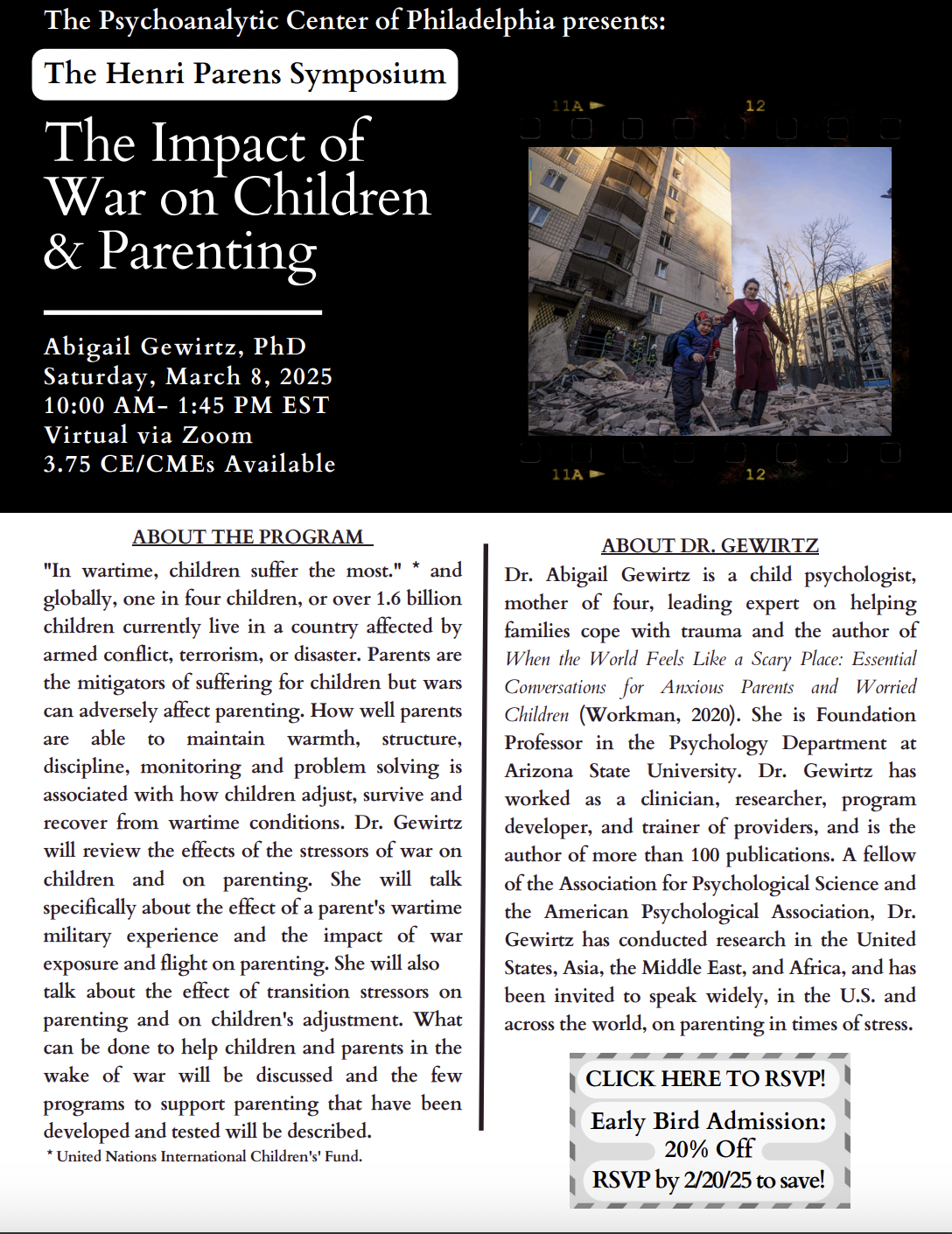
Symposium this Saturday on The Impact of War on Children and Parents

Hook-up culture has been around for a while. Often fueled by alcohol, these encounters avoid all the the preliminaries – the flirting, the talking, the “dates”.
Kids in their teens as well as young adults are getting drunk and having sex of one sort or another… and then ghosting each other.
But why?
And what can they possibly be getting out of this?
Delaney Ruston of “Screenagers” recently released a podcast and a blog post on this subject and she interviewed Dr. Lisa Wade, author of American Hook-up: The New Culture of Sex on Campus.
According to Wade, kids in high school and college often feel that “everyone is doing it”, referring to hooking up.
So perhaps one motivation for hook-ups is to be doing what “everybody” else is doing.
But there must be more.
Having an intimate encounter with someone can involve allowing oneself to be vulnerable. And allowing vulnerability, often leads to feelings of closeness and connection – which is something most teens want.
But teens who opt for hook-ups are getting the vulnerability and the physical closeness with none of the emotional connection.
Why opt for this?
I wonder if some teens – whether in high school or college – are avoiding something by engaging in hook-ups. I wonder if they are avoiding the anxiety of acknowledging that they like someone, taking the risk of contacting that person and actually talking with them face to face. I wonder if the anxiety and the potential for an awkward encounter – or even worse, for disappointment – is keeping some kids from trying.
But why is this more true now than ever before? Why is there even a hook-up “culture” at this point in history?
Could the isolation of COVID, combined with the usual awkwardness of adolescence and the prevalence of social media have made it harder for many adolescents to socialize face to face?
Of course, it is true that casual dating decreased during COVID. It was harder to meet people and it was harder to get together without the risk of exposure to illness. (2)
But the desire for a relationship did not decrease. This put teens in a difficult position. The longer kids were in isolation, the more many kids looked forward to the rewards of getting back to socializing and potentially finding a romantic relationship. (1)
However, hook-up culture existed pre-COVID and still exists post-COVID. So the appeal of the hook-up must transcend the loss of opportunities and the lack of social skills kids experienced as a result of COVID.
So this leaves me to speculate: I think there was always a certain amount of hooking-up. I think that kids have been having substance-fueled sex for a long, long time. But perhaps the prevalence of hook-ups now points to something more malignant.
At this point, many teens and young adults seem ill at ease with one-on-one interactions. And this is true even when it comes to the phone. Recently I read that one teen likened hearing his phone ring to being stabbed in the chest. People in this age group do not like to talk on the phone. They seem to lack confidence in their ability to hold down a one-on-one conversation. Even worse, for some, is getting together. Many kids prefer to stay on their beds. Many don’t have “friends” anymore – if they have anything, they have remote friends they talk to on social media or with whom they play video games. At best, they have “friend groups”. While sometimes they may get together one-on-one, more often the group does things together.
Something has happened to teens and young adults in regard to their ability to tolerate contact and intimacy.
And it is not just a few teens and young adults, it is many.
I suspect the advent of contact through screens has something to do with this – but perhaps not all of it. With the use of video gaming and social media, kids no longer have to leave the house to get stimulation. Now it can be had from the comfort of bed or basement. Social skills are no longer needed. And there are not nearly as many opportunities to practice what social skills a teen may have, or to make mistakes and recover, or to experiment.
I also think that one one-on-one conversations and interpersonal interactions are not demanded of teens and young adults often enough. Parents AND children spend hours each day on their phones. Even when they are together, parents are not talking to kids as much and kids are not talking to their parents as much as in previous generations.
And at school, as I wrote about in my last post, kids are on their phones at least some of the day, rather than interacting with each other. And at some schools and in some classrooms, kids use their computers rather than engaging in classroom discussion and debate.
The malignant thing I referred to earlier is not just the proliferation of screens, it is not just the aftermath of the isolation of COVID, it is our teenagers’ loss of faith in themselves as social beings.
And it is contributed to by our allowing teens to hide behind screens, stay on their beds, and avoid interpersonal interaction.
I think hook-ups, in many cases, are the workarounds that many kids have found to get to have sex and contact without having to utilize much in the way of social skills.
But hook-ups are a desperate workaround, a decidedly second-rate, often risky, and more often hurtful and disappointing way to try to get something rather than to risk what kids fear: getting nothing in the way of romance or sex.
One male student said:
“Most of the time, it’s not a fun experience. Sometimes it’s great, but more often than not, people are kind of left feeling maybe a little bit regretful, kind of embarrassed, awkward. There’s pressure to hook up, but if you don’t, you feel like you’re missing out.” He added, “If you hook up with someone and they don’t text you after, that can be pretty hurtful.” 1
This is only one student, but I suspect he speaks for many others. Hook-ups meet a basic desire for sex, but they don’t meet any of the other needs that teens have for interpersonal relatedness and connection, for affection, support, and validation.
References
1 Ruston, Delany. 2025. Is Hookup Culture Really the Norm? Feb. 18.
Kuperberg, Arielle (2022). Dating during COVID-19: A sociologist’s perspective.
2 Breaux R, Cash AR, Lewis J, Garcia KM, Dvorsky MR, Becker SP. Impacts of COVID-19 quarantine and isolation on adolescent social functioning. Curr Opin Psychol. 2023 Aug;52:101613. Epub 2023 Jun 1. PMID: 37364468; PMCID: PMC10232930.Ki

Screen use amongst children and teens in the US and elsewhere is an enormous concern – with adolescents aged 13 – 18 spending an average of 8.5 hours daily on screen-based media. This is at least one-half of all their waking hours – and it is time that could be spent in so many other ways.
And some of these 8.5 hours of phone use take place in school.
Yes, kids are on their phones at school.
The issue of whether kids should even have their smartphones with them during the school day is one that comes up again and again – including in this blog. Some parents feel it is a safety precaution in case their children need to get in touch with them. Others feel that phones are a distraction from learning and are better left in lockers or in a central location at school.
But there has been very little good data concerning how much time kids actually spend on their phones at school to date.
Finally, however, there is a study which looks at this. Just published in the Journal of The American Medical Association Pediatrics, this study begins to help us understand kids’ phone use at school.
The researchers not only answered the question of how much time kids spend on their phones but they also looked at what kids are doing on their phones during school hours.
As it turns out, kids spend an average of an hour and a half on their smart phones over the course of a six-and-a-half-hour school day. But a quarter of kids spend more than two hours on their phones while at school. And the most looked at apps or categories of phone use are messages, Instagram, video streaming, audio and email.
These are very revealing findings. They are not surprising….but they are shocking. The researchers who performed this study said, “Parents and adolescents may derive benefit from access to phones for communication and learning purposes during school. However, application usage data from this study suggest that most school-day smartphone use appears incongruous with that purpose. The analyses show high levels of social media use during school.”1
In other words, kids are not just using their phones to communicate with their parents during the school day. They are using their phones for the same purposes they use them out of school: scrolling social media, watching YouTube, etc.
It is time for us as a society, and for parents as individuals to think about whether this is the best use of kids’ time – both in school and out.
This is the third in a series on phone use in school.
Footnotes/References
1 Christakis DA, Mathew GM, Reichenberger DA, Rodriguez IR, Ren B, Hale L. Adolescent Smartphone Use During School Hours. JAMA Pediatr. Published online February 03, 2025. doi:10.1001/jamapediatrics.2024.66

I know, I know. Most teens love it and are on their phones 24/7. But do you have one of those rare teens who is just … over it? Who sees through all the curated images of life? Who is actually tired of sitting on their bed all day and watching life go by through a screen?
Because, if you do, they are not alone.
A New York Times reporter, Alex Vadukul, has written two stories on a group of teens in Brooklyn who started something they call “The Luddite Club”.
Biruk Watling, was one of the founders. Now a student at Temple University in Philadelphia, she says that she and some friends from high school started the club in 2022. They gathered in Prospect Park on the weekends sketching, painting, reading … and most radical of all, talking together.
They named their club after the bands of English workers who destroyed new machinery in cotton and woolen mills from 1811 to 1816, because they believed the machinery was threatening their jobs. These days, we use the name Luddite to describe people who oppose new technology.
Logan Lane, one of the members of the club in Brooklyn, said, “Like other iPad kids, I found myself from the age of 10 longing to be famous on apps like Instagram, Snapchat and Tiktok. My phone kept the curated lives of my friends with me wherever I went, following me to the dinner table, to the bus stop, and finally to my bed where I fell asleep groggy and irritable, often at late hours in the night, clutching my device.” Then at 14, she had a revelation while sitting by the Gowanus Canal. She said, “I felt the sudden urge to throw my iPhone in the water. I saw no difference between the garbage on my phone and the garbage surfacing on the polluted canal”. A few months later she signed off on social media and put her smartphone in a drawer.
The Luddite Club members all got flip phones so they could call people and used their computers for homework – but otherwise, they tried to stay away from electronic media.
Now Biruk is recruiting members for a new Luddite Club at college. But just because she and her friends have tried to embrace this lifestyle does not mean they find it easy.
Sometimes they feel left out. Odile Dexter, another founding member of the club says that she has resisted using technology since high school but she is sad that everyone at college uses dating apps and she cannot. Another member said she tried to adhere to the lifestyle but ended up getting a smartphone because she needed to order an Uber now and then. Many of the club members agreed that it is harder to live without using a smartphone these days.
It’s just not easy giving up technology. It’s omnipresent – but that hasn’t stopped more clubs from forming. There is one at Brooklyn Tech, one at Telluride High School in Colorado, one at Oberlin College and one each at high schools and colleges in Seattle, West Palm Beach, Florida, Richmond, Va., South Bend, Indiana, and Washington, DC.
If you have a teen who’s had it with social media, tell them about these clubs and maybe your teen will want to start one, too.
And if your kids are still loving their phones, try these ideas, as suggested by Andrew McPeak, who wrote an article on the subject:
1. Expose your kids to shows and articles about children and teens who are making different choices about their use of social media.
2. Bring up the question of how your kids’ media choices are affecting them and encourage your school to do the same.
3. Plan device-free activities, times, days and vacations for your family – and this means you too!!!
For more info on Luddite Clubs:
https://www.theludditeclub.org
References
Vaduku, Alex. Still averting social media’s grip. The New York Times, February 2, 2025.
McPeak, Andrew. A new wave of teens are pulling away from social media. Growing Leaders. https://growingleaders.com/a-new-wave-of-teens-are-breaking-away-from-social-media/

This is the second in a series on Gentle Parenting
The term, Gentle Parenting was coined by Sarah Ockwell-Smith, a British writer who has authored a variety of books on the subject. She emphasizes the importance of empathy, respect, understanding and boundaries in parenting. And in doing so, she shares some of the best practices of good parenting.
But you may be surprised to know that Ockwell-Smith actually has no qualifications for calling herself a parenting expert. She has an undergraduate degree in psychology, she is a mother, but otherwise, nada.
Her ideas are her own. Like other parenting experts before her such as William Sears (attachment parenting), she speaks based on her own opinions and observations rather than from scientific research findings.
In other words, Gentle Parenting has no data behind it.
And it is just beginning to be studied.
So how can parents know if it is an effective technique for raising happier children?
Well, they can’t.
But this has not stopped many parents from adopting Gentle Parenting wholeheartedly and feeling deeply that this is the “right” way to parent.
It is important for such parents to keep in mind that since parents started to parent, there have been styles of parenting that have been popular and then gone by the wayside, ways of parenting that have been considered “right” at the time and then, just as quickly, have gone out of fashion.
And in the last 75 years there has been a particular trajectory to parenting styles: Since Dr. Benjamin Spock wrote his first parenting book in 1946, parenting has become progressively more “child-centered” with Gentle Parenting being the most child-centered of them all.
But is this actually good for children?
Let’s look at what little data there is.
In one of the first studies of Gentle Parenting, professors Annie Pezalla and Alice Davidson gathered data from 100 self-identified “Gentle Parents”. And what they found may not surprise you. They said that these parents are “at risk of burnout”.
It turns out that this parenting style is extremely hard for parents to implement. For example, the expectation that a parent can remain calm at all times regardless of children’s behavior is extremely emotionally taxing for parents.
This is what they said, “Parenting young children has always been hard, but evidence suggests that it might be getting harder. The pressures to fulfill exacting parenting standards, coupled with the information overload on social media about the right or wrong ways to care for children, has left many parents questioning their moment-to-moment interactions with their family and leaving them with feelings of burnout. 1
And they found that gentle parents were not always so gentle on themselves: “the emergent theme of self-critique, expressed by over one-third of gentle parents, and the findings that, among those self-critical gentle parents, the levels of self-efficacy were significantly lower, illuminates the need for more explorations and more support of these parents. One of the gentle parents in our sample, a 40-year-old mother of two children, wrote that her approach to parenting is about “Trying to remain calm…but I do reach my limit sometimes.” Gentle parenting seems to represent an approach that is extraordinarily gentle for the children, but perhaps not-so-gentle for the parents themselves. “1
Moreover, it is also not clear that remaining calm at all moments is actually helpful for children.
While extreme emotional outbursts from parents in reaction to children’s misbehaviors are obviously not advantageous, I would suggest that there is a natural feedback system that is in place in parent-infant/child interactions both in humans and in most other mammals: when a child or young animal misbehaves by doing something dangerous or annoying, the parent naturally reacts accordingly – with an angry word or growl and sometimes a correction. From this, the child understands that she has done something she should not have. The parent’s negative reaction is the logical and normal consequence for a child’s misbehavior and the child learns what the parent will and will not tolerate.
And the effectiveness of providing a consequence for misbehavior has been widely researched. As I discussed in my last post, in the parenting style known as Authoritative Parenting, parents make their expectations clear, they support children’s feelings and needs and they provide gentle punishments or consequences when children misbehave. And this parenting style has been shown, in many studies, to be the most effective parenting method (amongst the three types of parenting styles: Authoritative, Authoritarian and Permissive) and the one that yields the happiest children.
Gentle Parenting does share some characteristics of Authoritative Parenting – it advocates clear boundaries and provides support for children’s feelings and needs.
And where Gentle Parenting also gets it right is in the area of advising parents to stay calm in the face of children’s extreme feelings. A parent’s ability to remain calm in the face of an infant or young child’s distress – sadness, pain, frustration, IS helpful – and we have known this for a long time. Theorist Wilfred Bion wrote about the mother’s ability to contain her infant’s highly charged affects by reacting with soothing as being one of her most important functions and the one that helps infants learn to tolerate their own distress. He explained that the mother who can grasp the importance of, and take into herself, some of the baby’s earliest and most primitive anxieties helps her baby to internalize the mother’s capacity to tolerate and manage anxiety.
So this is a well known function of the mother, one that was recognized before Gentle Parenting and which Gentle Parenting wisely incorporates – just as it includes a variety of other important parental functions including empathy, endeavoring to see matters from the child’s point of view, verbalization of the child’s feelings and motivations and support for these.
Where Gentle Parenting goes wrong is that it asks WAY too much of parents and it asks WAY too little of children.
At this point in history, most parents work to earn a living and face a host of demands just to survive. Adding to this the expectation to stay calm in the face of every sort of child emotion and behavior, being endlessly empathic, and having no consequences for misbehavior may just be asking too much of parents.
Parents need a sense of having SOME control at home. Sometimes they need a child just to do what they have told them to do. And parents need some way to express themselves to their children. When a child does not comply with what a parent has expected of them, it is natural for the parent to be annoyed and to say so. This is life. Children need to know that not everything they do is acceptable and that some things they do come with unpleasant consequences. They really need to learn what not to do and what to do – because once they go to school and eventually to internships and to jobs, once they have friends, and eventually romantic relationships, this will be the reality of their lives. Not every person in life will be understanding and empathic. Not every motivation for every kind of behavior is equally acceptable in life.
Moreover, research has shown that children feel safer when they know what is expected of them AND they feel less guilty when they have a consequence when they do not comply.
In the end, this is what the researchers who did one of the first studies on Gentle Parenting had to say: What seems to be unique about the gentle parenting movement is that it has not been presented or advocated by scholars of human development; rather, it has largely been the product of social media. Considering that parents are increasingly stressed or burned out by their caregiving responsibilities, it is imperative that evidence-based guidance is made available to those who are interested in gentle parenting. What does this approach entail? How is it related to other parenting approaches? Is it a sustainable approach for caregivers? These are empirical questions, and they deserve empirical answers.
1 Pezalla, A., Davidson, A., (2024) Trying to remain calm…but I do reach my limits sometimes; An exploration of the meaning of gentle parenting. Tenth International Congress on Peer Review and Sicentific Publication, July 31.https://journals.plos.org/plosone/article?id=10.1371/journal.pone.0307492#pone.0307492.ref010
https://www.psychologytoday.com/us/blog/parenting-translator/202311/when-gentle-parenting-doesnt-work
https://journals.plos.org/plosone/article?id=10.1371/journal.pone.0307492#pone.0307492.ref010
https://www.nbcnews.com/news/gentle-parenting-style-hard-on-parents-rcna176917

Should children suffer consequences when they don’t do what we tell them to do?
This question has come up a great deal recently in light of the advent of “Gentle Parenting“.
Most of you have probably heard of Gentle Parenting and some of you may even be using the Gentle Parenting philosophy to raise your kids. But for those who are not up to speed, the Gentle Parenting movement was started by Sarah Ockwell-Smith, a British author and mother of four. She has written a variety of books about gentle parenting, including The Gentle Parenting Book. She emphasizes understanding children’s feelings and acknowledging the motivations behind challenging behaviors as opposed to correcting the behavior itself. She advocates setting firm boundaries, giving choices, and avoiding punishments.
According to a New Yorker article on the subject, “Instead of issuing commands (“Put on your shoes!”), the parent strives to understand why a child is acting out in the first place (“What’s up, honey? You don’t want to put your shoes on?”) or, perhaps, narrates the problem (“You’re playing with your trains because putting on shoes doesn’t feel good”)4
This sounds great – and it IS great: trying to understand why your child feels the way she does, and putting this is into words for her is part of good parenting. And yet, this may not be enough. It may not result in the desired outcome…and parents are getting tired of exerting all the energy this style of parenting requires.
We want our children to do the things we want them to do—like getting dressed, coming to meals promptly, sitting at the table, doing their homework, not fighting with their siblings, etc.—and we struggle with how to accomplish this without violating current parenting norms.
And we don’t just want our children to do these things when we tell them; we also want them to learn to do these things without having to be told.
But there’s more. We want our children to internalize good values. We want them to develop their own moral compass. By the time they are 9 or 10, we want them to understand the importance of listening to others, following rules, treating others with consideration, and being honest, among other things.
And often we don’t know how to reach this goal.
So what do we do? Talk to our children each time they do something we don’t like or when they fail to do something we want them to do in the style of Gentle Parenting? Provide consequences when they don’t do what we tell them to do? Or do we go back to old fashined punishments – and actually punish them—whether by a spanking, the removal of a privilege, or by taking away a promised treat?
Well, let’s start with physical punishment. That is an immediate no – because we have long known that physical punishment is not beneficial for children. In a review article on the subject, Anne B. Smith states that while physical punishment has often been considered an effective, and even necessary means of socializing children, research has revealed it to be a predictor of a wide range of negative developmental outcomes for children. There is widespread agreement on this throughout all the recent research done in the area. Physical punishment is associated with increased child aggression, antisocial behavior, lower intellectual achievement, poorer quality of parent–child relationships, mental health problems (such as depression), and diminished moral internalization.2
In a review of the literature on this subject, one researcher found that there was also widespread agreement among studies that physical punishment tends to lessen the chances that children will internalize parental rules and values.2
Now let’s move on to another alternative: talking to our children. This has been found over and over to enhance children’s understanding of parental expectations as well as maintaining the affectional bond between parent and child.
But, as I mentioned, talking is often not enough. While some advocates of Gentle Parenting may differ, it has been found that what is more effective than talking alone is setting clear expectations, instituting gentle punishments, such as consequences for misbehavior, and being consistent.
This is called authoritative parenting.
And the research on parenting is clear on this. In many studies of three types of parenting: authoritative, authoritarian, and permissive, authoritative parenting has been found to be the most effective as well as the style that yields the happiest children.
Authoritative parents are responsive to their children’s feelings and needs, and they are more often supportive than harsh with their children. This style of parenting is associated with talking together with children about their behavior as well as setting up mild punishments or consequences for misbehavior. Studies have shown that this type of parenting results in lower levels of depression and higher levels of school commitment among adolescents.3
Meanwhile, authoritarian parents are those who are low in responsiveness to their children yet highly demanding of them. The authoritarian parenting style is associated with emphasizing obedience and conformity and expectations that rules be obeyed without explanation. Authoritarian parents exhibit low levels of trust and engagement toward their children, discourage open communication, and engage in strict control. And it has been found that verbal hostility and psychological control are the most detrimental of the authoritarian parenting behaviors. Adolescents from authoritarian families have been found to exhibit poor social skills, low levels of self-esteem, and high levels of depression.3
Permissive parenting is characterized by high levels of responsiveness to children coupled with low levels of demandingness. Permissive parents affirm their children’s impulses, desires, and actions and consult with their children about decisions. In results that may surprise you, adolescents from permissive families report a higher frequency of substance use and school misconduct and are less engaged and less positively oriented to school compared to individuals from authoritative or authoritarian families. And permissive parenting is also associated with low self-esteem in children.
So back to the question: What is the best thing for parents to do?
Well, it seems to me that what some people call “gentle parenting” can end up being a lot like the “permissive parenting” I described above.
And, according to the research, authoritative parenting seems to yield happier children and children who eventually internalize the rules.
So this means setting clear rules and limits for your children starting early, talking to them about these, and instituting clear, mild punishments, or what I call consequences, for when children do not do what you have told them to do.
And notice, I use the words, “what you have told them to” instead of what you have “asked.”
It is time to stop saying, “OK?” after each thing we tell our child to do. As the parent, it is time we stop asking our children to do things we actually want them to do. It may be hard to act like an authority with our children, but generational boundaries are important. Our children need to know that, in the end, we, as the parents, are the boss.
As parents, we are often afraid to set limits or to give consequences. We are afraid of making our children unhappy or angry. We are afraid of meltdowns—whether in public (embarrassing) or at home (frustrating).
But we have to understand that we need to be able to tolerate our children being upset, disappointed, sad, or even angry with us if we want them to learn how to do what we want them to do and if we want them, eventually, to internalize the values we hold dear.
So, let’s start to institute consequences, be consistent, and let the consequences fit the misbehaviors. Often called logical consequences, these will make sense to you and your child. For example, if your child does not put on her pajamas in time for her to have books read to her on a certain night, then story time will have to wait until tomorrow.
References
1. A. Mageau, Joannie Lessard, Joëlle Carpentier, JeanMichel Robichaud, Mireille Joussemet, Richard Koestner (2018). Effectiveness and acceptability beliefs regarding logical consequences and mild punishments. Journal of Applied Developmental Psychology, Vol 54, Jan-Feb, 2018.
2. Smith, Anne B. (2006) The state of research on the effects of physical punishment, Ministry of Social Development, New Zealand.
3. Hoskins, Donna. (2014). Consequences of Parenting on Adolescent Outcomes.Societies, 4(3), 506–531; https://doi.org/10.3390/soc4030506
4. Winter, Jessica. 2022. The harsh realm of gentle parenting. March 23, 2022, The New Yorker.
It is terribly painful to watch our children suffer loss — whether it’s the loss of a grandparent, a friend, or even a pet.
Children struggle to understand separations and death, and their feelings of missing the person they loved are powerful.
But it is important to understand that loss is part of life — and it is not something we should protect our children from.
We do not need to sugarcoat the experience for them. Nor do we necessarily need to keep our children at home during the funeral.
What we do need to do is to explain to them what has happened and to be there for them through all of their questions and feelings. And I am talking about children from the earliest years, on through adolescence. Even two and three-year-olds are interested in why someone is not there anymore. Whether the person has gotten angry and left, or the person has moved away, or the person has died, we can explain this in terms that they will understand. And we can understand that being with them to help them talk about and process their loss helps them to grow.
Researchers have looked at this phenomenon. Calhoun and Tedeschi called this “post-traumatic growth,” and they observed that following a loss, some people experience a number of positive effects. Some develop a greater appreciation for life, some experience a strengthening of close relationships, some feel increased compassion and altruism, some identify new purpose and new possibilities in life, some feel a greater recognition of personal strengths, some experience enhanced spiritual development, and some develop enhanced creativity. And they found that the activity which most helps people to grow following loss is talking about and processing the loss.
Another researcher and clinician, Jessica Koblenz, specifically looked at children. She found that following loss, some children expressed a heightened sense of life and a new appreciation for the value of time. They were aware of not wanting to waste time or have regrets. Some learned to seek help from others, and they figured out how to determine who was capable of giving them the help they needed.
Two other researchers looked at college-aged kids and found that the greater the loss was, the greater the growth could be – but only in those who did not avoid their feelings.
George Bonanno, in his research as described in his book The Other Side of Grief, also looks at the importance of understanding that many of those who suffer loss do so with resilience. While he does not study children, Ann Masten does, and she has found that the majority of children who suffer loss, even traumatic loss, come through the experience without developing any major mental illness.
These findings support the importance of not over-pathologizing the grief process and not protecting our children from feeling the feelings they have around loss. In fact, these finding support helping our children to explore, express and process their feelings — whether this is through talking, art work, or play.
References
Bonnano, George. (2009). The other side of sadness: what the new science of bereavement tells us about life after loss.
Calhoun, L. and Tedeschi, R. (2001). Post traumatic growth: the positive lessons of loss. In R. A. Niemeyer, Meaning, Reconstruction and The Experience of Loss (p 152 – 172), APA Press.
Koblenz, Jessica (2016). Growing from grief. Omega, 73(3), p. 203 – 230.
Masten, Ann. Resilience and development: Contributions from the study of children who overcome adversity
Development and psychopathology 2 (4), 425-444

You may find this hard to believe – but up until the 1990’s infants were routinely subjected to medical procedures including surgery without the benefit of anesthesia.
Pain research’s most famous infant, Jeffrey Lawson, was born prematurely in February 1985 and underwent open heart surgery shortly thereafter. (1) What made this particular surgery noteworthy was the fact that Jeffery was awake and conscious throughout the entire procedure. The anesthesiologist had administered only Pavulon, a paralytic that has no effect on pain. Only after Jeffrey died 5 weeks later did his mother, Jill, learn the truth about his surgery. Jeffrey had been too young to tolerate anesthesia, the anesthesiologist said, and anyway, “It had never been demonstrated to her that premature babies feel pain.” 1 This was not the case of a rogue anesthesiologist; textbooks at the time taught that the surgery Jeffrey underwent “could be safely accomplished with only oxygen and a paralytic”. (1)
Not until a research report from Anand and Hickey, “Pain and Its Effects in the Human Neonate and Fetus,” was published in the New England Journal of Medicine in 1987 did this practice finally begin to end.
Similar to the denial of infant physiological pain has been the denial of psychic pain, including the pain of separation from parents in infancy and childhood. Until the 1970s, infants and children who were hospitalized were actually denied visitation by their parents.
The need for parental love and care and the distress that children suffer without this, were considered unimportant in the physical recovery process for babies and children in the hospital – and the attachment needs of the young child went completely unrecognized in medical circles.
And even now, there are those who question whether trauma and/or loss occurring in the early months and years of life can be remembered. Many deny the importance of separations in the first weeks of life and some doubt whether separations or early trauma of other kinds are encoded in memory.
But this is what Susan Coates, a well known psychologist and the author of September 11: Trauma and Human Bonds (among other books) has to say:
It is now well documented that very young children show the same three basic categories of posttraumatic symptoms observed in adults: reexperiencing, numbing, and hyperarousal.(2) These three clusters of symptoms are the means by which posttraumatic disorders in adults are diagnosed. These clusters have consistently been shown to represent independent factors in the traumatic response process, and there are now over fifty published case reports documenting their presence in children under the age of four.(3)
She goes on to say:
Both Lenore Terr (1988) and TJ Gaensbauer (1995) report that children under the age of three, though unable to describe a trauma in words, enact it in play through motor behavior and somatic responses. Doing this requires a preverbal capacity to symbolically represent traumatic events in memory. Posttraumatic play in very young children is readily distinguishable from ordinary play. It is compulsively driven and it includes repetitive reenactment of the trauma. In addition, very young children show symptoms of reexperiencing the trauma that are highly reminiscent of what is seen in older children and adults: repeated nightmares, distress at exposure to reminders of the trauma, and episodes with features of flashbacks or dissociation.
What Coates is saying, in other words, is that babies, toddlers and young children who experience prolonged separations, or traumatic events, including medical procedures and hospital stays are affected by these events.
And if you have not read or heard about Susan Coates’ case of “Betsy”, you need to. This case involves a ten month old girl who was stabbed repeatedly by a psychotic man while sitting in her stroller in a park. Thanks to the fast action of her babysitter, a police officer and a surgical team, she survived. Her parents noticed no post traumatic symptoms, did not think she remembered the event, did not think it necessary to tell her about what happened and, in fact, were counseled not to do so.
One day, when she was three and playing in the kitchen sink with her father, she leaned against the counter and said “my line hurts”. When her father said, “Oh, you mean your special boo boo?” she said, “No” and made slashing motions with her hand. She said, “It was a very bad day”.
Clearly she had a memory of the traumatic event. And it was a somatic memory, that is, it was felt in her body and expressed through her physical action of replaying the stabbing motions of the man who attacked her. Her parents realized that she needed help to understand what had happened – and they took her to see Susan Coates for psychotherapy. Together, Betsy, her parents and Dr. Coates reconstructed what had happened and what it meant to Betsy.
So, not only do infants experience pain—and severe stress—when they are subjected to prolonged separation from parents or when they experience physical trauma such as catheterizations, lumbar punctures or other medical procedures without the benefit of anesthesia, but they are ALSO capable of forming symbolic representations and somatic – or bodily – memories of these experiences. In addition, we now know that their capacities for other kinds of memory are far more sophisticated than was thought even thirty years ago. And it is also true that these capacities include the rudiments of an episodic memory system even before the onset of language.
These two factors—the experience of pain and its memory—create necessary and sufficient conditions for traumatization and the development of PTSD – whether around trauma – or loss – in infants and children.
So, why is this important for parents to know?
It is important to recognize that early experiences of pain and separation may be important to your child and how she sees herself and the world. It is part of her life story and part of what has shaped her. And here we are not talking about separations of a few hours or a day, we are talking about long separations of weeks and months.
If a child has suffered an early and prolonged separation or a difficult medical experience, parents may be tempted to discount the possibility that this affected them or that they have any memory of what happened.
It is painful for parents to think otherwise. But it is important to acknowledge that these experiences do affect small children. It is important to talk with them about what happened in an age-appropriate way, and to empathize with how hard it may have been for them – even though they were very little at the time. It is important to be open to what the child has to say about it. And it is important to not make this a one-time conversation. It is important to talk about it with them from time to time and try to help them to understand what this experience might have been like for them and what it may have meant to them.
We need to give children credit for being fully feeling individuals – from the moment they are born and throughout their development.
***** 4 Stars
0 Tissues
Good for ages 8 and up

Wicked is an indisputable triumph.
Cynthia Erivo and Ariana Grande as the co-stars simply could not be better, the singing and staging are beautiful and the complexity of the plot will hold the interest of adults as well as children.
This is not just a children’s story – the themes are intensely political and environmental and the message about prejudice is hard to miss.
Age old questions about good and evil are raised again and again. The mean girl trope is trotted out and it is unclear how it will all be resolved….and yet we kind of know.
References to other films are fun to spot – Harry Potter, Legally Blond, Shrek and others are there in spades.
And why do I give this film an 8 and up rating? Well, the flying monkeys are still really scary – and so is the big Oz mask. I was afraid of those monkeys, and the big Wizard when I was a child and watched the original – and your children may have nightmares just as we did – if you decide to bring the little ones along.
Also, as I said earlier, this film is complex. The plot is not easy to follow and the usual expectations around who is good and who is not is turned on its head. But of course, that’s the point of this film.

Today I am reviving and adding to an old post:
There seems to be a problem going on amongst middle and upper-middle-class parents which involves not just hovering and helicoptering but also downright coddling and intruding.
Children from 2 to 32 are being treated as incompetent people who can never do the simplest things — tasks their own parents — and certainly their grandparents did starting very early in life.
The thing is — children are more competent than we give them credit for — and they always have been.
By hovering and helicoptering we get in the way of their developing their own skills, and worse, we interfere with their ability to have experiences that teach them how to do what they need to do in life. As a result, we limit the development of their feelings of competence, confidence, and mastery.
In our parenting groups, I have observed that parents are feeling exhausted. And part of this is because they feel they have to help with everything. If a child doesn’t like what is for dinner, the parent feels like they have to provide something else. If a child wants the parent to help them with their homework each day, the parent feels they have to do this. If the child wants to look at a device during dinner, the parent feels they have to say yes to avoid a meltdown. And in the bathroom? Don’t get me started…
When a five or six or seven year old asks for help with wiping, the parent feels they have to go right in.
But the question parents must ask themselves from the time their children are two years old through adulthood is this: Am I actually helping my child become more competent and confident? Or am I expecting too little from them? Am I stepping in and doing too much for them? And if I am stepping in too often, why am I doing this?
Is it just easier to do things for our children rather than insisting they do them for themselves? Or is it too painful to watch children struggle — to watch children make mistakes and suffer the consequences — to watch children feel frustrated? Bored? Angry?
Or do we have expectations of ourselves as parents that are too high? If so, why? When did we cease to believe that experience was the best teacher? And when did we decide that we, as parents, are really the best teachers and that it is our job to help our children avoid difficult feelings such as frustration, failure, boredom, and anger?
Let’s look to the scientific literature for help.
In studies of what promotes feelings of competence amongst students, structure and support for their autonomy have been shown to be important. Students feel more competent when their teachers give them the opportunity to do work on their own, and when there are clear instructions as to what they should be doing.1
Students also feel more competent when they have the opportunity to help others, and to get support for themselves from peers.1
The attitude of the adults who are around kids is also pertinent as to what makes them feel competent. In a survey, students described teacher kindness, support for autonomy, relatedness, and non-controlling orientation as factors that contributed to their competence satisfaction. For instance, the students felt competent because their teachers had an approachable, helpful, and interactive teaching style and provided them with opportunities to interact with each other.1
Additionally, students mentioned that participation opportunities, respectful teacher-student interactions, and teachers who were responsive to their views, needs, and interests facilitated their competence satisfaction in class. This means that opportunities to give their opinions, to do hands-on work and to be met with a respectful attitude was helpful.
What’s more, students indicated that they feel more competent when teachers make expectations clear, and provide appropriate help when necessary.
Other research has looked at social and emotional competence and has found over and over again that children with better social skills and those who are able to manage their own feelings feel more competent — in addition to being more trusting, empathic and intellectually inquisitive.
So there is quite a bit of research, but often these studies are not translated into actual methods by which parents can learn how to promote competence in their children.3
So, how can parents apply the research findings to their own approach to parenting?
Well, first, we know that being attuned to our babies and children’s feelings and needs is crucial. From birth, we need to observe how they are feeling, and when they are upset, we need to be able to tell the difference between times when they need help calming down and when they are able to soothe themselves.
We must try to stay attuned to their feelings as they engage in difficult tasks (starting with tummy time and going all the way through writing high school papers) and only intervene when it is clear that they have become so frustrated that they cannot continue. We can be there and be available in case help is needed – but we should not jump in at the first sign of frustration.
Second, we must make our expectations of our children clear, but not try to control what and how they do things.
Third, being kind and respectful toward our children and their efforts to accomplish things helps them to internalize a kind and respectful attitude toward themselves.
Fourth, helping children to manage, recognize and understand their own feelings and talking with them about the feelings of others supports social and emotional competence.
Fifth, it is important to encourage independence and autonomy in our children while providing as much structure and support as we think they need.
So, for example, we can help a toddler learn how to pour her own orange juice — but we can suggest starting out doing this activity while standing on a stool and doing it in the sink. As she becomes more capable of pouring without spilling we can ask her if she has noticed how much better she’s gotten and invite her to pour her juice at the table.
Or, when a high schooler is having difficulty with writing a paper, rather than jumping in to read it over or to aid with the writing, we can start by helping them calm down and talk about what is making it so hard for them – before we take ANY action whatsoever.
In summary, helping a child or teen with a task by telling them how to do it or doing it for them is not actually the most effective way to help a child feel competent.
These days, we often feel we have to help our children before they may actually need it. And we may praise our children rather than pointing out the improvement the child has made and asking the child if they notice their improvement or whether they feel proud — of themselves.
In the end, we all want our children to feel competent and good about themselves. And we want them to feel this from the inside rather than waiting for praise from the adults around them or for A’s from their teachers. We want them not only to be competent, but we want them to feel competent.
References
1 Reymond, N. C., et al. (2022) Why students feel competent in the classroom: a qualitative analysis of students’ views. Frontiers in Psychology, Oct 13. https://pmc.ncbi.nlm.nih.gov/articles/PMC9612881/
2Housman, D.K. (2017) The importance of emotional competence and self-regulation from birth: a case for the evidence-based emotional cognitive social early learning approach. ICEP 11, 13. https://doi.org/10.1186/s40723-017-0038-6
https://ijccep.springeropen.com/articles/10.1186/s40723-017-0038-6
3 Miller, J. S., et al. (2018) Parenting for Competence and Parenting With Competence: Essential Connections Between Parenting and Social and Emotional Learning. School Community Journal, V. 28 (2) p. 28. https://files.eric.ed.gov/fulltext/EJ1201828.pdfMorereferences
 Thoughtful Parenting